

Pune's Green Cover Under Siege: Forest Fires Ignite Citizen Outcry Amid Development Push
In a distressing trend, Pune has witnessed significant loss of green cover over recent years, driven by infrastructure projects and redevelopment initiatives, despite vigorous resistance from local citizens. Agitations to preserve heritage trees and biodiversity have placed numerous work sites at the center of ongoing conflicts, ranging from the sacred grove at the Ramnadi-Mula river confluence to the iconic Vetal Tekdi.
Suspicious Fires Erupt in Disputed Green Zones
Over the past month, a series of forest fires have been reported in these contested areas, fueling anger and suspicion among residents and activists. While no concrete evidence exists, some environmental advocates allege these blazes may be premeditated to clear land, thereby undermining protests against deforestation. Although forest fires are common during this season, citizens note an unusually high frequency—nearly daily in locations like Baner Hills—raising red flags about potential human interference.
Environmentalists have long urged authorities to enhance the forest department's firefighting capabilities, but their appeals remain largely ignored. Ravindra Sinha, convenor of Citizens for Area Sabha, highlighted the systemic challenges: "We've engaged with forest officials for nearly five years, and their biggest hurdle is a severe lack of equipment and manpower. The state government allocates a minuscule budget—often less than 1%—for managing Maharashtra's vast 60,000 sqkm forest area. There's an urgent need for standard operating procedures to prevent fires and hold accountable those who burn garbage or ignite blazes, which devastate thriving biodiversity. Collaborative on-ground measures with local bodies are essential."

Sacred Grove and Biodiversity Devastated by Blaze
During a routine nature walk on March 6, volunteers from the NGO Jeevitnadi were horrified to find a section of the riparian zone near the Ramnadi-Mula river confluence ravaged by fire. This area had been protected from tree felling and construction for a riverfront development project since 2025, thanks to citizen efforts to safeguard a sacred grove. Volunteer Shubha Kulkarni reported, "A stretch of 700-750 meters is burnt. While smaller incidents have occurred before, this scale is unprecedented and doesn't appear accidental."
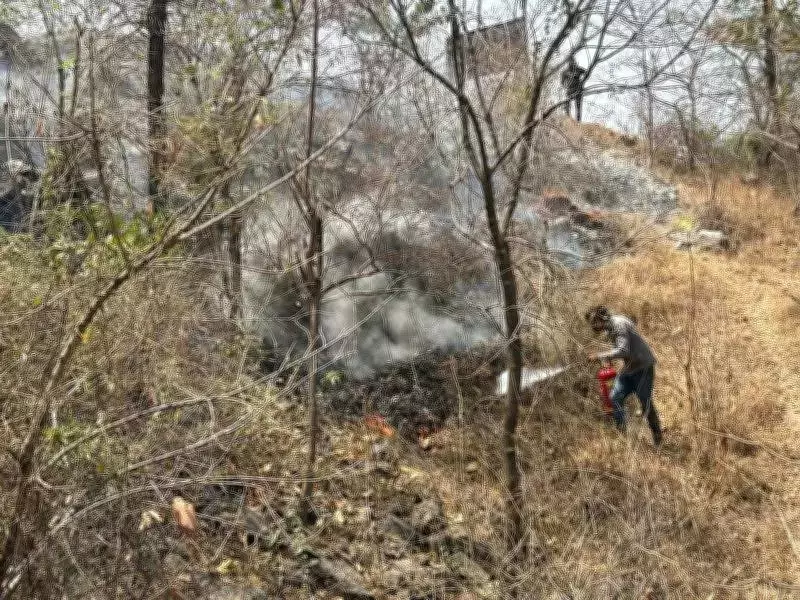
Kulkarni added that monitoring is hampered by jurisdictional disputes, with police and ward offices failing to provide adequate vigilance. In response, volunteers have taken matters into their own hands, conducting daily patrols to prevent further fires. On March 15, Jeevitnadi members gathered to water the burnt area and extinguish smoldering embers, using buckets from a local well and a water pump from the river. Prajakta Mahajan, another volunteer, explained, "We spent two hours trying to save remaining trees, involving everyone from schoolchildren to seniors. This activity will continue periodically."
The fire has had severe ecological impacts, destroying Glycosmis pentaphylla shrubs that host butterflies and disrupting the mating season for various species. Kulkarni emphasized, "Insects and other foundational species in the food chain are most affected, threatening the entire ecosystem."
Vetal Tekdi and Urban Hills Face Recurrent Blazes
The popular Vetal Tekdi, a hotspot for debates over the Bal Bharati-Paud Phata Road project that threatens thousands of trees, experienced a fire in February, further degrading its ecosystem. Sushma Date of the Vetal Tekdi Bachao Kruti Samiti noted, "Fires are annual, but the lack of preventive measures is alarming. Miscreants using the area for parties often ignite small fires that spread rapidly due to dry leaves, damaging plant roots and killing small organisms."
In Baner and Pashan hills, residents have dealt with near-daily fires for eight weeks, with frequency spikes raising concerns. Pushkar Kulkarni, a Pashan resident, stated, "Many fires are intentionally set for fresh grass post-monsoon or to burn dumped garbage, as authorities neglect prevention. This leads to biodiversity loss, reduced groundwater recharge, increased heat, and poor air quality." He also highlighted that fires exacerbate dust levels by destroying shrubs and grass.

Katraj Ghat Ravaged by Severe Inferno
In mid-March, a three-day fire near Katraj Ghat left extensive hillsides charred. Local activist Vickrant Siingh, who volunteers to monitor blazes, reported, "This month's fire was severe, blackening the entire ghat. Grass burning for cattle fodder and garbage dumping are common causes, but fire brigades can't access interior areas, allowing fires to rage unchecked."
Siingh and his team have approached multiple authorities, including PMC commissioner Naval Kishore Ram, with demands for better coordination, fencing, and water reservoirs. However, jurisdictional disputes between PMRDA, PMC, and the forest department have stalled progress. In a November 2025 letter, Siingh outlined the area's rich biodiversity and proposed solutions like CCTV surveillance and daily cleaning, but action remains elusive.
Official Apathy and Manpower Shortages Exacerbate Crisis
Mahadev Mohite, deputy conservator of forests in Pune, asserted that all forest fires are manmade, often due to misconceptions about grass burning improving yields. He admitted, "The department is severely understaffed. From 5,000 permanent staff in Maharashtra in 2012-13, we're now below 1,000, with only 30-40 in Pune. Temporary staff lack local knowledge, and major resources are diverted to high-fire zones like Gadchiroli." Preventive measures like fire lines are insufficient given increased human interference.
As Pune grapples with these challenges, citizens continue to advocate for stronger protections and accountability to preserve the city's dwindling green spaces.





