Pune's Great Backyard Bird Count Transforms City into Avian Hub
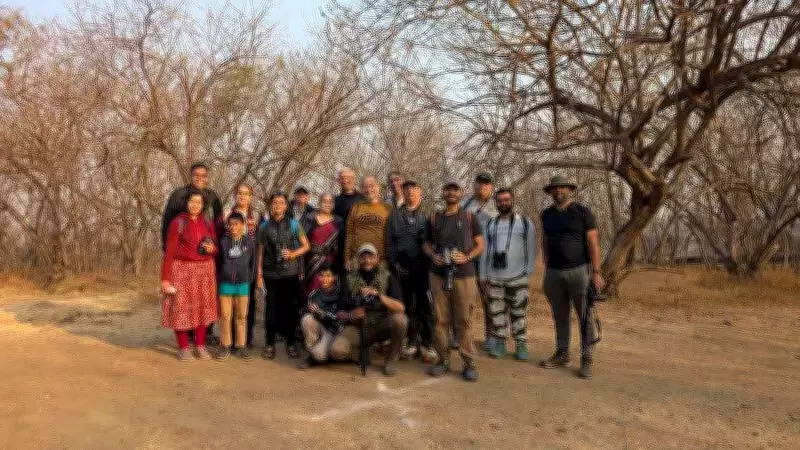
If you noticed groups of Punekars on the city's hills, in gardens, or by lakesides this Friday, gazing upward at the canopy instead of the trail ahead, you likely witnessed the commencement of the Great Backyard Bird Count (GBBC). This global citizen science initiative, running from February 13 to February 16, has turned Pune into a bustling center for avian observation. Nearly 50 guided bird walks are being organized across the city's hills, river stretches, lakes, and neighborhood parks, engaging residents in a unique community effort.
Community Engagement and Tools for Birdwatching
Ranjeet Rane, an event organizer and enthusiastic birder, explained the straightforward goal: "The event encourages people to observe birds for at least 15 minutes and upload their sightings on the eBird platform." For many participants, this experience is truly eye-opening. Nachiket Likhite, a data scientist and passionate birder who led a trail on the Panchavati hillside, shared his observations from Friday morning. "I had a group of about 12 people from diverse backgrounds. We introduced them to two essential tools: Merlin, which identifies birds via photos or calls, and eBird, where observations are recorded," Likhite said.
He recounted an inspiring encounter with a first-time participant who regularly walked the same trail but was amazed to spot several species she had never noticed before. "Once you begin to notice them, it feels incredible," he added, highlighting how the event fosters a deeper connection with nature.

Global Coordination and Local Impact
The GBBC is coordinated globally by the Cornell Lab of Ornithology and the National Audubon Society, with Bird Count India managing the local efforts in India. The data collected provides a real-time snapshot of bird distribution, supporting crucial research on migration patterns and the effects of urban growth. In Pune, this community-driven initiative has already yielded exciting discoveries.
"Last year, Pune documented the European Honey Buzzard—only its second sighting in Maharashtra," said Rane. "This year, we have already sighted the Eurasian Hobby. What makes this rare is that the bird's natural range is typically the Himalayan region. It was spotted by Madhur Vaidya from our group, proving the merit of community birdwatching—there are many more eyes in the sky."
Record-Breaking Participation and Ecological Importance
India achieved record-breaking participation in 2025, with over 6,500 participants submitting 66,000 checklists and reporting more than 1,080 species nationwide. In rapidly expanding cities like Pune, this data is vital for understanding how wildlife utilizes fragmented urban habitats. "These events turn birding from an individual hobby into a community activity," Rane noted. "It spreads awareness about the birds' essential role in our ecosystem."
How to Participate
Participation remains open to everyone through Monday, February 16. Participants simply need to watch birds anywhere in the city for at least 15 minutes. They can utilize the Merlin Bird ID app to assist in identifying species by sound or sight and submit their sightings via the eBird mobile app or website. This accessible approach ensures that anyone, regardless of experience, can contribute to this important scientific endeavor.