

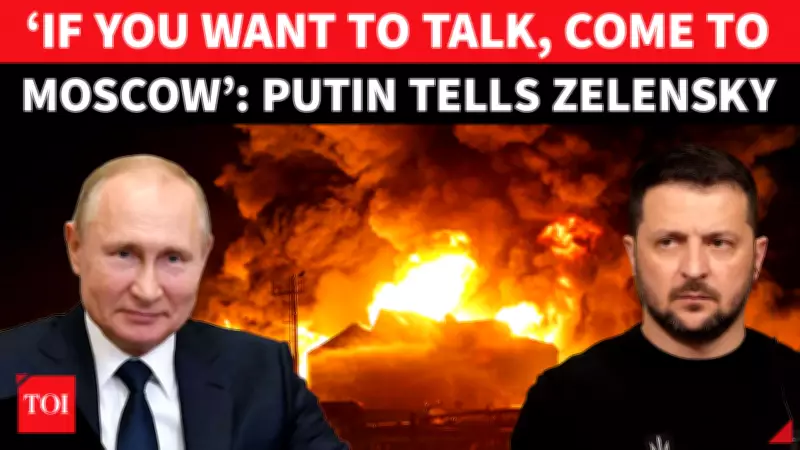
Putin Proposes Moscow Summit with Zelensky, Pledges Security for Rare Dialogue
In a significant diplomatic development, Russian President Vladimir Putin has extended a formal invitation to Ukrainian President Volodymyr Zelensky to travel to Moscow for what could become rare face-to-face peace talks. The Kremlin has explicitly guaranteed security arrangements for such a meeting, marking a potential shift in the protracted conflict between the two nations.
Russia's Conditional Openness to Direct Negotiations
Senior Kremlin aide Yuri Ushakov confirmed Russia's conditional openness to direct Putin-Zelensky talks, emphasizing that any dialogue must occur strictly on Russian terms. The primary condition requires President Zelensky to come to Moscow, with Russia offering security guarantees for his visit. This development emerges against the backdrop of Ukraine's persistent calls to resolve critical issues, including ongoing territorial disputes and the escalating crisis surrounding the Zaporizhzhia nuclear power plant.
Ukraine's Key Demands and Nuclear Plant Concerns
Ukraine has been advocating for comprehensive negotiations that address several pressing matters:

- Territorial sovereignty and the resolution of armed conflicts in disputed regions
- The urgent situation at the Zaporizhzhia nuclear facility, which has raised international alarm about potential safety risks
- Establishment of sustainable ceasefire agreements and humanitarian corridors
The proposed Moscow talks represent a potential breakthrough, though they come with significant geopolitical implications given the venue's symbolic importance.
Analysis of the Kremlin's Strategic Positioning
By insisting on Moscow as the negotiation venue, Russia appears to be asserting diplomatic dominance while testing Ukraine's willingness to engage under these specific conditions. The security guarantee offer represents a notable concession, potentially designed to facilitate dialogue while maintaining Russia's preferred framework for discussions. International observers will be closely monitoring whether this invitation leads to substantive negotiations or remains a diplomatic gesture amid ongoing hostilities.
The timing of this proposal coincides with increasing international pressure for conflict resolution, particularly concerning nuclear safety at Zaporizhzhia. Both leaders face complex domestic and international considerations as they weigh the risks and potential benefits of such a high-stakes meeting.






