

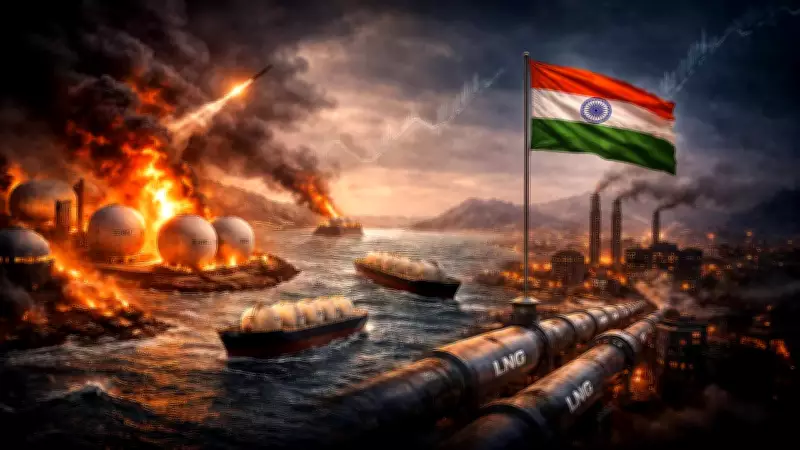
Qatar's Critical LNG Hub Suffers Catastrophic Damage in Iranian Strikes
The ongoing Middle East conflict has delivered a devastating blow to global energy markets with multiple Iranian strikes causing extensive damage to Qatar's Ras Laffan liquefied natural gas (LNG) hub. The attacks, part of escalating hostilities following US-Israeli strikes on Iran, have raised alarm about worldwide energy security and supply chains.
Years of Repair Needed for Vital Energy Infrastructure
QatarEnergy CEO Saad al-Kaabi has revealed that the Iranian attacks have wiped out approximately 17% of Qatar's LNG production capacity, with repairs potentially requiring three to five years to complete. This damage to Ras Laffan – which normally supplies around one-fifth of global LNG – represents a seismic shock to energy markets worldwide.
The immediate market reaction was dramatic, with Brent crude prices briefly surging more than 10% to exceed $119 per barrel following Thursday's attacks. European gas prices have already skyrocketed by 35%, while Asian markets face prolonged supply vulnerabilities. The Financial Times reports that QatarEnergy anticipates annual revenue losses approaching $20 billion, potentially forcing cancellation of long-term contracts with major importers including China, Italy, Korea, and Belgium.

Widespread Energy Infrastructure Attacks Across Gulf Region
The assault on Qatar's LNG facilities represents just one component of a broader campaign against Middle Eastern energy infrastructure. Multiple critical installations have been targeted across the region:
- Iran's South Pars gas field, part of the world's largest gas reserve shared with Qatar
- Iran's Kharg Island crude export terminal
- UAE's Ruwais refinery, which halted operations following drone incidents
- Saudi Arabia's Ras Tanura refinery and Yanbu port facilities
- Kuwait's Mina Abdullah and Mina Al-Ahmadi refineries
These coordinated attacks have significantly reduced Gulf oil output and heightened fears of severe disruption to global energy markets, with the Strait of Hormuz rendered nearly impassable due to Iranian attacks and heightened maritime risks.
India's Critical Vulnerability to Middle East Energy Disruptions
India faces particularly severe exposure to these developments, with multiple dependencies on Persian Gulf energy supplies. According to Sourav Mitra, Partner – Oil & Gas at Grant Thornton Bharat, India's energy security faces unprecedented challenges:
- More than 60% of India's crude oil imports originate from the Persian Gulf, primarily from Iraq, Saudi Arabia, and the UAE
- 40% to 50% of crude imports normally transit the now-impassable Strait of Hormuz
- Qatar alone supplies approximately 40% of India's LNG through the damaged Ras Laffan facility
- About 90% of India's LPG imports travel through the Hormuz chokepoint
External Affairs Ministry spokesperson Randhir Jaiswal expressed deep concern, stating: "The recent attacks against energy installations in different locations across this region are deeply disturbing and only serve to further destabilise an already uncertain energy scenario for the whole world."
India's Multi-Pronged Response Strategy
Indian authorities have activated emergency measures to address the unfolding crisis. Ministry of Petroleum and Natural Gas Joint Secretary Sujata Sharma confirmed: "We are affected by the supplies of the Middle East... Anything which impacts the supplies from the Middle East impacts us."
India's response includes several critical initiatives:

- Accelerating diversification efforts, raising non-Hormuz imports to approximately 70%
- Increasing crude purchases from Russia and securing additional cargoes from the US, West Africa, and Latin America
- Turning to alternative LNG sources including the US and Australia
- Expanding domestic strategic reserves and speeding up renewable energy adoption
- Securing 1 million metric tons of LPG primarily from the United States
- Working with Iran to secure passage through the Strait of Hormuz
- Increasing domestic refinery LPG production by approximately 36%
Market Realities and Future Challenges
Sumit Ritolia, Lead Research Analyst at Kpler, warns that India sits among the most exposed buyers in the region. "More than half of India's LNG imports come via Hormuz, making the country particularly vulnerable to both physical supply disruptions and price shocks," he explains.
The shutdown of the Strait of Hormuz has already blocked India's access to nearly 60% of its LPG, triggering panic buying across the country. Replacement LNG volumes from alternative sources like the US, West Africa, Australia, or Russia involve longer shipping distances, higher freight costs, and slower delivery times.
Ritolia notes: "If the disruption through Hormuz persists, Indian buyers may need to procure higher-priced spot cargoes or reduce consumption. Price-sensitive sectors could shift toward alternative fuels such as oil products, naphtha, or petroleum coke."
As the Middle East conflict continues to escalate, the damage to Qatar's LNG infrastructure represents more than a regional crisis – it has triggered a global energy supply emergency with particularly severe implications for energy-dependent economies like India. The coming months will test both international diplomacy and national energy security strategies as markets adjust to this new reality of disrupted supply chains and heightened geopolitical risks.





