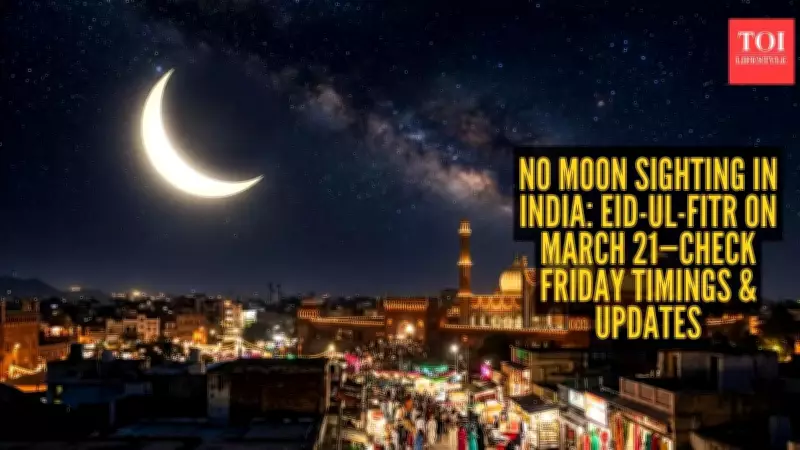
India to Observe Eid-ul-Fitr on March 21, 2026 Following No Moon Sighting
The long-awaited search for the crescent moon concluded quietly across India on Thursday evening, with religious authorities delivering a definitive verdict: the Shawwal moon remained unseen. This announcement extends the holy month of Ramadan by one additional day, setting the stage for Eid-ul-Fitr celebrations to officially commence on Saturday, March 21, 2026.
Millions of Muslims nationwide will complete a full 30-day cycle of fasting this Friday, while other regions globally prepare for festivities a day earlier. The decision underscores India's commitment to local moon-sighting traditions, creating a distinct celebratory timeline.
Official Announcement from Religious Leaders
Late Thursday evening, moon-sighting committees from various cities reported their findings, leading to a coordinated announcement. Maulana Khalid Rasheed Farangi Mahli, Chairman of the Islamic Centre of India, confirmed the development from Lucknow.

"Since the moon was not sighted in Lucknow or anywhere else in India today, March 19, we will observe our 30th Roza tomorrow," he stated. "Eid-ul-Fitr will be celebrated on Saturday, March 21, with the main Namaz at 10 AM at the Lucknow Eidgah, where we will pray for peace across the nation and the world."
In New Delhi, Syed Usama Shaban Bukhari, Naib Imam of Jama Masjid, formally announced to gathered crowds and media that the month of Shawwal-ul-Mukarram had not yet begun, reinforcing the nationwide consensus.
Divergent Dates: India's Local Sighting Versus Global Calendars
A recurring annual question arises regarding why Eid dates differ between India and other nations. This year, Saudi Arabia, the United Arab Emirates, and several Middle Eastern countries are set to celebrate on Friday, March 20, as their moon-sighting occurred a day earlier.
India, however, adheres strictly to local astronomical observations. The country now aligns with neighboring nations including:
- Pakistan
- Bangladesh
- Sri Lanka
Additionally, Southeast Asian countries such as Indonesia, Malaysia, and Singapore will also celebrate on Saturday, creating a unified regional observance.
City-Wise Moon Sighting Windows and Observations
Despite the official announcement, many devoted observers spent Thursday evening scanning the skies during peak visibility periods. Key metropolitan areas reported the following sunset timings and observation windows:
- Kolkata: Sunset at 5:50 PM, with optimal viewing concluding by 6:10 PM.
- Chennai & Bengaluru: Windows closed around 6:35 PM and 6:45 PM respectively.
- Delhi & Hyderabad: Both experienced sunset around 6:30 PM, with observers active until approximately 6:50 PM.
- Mumbai: The last major city to check, with the viewing window extending until 7:05 PM.
Anticipating the Festivities of "Meethi Eid"
With Saturday confirmed as Eid-ul-Fitr, the vibrant energy of "Chand Raat" – the joyful Eve of Eid – is expected to peak on Friday night. Traditional markets from Chandni Chowk in Delhi to Mohammed Ali Road in Mumbai will likely be bustling with families engaged in last-minute shopping for new attire and essential ingredients for the festive feast.
Affectionately known as Meethi Eid, the day will be characterized by several key traditions:
- Special congregational prayers held nationwide
- Distribution of Zakat al-Fitr, the obligatory charity
- Preparation and sharing of traditional sweets like Sheer Khurma
While regional conflicts in West Asia may cast a subdued mood in some areas, the overarching spirit of the festival remains firmly rooted in community, gratitude, and collective prayers for a peaceful and prosperous future.