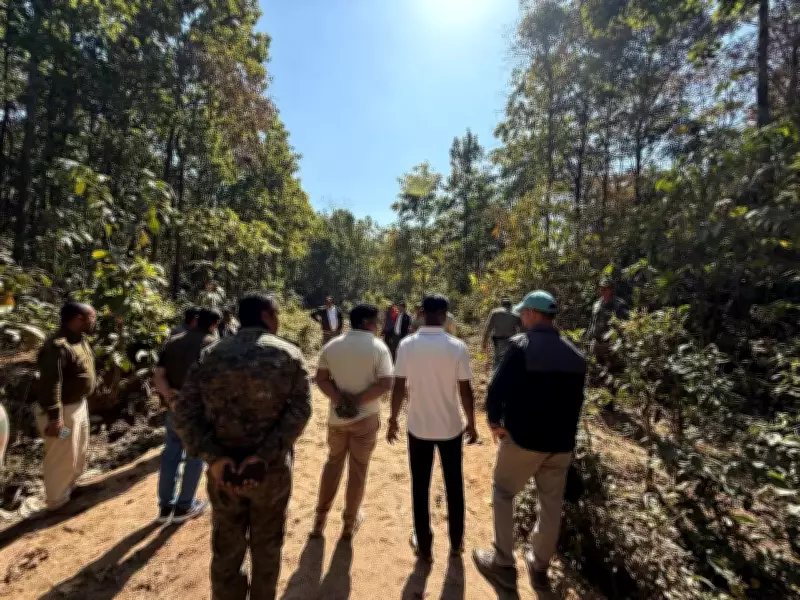
Hazaribag Forest Officials to Deploy Radio Collar on Aggressive Elephant Matriarch
Forest officials in Hazaribag announced on Wednesday a strategic plan to fit a radio collar on a 40-year-old female elephant, identified as the leader of a herd responsible for the deaths of seven individuals in the Churchu block of Hazaribag district. This decision follows a series of fatal incidents attributed to the herd, with the matriarch being the primary aggressor in most cases.
Tracking the Herd with Advanced Technology
Authorities have mobilized several teams, including experts from Odisha, to monitor the elephant herd's movements. The operation utilizes three drones, one of which is equipped with thermal imaging cameras, to enhance tracking capabilities in the dense forest terrain. On Wednesday, the herd was observed migrating from Chadri Pahar in Churchu to the Purpania and Jhumra Hills in the neighboring Bokaro district.
Ravindra Nath Mishra, the Regional Chief Conservator of Forests (RCCF), explained the rationale behind the radio collar initiative: "Tranquilizing and relocating the female elephant from such a thickly forested area is not feasible. Therefore, we have devised a plan to attach a radio collar to her, enabling us to monitor her movements closely and prevent further conflicts."

Unusual Aggression Sparks Scientific Interest
The behavior of the elephant matriarch has raised concerns among wildlife officials, as such aggression is typically associated with male elephants. Mishra emphasized the need for further study, stating, "This level of aggression in a female elephant is surprising and warrants investigation into the underlying causes. Understanding these factors could be crucial for managing similar situations in the future."
The forest department's response highlights a proactive approach to human-wildlife conflict mitigation, combining technology with expert collaboration to address the immediate threat while gathering data for long-term conservation strategies.