

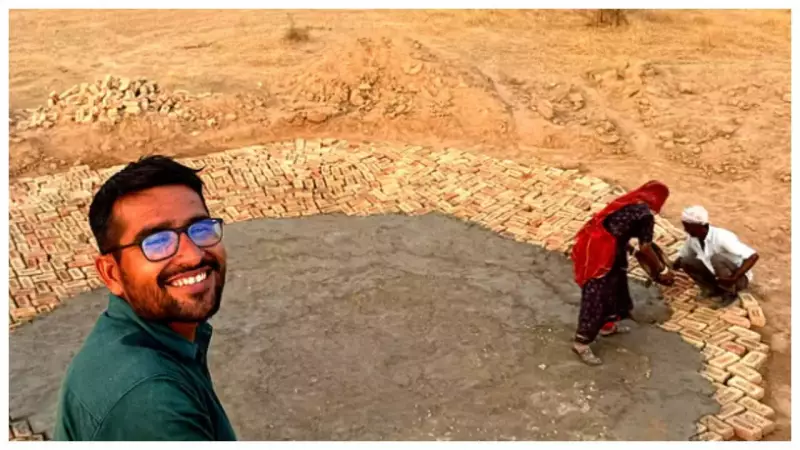
In a heartening tale of individual initiative transforming into a community movement, a wildlife photographer from Rajasthan's arid heartland has brought respite to thirsty desert animals by creating a network of small water ponds. Sharvan Patel, from Dhawa village in Churu district, has constructed over 130 water sources, known locally as 'khailis', across western Rajasthan, providing a critical lifeline for species like blackbucks, peacocks, and chinkaras.
The Photographer's Pivotal Moment
The journey began in the summer of 2022 at the Tal Chappar Wildlife Sanctuary, a flat grassland renowned for its blackbuck population. While pursuing his passion for wildlife photography, Sharvan encountered a deeply distressing scene: a once-reliable waterhole had completely dried up. He witnessed blackbucks tentatively approaching the cracked earth and a mongoose scurrying away from a tiny, muddy stream. This sight of wildlife struggling for a basic necessity sparked a resolve within him.
He recognized the severe implications of water scarcity in the desert. The lack of water forces animals into a deadly dilemma: perish from dehydration or venture into human settlements in search of water, leading to potential accidents, poisoning, or human-animal conflict. Determined to make a difference, Sharvan vowed to return with a solution.

From a Single 'Khaili' to a Widespread Network
Inspiration struck during a subsequent visit when Sharvan noticed a small, shallow, traditional rainwater harvesting pond called a 'khaili'. Initially, animals were wary, but soon, hares, mongooses, peafowls, and eventually blackbucks began to use it. This small success proved a powerful concept: simple, shallow ponds could restore life to parched ecosystems.
Sharvan, along with friends, built his first khaili by creating a depression in the ground, lining it with a thin cement coating for durability, and camouflaging it with soil to keep the water cool. The wait was rewarded when camera traps captured blackbucks drinking and birds visiting. He shared the results on social media, triggering an overwhelming response from villagers across Rajasthan pleading for similar ponds in their areas, where animals were dying of thirst.
What started as a single experiment rapidly expanded. Sharvan and his team began constructing identical khailis in dry, open wildlife habitats. These shallow ponds are easy to maintain and are filled by both rainwater and water delivered by tankers during the scorching summer months from March to July. Today, this network spans districts like Barmer, Jodhpur, Jaisalmer, and Churu, with more than 130 functional water sources.
A Lifeline for Desert Biodiversity
The impact of these 130+ ponds on the desert ecology is profound. They serve as protected oases for a wide range of species.
- Blackbucks and chinkaras (Indian gazelles) now have safe drinking spots, reducing their need to enter villages and risk vehicle collisions or consuming poisoned water.
- The ponds have become regular habitats for peacocks, desert foxes, hares, mongooses, and various reptiles.
- They also function as crucial stopover points for migratory birds like harriers and cranes during their long journeys.
Most importantly, the khailis provide clean water, preventing animals from drinking contaminated water from village ponds or agricultural fields laced with chemical pollutants.
Sustaining the Flow: Community and Conservation
Building the ponds was only the first challenge; maintaining water levels through the extreme desert summer is an ongoing task. With natural sources dried up, the team relies on water tankers, each costing around ₹2,000 and traveling approximately 20 km to replenish the khailis.
Funding this vital supply is made possible through a unique, community-driven model: a donation program asking people to contribute just one rupee per day. This initiative has united over 1,000 participants from across India, whose small contributions collectively fund the tankers, habitat maintenance, and animal care, proving that conservation can be a collective, affordable effort.

Sharvan Patel's story demonstrates how a moment of empathy, coupled with action, can seed a significant ecological change. His work as a wildlife photographer evolved into a wildlife protection movement, ensuring that the harsh Rajasthani summer no longer spells doom for its magnificent desert inhabitants.





