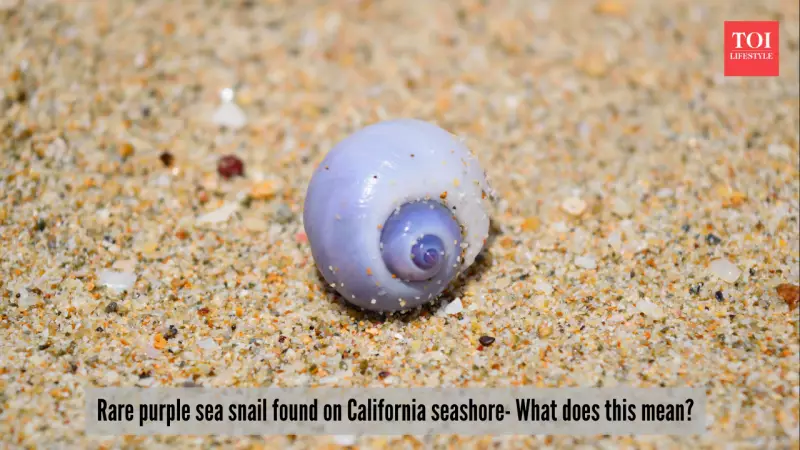
A stunning discovery on a Californian beach has captivated marine enthusiasts and scientists alike, highlighting the ocean's hidden wonders and the subtle signals of environmental change. During a serene sunset walk along the shore in La Jolla, California, a doctoral student stumbled upon a tiny but extraordinary treasure.
The Magical Discovery on a Sunset Walk
Anya Stajner, a Ph.D. student at the prestigious UC San Diego’s Scripps Institution of Oceanography, made the remarkable find. She spotted a small, brilliantly coloured purple shell that immediately stood out. Recognising its significance, Stajner identified it as a rare pelagic sea snail known as Janthina.
These are not your average garden snails. A spokesperson from Scripps explained that these marine creatures are famous for their vivid purple shells and their unique survival technique. They create a natural 'bubble raft' from mucus, which allows them to float upside down on the ocean's surface. Typically inhabitants of subtropical and tropical seas, their appearance on Southern California coasts is noteworthy.

Understanding the Rare Janthina Snail
The journey of these snails to the shore is as fascinating as their colour. Using their bubble rafts, they drift across the ocean, preying on jellyfish such as the dangerous Portuguese man o' war. Their delicate shells, which can grow to about 1.5 inches, have distinctive angled whorls. While safe to touch, they can release a purple ink that stains.
But why are they purple? Anya Stajner shed light on this clever evolutionary design. The snails exhibit a form of camouflage known as countershading, but with a twist. "They’re darker on the top so that a sea bird flying above might not see it, and they’re a lighter purple below so that a fish looking up from below might have a harder time spotting," she told FOX 5. Since they float upside down, this reversed colouration provides perfect protection.
A Sign of Changing Oceans
The arrival of this tropical voyager has sparked curiosity and concern among locals. Beachgoer Whitney expressed a common sentiment, noting it was "cool" but also made her wonder why they were appearing. The answer often points to larger environmental shifts.
Strandings of Janthina snails are frequently linked to changing ocean patterns, particularly the influence of warmer offshore waters moving toward the coast. This sighting is especially significant as it marks the first such event in San Diego since 2015. Experts suggest these fragile nomads are venturing further north due to unusual currents, potentially driven by broader climate phenomena.
Their fragile, thin shells and planktonic lifestyle, documented by resources like the World Register of Marine Species, make them sensitive indicators of ocean health. This rare purple visitor is more than just a beachcombing prize; it is a floating message about the dynamic and warming state of our seas.