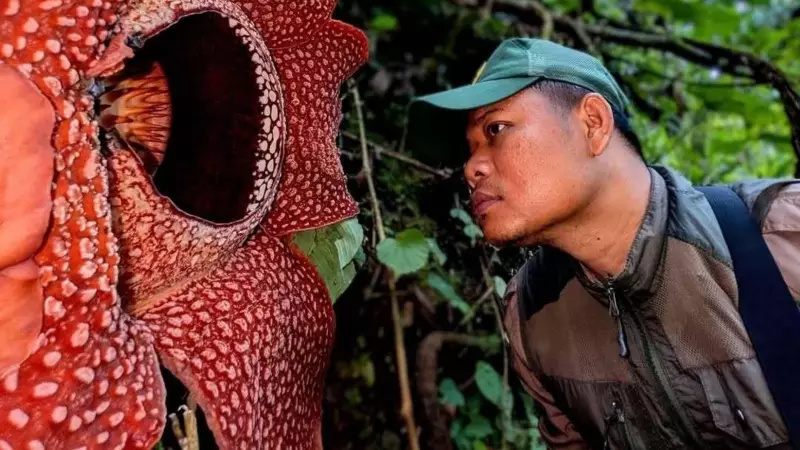
In a moment of profound triumph, an Indonesian conservationist has finally laid eyes on a botanical wonder so rare, its sighting is considered more exceptional than spotting a tiger. After a relentless search spanning over a decade, Septian Andriki, known as Deki, witnessed the breathtaking bloom of the Rafflesia hasseltii in the dense rainforests of Western Sumatra.
The Elusive Bloom: A 13-Year Wait Ends
The breakthrough came earlier this year, sparked by a crucial tip from a local forest ranger. The ranger sent a photograph showing what appeared to be a Rafflesia bud. This single image ignited new hope for Deki and a team led by British plant expert Dr. Chris Thorogood, prompting an immediate expedition. For nearly 13 years, Deki had trekked through treacherous jungle terrain, climbed steep hills, and remained vigilant of the resident tigers, all in pursuit of this singular flower. "It has been 13 years of waiting," Deki told the BBC, his perseverance finally rewarded.
What Makes the Rafflesia So Extraordinary?
Often called the "stinking corpse lily," Rafflesia is a botanical marvel that captivates and repels in equal measure. Its fame stems from several unique and extreme characteristics:

- Giant Proportions: The flower produces the largest single bloom on Earth, sometimes stretching up to one metre across and weighing over 6 kilograms.
- Pungent Perfume: It emits a powerful odour reminiscent of rotting flesh. This scent is a clever evolutionary trick to attract carrion flies, which act as its pollinators.
- Ephemeral Beauty: The Rafflesia's life cycle is slow and secretive. A bud takes approximately nine months to mature. Once ready, the flower opens fully for only a few brief days before wilting, making a chance encounter in the wild an event of incredible luck.
Deki poetically compared the experience to a birth, stating, "The life cycle of the Rafflesia is nine months long, like a baby in the womb."
A Discovery with Deeper Implications for Conservation
This rediscovery carries weight far beyond botanical interest. Indonesia is the world's largest producer of palm oil, and the rapid expansion of plantations has led to widespread conversion of pristine rainforest. These forests are not just home to the Rafflesia; they also shelter critically endangered Sumatran tigers, orangutans, hornbills, and countless other species.
Deki has dedicated his life to protecting Indonesia's rare flora. During the pandemic, he intensified his collaboration with Dr. Thorogood to document Rafflesia species across Sumatra. While they found several species in a 2021 expedition, the Rafflesia hasseltii had always remained just out of reach—until now.
For Deki, the find is a beacon of hope. He aspires that this extraordinary discovery will highlight the irreplaceable value of Sumatra's rainforests, ensuring that future generations might also have the chance to experience their wonders. In a landscape under constant threat, the fleeting bloom of the world's rarest flower serves as a powerful symbol for the urgency of conservation.