

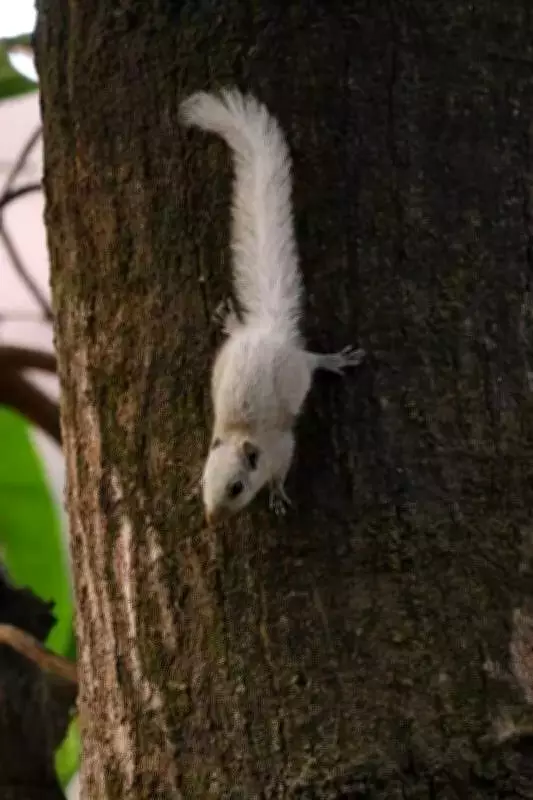
Rare White Squirrels Discovered in Kolhapur, Research Published in International Journal
In a remarkable wildlife discovery, researchers from Kolhapur and Satara have identified two extremely rare leucistic squirrels within the urban settlements of Kolhapur city. This groundbreaking observation has now been formally documented and published in the prestigious international journal Maydica, which is published from Italy, bringing significant attention to this unique genetic phenomenon in India's urban wildlife.
Unusual Coloration and Missing Stripes
The researchers reported a striking deviation from the norm in these squirrels. Typically, these animals exhibit a brown or reddish-brown coloration, but the discovered specimens displayed a pale whitish-grey hue across their bodies. Even more notably, the characteristic three stripes that are usually present on their backs were completely absent, adding to their uniqueness and scientific interest.
Initial Discovery and Observational Study
The discovery occurred on April 12, 2025, during a bird-watching expedition by wildlife researchers Mayuresh Rampure and Devendra Bhosale. Initially, they spotted what they believed to be a single white squirrel in Kolhapur. However, upon closer and more careful observation, they realized there were actually two such squirrels at the location. Recognizing that this phenomenon was being observed for the very first time in this context, they promptly initiated a detailed observational study to document and understand it.

Genetic Analysis and Research Paper
Upon thorough examination, the researchers conclusively determined that the squirrels belonged to the leucistic category. Leucism is a genetic disorder characterized by a partial or complete reduction of body pigmentation, specifically melanin, while the colour of the eyes remains normal. This finding led Devendra Bhosale, Mayuresh Rampure, and Kalpana Sable, an assistant professor at MLA Shashikant Shinde College in Satara, to author a comprehensive research paper based on this significant event, which was subsequently accepted for publication.
Collaborative Effort and Institutional Support
The study was a collaborative endeavor involving multiple organizations and individuals. Key participation and contributions came from the Chhatrapati Wildlife Foundation and the Sahyadri Shiledar Seva Trust. Additionally, members from the Kolhapur Amateur Photographers Association, including Ashutosh Suryavanshi, Vinayak Alvekar, Shirish Rampure, Omkar Katkar, and Shubham Kothawale, played crucial roles. The research team received expert guidance from Omkar Yadav, an Assistant Professor based in Satara, and was strongly supported by the Kolhapur Forest Department. This support was notably provided by the then-Deputy Conservator of Forests, Kamlesh Patil, and Range Forest Officer Ramesh Kamble, highlighting the importance of institutional backing in wildlife research.
This discovery not only adds to the biodiversity records of the region but also underscores the potential for rare genetic occurrences in urban environments, prompting further interest in conservation and genetic studies.






