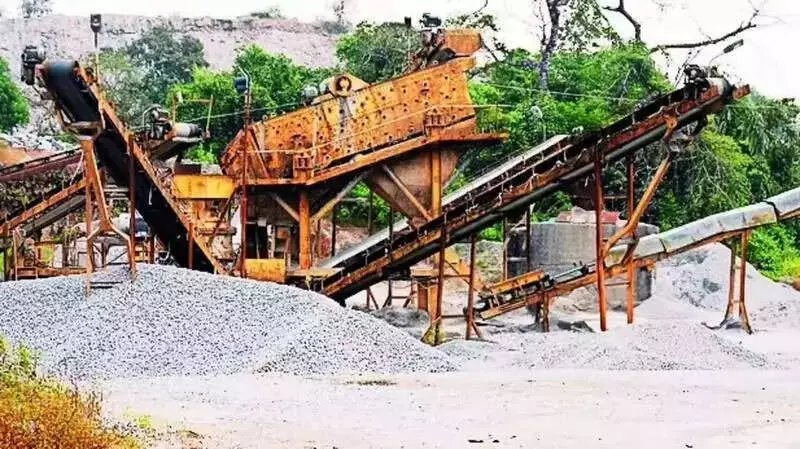
Ropar Stone Crusher Clusters Record Dangerous Air Quality Levels
The Punjab Pollution Control Board (PPCB) recently conducted a detailed assessment of ambient air quality in stone crusher cluster zones across Ropar district. Their findings reveal a serious environmental concern. More than sixty-one percent of air samples collected exceeded permissible particulate matter limits.
Widespread Monitoring Uncovers Critical Failures
PPCB officers carried out ambient air quality monitoring in several cluster areas. These locations included Sainsowal, Algran, Plata, Agampur, Khera Kalmot, and Saidpur. The team collected a total of eighteen samples from six different sites. They specifically assessed levels of suspended particulate matter, known as SPM or PM10.
The analysis presented a troubling picture. Only six samples from two locations, Saidpur and Plata, fell within the safe limit of 150 micrograms per cubic meter. At Algran, officials gathered three samples near a government school. One sample measured 139 µg/m³, staying under the limit. However, the other two samples recorded alarming levels of 185 µg/m³ and 167 µg/m³, both surpassing the standard.

Overall, eleven out of the eighteen samples breached the prescribed safety standard. This pushed the failure rate to a significant 61.11 percent. The findings highlight a persistent air pollution problem in these industrial zones.
National Green Tribunal Demands Action and Reports
The PPCB placed these findings before the National Green Tribunal. The tribunal is currently hearing an ongoing case related to illegal sand mining in Rupnagar district. On April 21, 2025, the tribunal issued a clear directive. It ordered the pollution board to submit a comprehensive report within six months.
The report must address three critical aspects. First, it must detail compliance with consent conditions by all stone crushers. Second, it must provide updated data on ambient air quality in the affected area. Third, it must assess the carrying capacity of the region to sustain such industrial activity.
Regulatory Measures and Inspection Drive Underway
In response to the deteriorating air quality, the PPCB directed all stone crusher units to take immediate corrective action. The board mandated the installation of suitable and adequate air pollution control devices on their premises. These devices are essential to contain harmful emissions and protect public health.
Official records indicate that around 171 stone crushers in the Ropar area have obtained consent to operate. This consent is granted under the Water (Prevention and Control of Pollution) Act, 1974, and the Air (Prevention and Control of Pollution) Act, 1981. Compliance with these laws is mandatory.
The regional office has already inspected 106 stone crushers to verify adherence to environmental norms. Inspectors conducted thorough checks on multiple fronts. They examined machinery, looked for proper display of environmental data, and assessed conveyor belts and chutes. The inspection also covered water sprinkling systems, stabilization of movement areas, plantation efforts, and septic tanks for domestic effluent. Officials checked recirculation tanks, boundary walls, installation of surveillance cameras, and the crucial air pollution control devices.
Pending Inspections and Enforcement Actions
Inspection of sixty-five units remains pending. The pollution board has sought a period of three months to complete these inspections. After finishing, the board will submit a final status report. This report will cover compliance levels, ambient air quality standards, and the carrying capacity assessment as ordered by the tribunal.
The board is also taking strict action against violators. It issued separate legal notices to fifty-seven stone crushers found in breach of environmental norms under the Water and Air Acts. Additionally, twenty-four stone crushers showed partial compliance. For these units, the board issued advisories. The advisories direct them to meet all prescribed standards and follow the established code of practice without further delay.
The situation underscores the ongoing challenge of balancing industrial activity with environmental protection. Continuous monitoring and strict enforcement will be crucial to safeguard air quality for residents in and around Ropar's stone crusher zones.