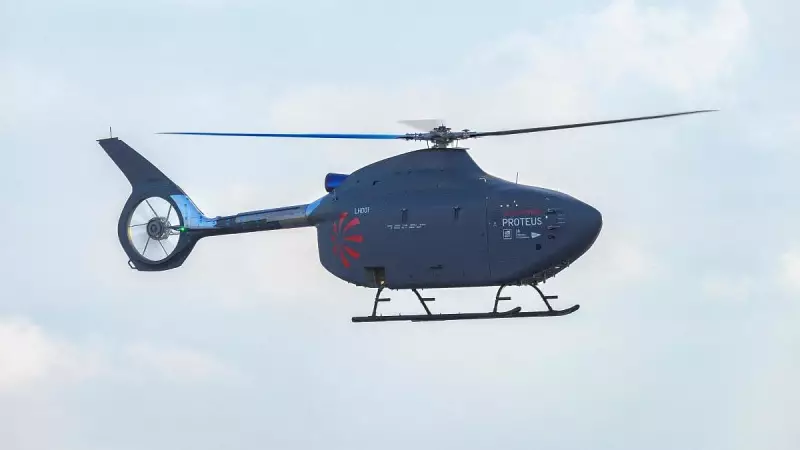
Royal Navy Deploys First Autonomous Helicopter to Counter North Atlantic Threats
The Royal Navy of Britain has taken a significant step forward in maritime defense. It has launched its first autonomous helicopter, named Proteus. This advanced aircraft is designed to counter threats in the challenging North Atlantic region.
Advanced Technology Behind Proteus
Leonardo, a leading defense and aerospace group, designed and built Proteus. The helicopter relies on a sophisticated array of sensors and computer systems. These components are powered by specialized software that allows Proteus to interpret its environment in real-time.
The software enables the helicopter to make independent decisions based on the data it collects. This capability marks a major advancement in autonomous military technology. The Royal Navy highlighted these features in its announcement, emphasizing the strategic importance of this development.

Strategic Implications for North Atlantic Security
The deployment of Proteus is specifically aimed at enhancing security in the North Atlantic. This area has seen increasing geopolitical tensions and potential threats in recent years. By utilizing an autonomous helicopter, the Royal Navy can conduct surveillance and response missions with greater efficiency and reduced risk to human personnel.
Proteus represents a shift towards more automated and intelligent defense systems. It showcases how modern militaries are integrating artificial intelligence and robotics into their operations. The helicopter's ability to operate autonomously in harsh maritime conditions could set a new standard for naval aviation.
This launch underscores Britain's commitment to maintaining a technological edge in defense. It also aligns with broader NATO efforts to bolster security in the Atlantic region. The Royal Navy's initiative with Proteus is likely to influence future developments in autonomous military vehicles worldwide.