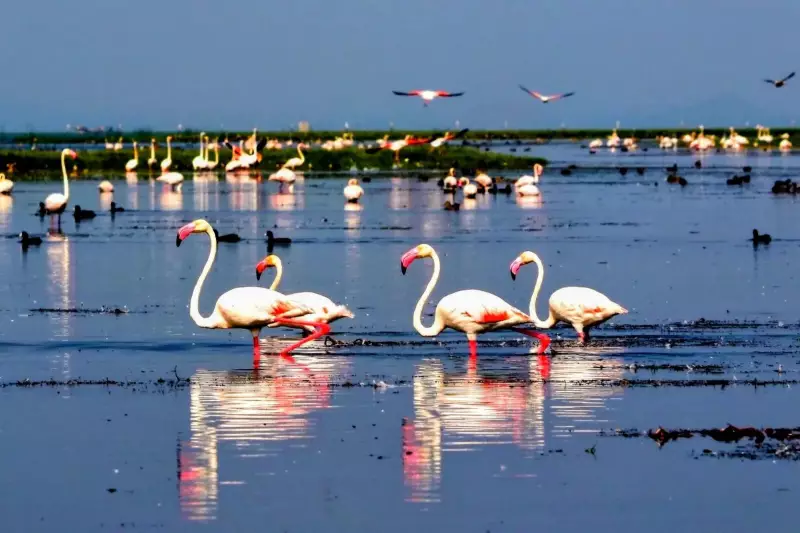
The Odisha government has announced a major initiative to revive the ecological health and productivity of the iconic Chilika Lake. A detailed project report worth an estimated Rs 2,000 crore will be prepared with technical assistance from IIT Madras, as disclosed by Law and Works Minister Prithiviraj Harichandan on Friday.
A Comprehensive Blueprint for Revival
The move follows a recent meeting between Minister Harichandan, Puri MP Sambit Patra, and Union Finance Minister Nirmala Sitharaman to seek central support for the lagoon's restoration. IIT Madras has already submitted a preliminary project report outlining a multi-pronged strategy. Key interventions identified include opening a new tidal mouth based on advanced numerical modelling, desilting critical internal channels, and conducting extensive hydro-sedimentological and bathymetric surveys to map the lake bed.
The urgency for action is underscored by alarming siltation. Forest Minister Ganesh Ram Singhkhuntia recently informed the assembly that the lake's depth is decreasing annually, with 800,000 metric tonnes of muddy soil entering Chilika every year. Over the past five years, the forest department has already extracted 326,716 cubic metres of sludge. Currently, the lake's depth varies from a shallow 0.38 metres to a maximum of 6.2 metres.

Focus on Fisheries and Salinity Management
The preliminary report highlights that reopening the lake's mouth is essential to maintain proper salinity levels. This is crucial for improving fish migration, reducing water stagnation, and controlling excessive weed growth. The report also calls for a sustainable fisheries resources management study. This study aims to conduct a comprehensive assessment of finfish and shellfish diversity, analyse fish recruitment trends, and understand environmental stress factors to ensure long-term stock sustainability.
Furthermore, an upgrade of fisheries infrastructure is deemed necessary due to a lack of modern landing facilities for fishermen.
Balancing Tourism with Conservation
The restoration plan strongly emphasizes developing community-based responsible tourism to provide robust livelihood options for locals. The report specifically mentions the need to study the carrying capacity for popular tourist activities like dolphin watching at Satapada and bird watching at Mangalajodi. The goal is to ensure tourism growth balances conservation with community benefit, preventing ecological damage from overcrowding.
Spanning over 1,100 square kilometres, Chilika is a wetland of international importance (a Ramsar site) with diverse habitats including the reed swamps of Mangalajodi, the mudflats of Nalabana, and the open waters near Rambha and Satapada. The forthcoming detailed project report aims to secure a sustainable future for this unique ecosystem and the communities that depend on it.