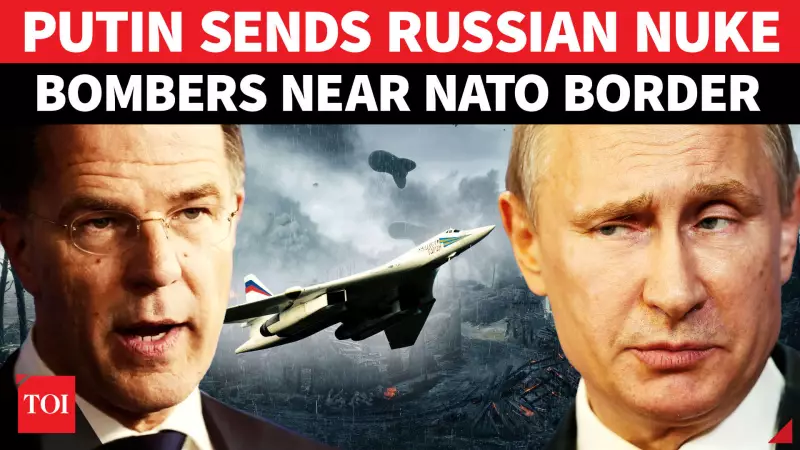
Russia Deploys Nuclear-Capable Bombers Near NATO Borders, Escalating Baltic Tensions
In a significant military move, Russia has deployed its advanced Tu-22M3 long-range bombers, escorted by Su-35 and Su-30 fighter jets, over neutral waters of the Baltic Sea. This deployment, reported on January 23, 2026, has drawn intense monitoring from NATO forces and sparked widespread concerns over regional security dynamics. The extended patrols by Russian aircraft are seen as a strategic maneuver at NATO's doorstep, reinforcing geopolitical tensions in the area.
Details of the Military Deployment
The Tu-22M3 bombers, known for their nuclear-capable payloads and long-range strike capabilities, have been conducting patrols in the Baltic Sea region. These aircraft are accompanied by Su-35 and Su-30 fighters, which provide escort and air superiority support. This combination of forces represents a formidable display of Russian military power in a sensitive geopolitical zone.
NATO has responded by closely monitoring these activities, with officials expressing alarm over the potential implications for international security. The Baltic Sea, a critical maritime area bordered by NATO member states, has become a focal point of strategic tension due to these patrols.

Geopolitical Implications and Regional Reactions
The deployment of Russian bombers near NATO borders has heightened fears of escalating military confrontations. Analysts suggest that this move is part of Russia's broader strategy to assert its influence in Eastern Europe and test NATO's defensive posture. The situation has led to increased diplomatic discussions and calls for de-escalation from European leaders.
In related developments, recent statements from global figures, such as Ukrainian President Zelensky and French President Macron, have highlighted the complex interplay of alliances and tensions in the region. For instance, Zelensky's calls for stronger EU unity and Macron's comments on European solidarity reflect the broader context of this military escalation.
Broader Context of International Security
This incident occurs against a backdrop of ongoing geopolitical shifts, including debates over NATO's role, US foreign policy under figures like Trump, and conflicts involving Russia and Ukraine. The Baltic Sea patrols underscore the fragile state of international security, where military posturing can quickly escalate into broader crises.
Key points to consider include:
- The strategic importance of the Baltic Sea for NATO and Russian military operations.
- The role of advanced aircraft like the Tu-22M3 in modern warfare and deterrence strategies.
- Potential impacts on diplomatic relations between Russia, NATO members, and other global powers.
As tensions simmer, the international community watches closely, hoping for diplomatic resolutions to prevent further escalation. This deployment serves as a reminder of the ongoing challenges in maintaining global peace and security in an increasingly volatile world.