

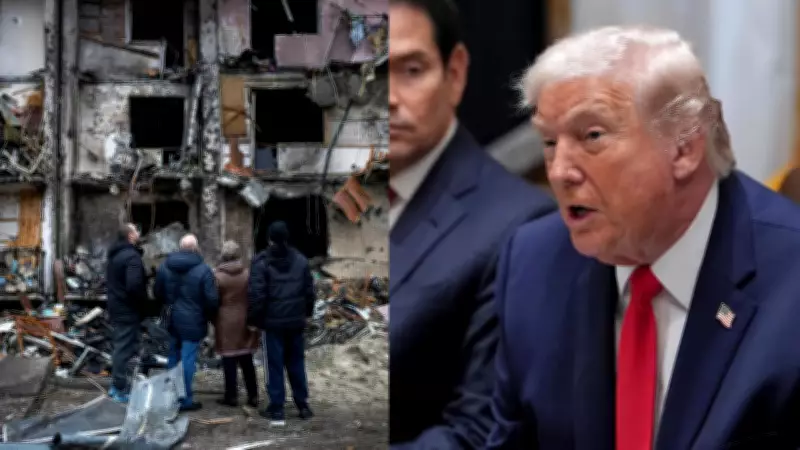
In a significant diplomatic development, Moscow has consented to a personal request from United States President Donald Trump to suspend military strikes on Kyiv for a period of one week, extending until February 1. The Kremlin officially confirmed this arrangement on Friday, marking a temporary pause in the ongoing hostilities.
Kremlin Confirms Personal Appeal from US President
Kremlin spokesperson Dmitry Peskov addressed reporters on Friday, revealing that Russia had accepted what he characterized as a "personal request" from President Trump. This move creates a brief ceasefire window specifically targeting the Ukrainian capital.
"I can confirm that President Trump did indeed make a personal request to President Putin to refrain from striking Kyiv for a week until February 1," Peskov stated, as reported by international news agencies. "This pause is intended to establish favorable conditions for potential negotiations between the conflicting parties."

Divergent Explanations for the Ceasefire
Interestingly, the reasoning behind this temporary halt in attacks differs between the two world leaders. President Trump disclosed his appeal during a White House Cabinet meeting on Thursday, citing the "extreme cold" conditions affecting Ukraine as his primary motivation.
"I personally asked President Putin not to fire into Kyiv and the various towns for a week," Trump explained. "This request was made because of the cold, the extreme cold weather conditions currently affecting the region."
In contrast, the Kremlin's official statement made no mention of weather considerations. Instead, Russian officials presented the decision as a diplomatic gesture aimed at facilitating negotiations, particularly as the United States continues to advocate for an end to the nearly four-year conflict between the neighboring nations.
Harsh Winter Conditions Compound Humanitarian Crisis
The timing of this temporary ceasefire coincides with particularly severe winter conditions across Ukraine. Russia's sustained attacks on Ukrainian energy infrastructure throughout the conflict have left thousands of Kyiv residents without reliable heating during what meteorologists describe as an unusually harsh winter season.
Ukraine's national weather agency has issued warnings that the coldest conditions are expected to arrive after February 1. Forecasts predict temperatures in Kyiv could plummet to as low as minus 30 degrees Celsius in the coming days, creating potentially life-threatening conditions for vulnerable populations.
Ukrainian Response and Reciprocal Restraint
Ukrainian President Volodymyr Zelenskyy welcomed President Trump's announcement, expressing cautious optimism about the temporary reprieve. Zelenskyy indicated that Ukraine would respond with reciprocal restraint if Russia honors the ceasefire agreement.
"If Russia does not strike our energy infrastructure generation facilities or any other energy assets, we will not strike theirs," President Zelenskyy declared on Friday, as cited by international news sources. This statement suggests a potential mutual de-escalation, at least temporarily, regarding critical infrastructure targets.
Continued Hostilities Despite Ceasefire Announcement
Despite the announced pause in attacks on Kyiv, Ukrainian military officials reported that Russian forces launched dozens of drones and at least one missile at various Ukrainian targets overnight. This indicates that hostilities continue in other regions despite the specific ceasefire agreement regarding the capital.
Additionally, Ukrainian police authorities revealed they received more than 2,000 bomb threats within just a few hours on Friday, highlighting the ongoing tension and security concerns throughout the country. These developments underscore the complex and multifaceted nature of the conflict, where diplomatic announcements don't always translate immediately to complete cessation of hostilities across all fronts.
The temporary ceasefire represents a delicate diplomatic maneuver amid challenging winter conditions and prolonged conflict. As the February 1 deadline approaches, international observers will closely monitor whether this week-long pause leads to meaningful negotiations or simply provides temporary relief during extreme weather conditions.






