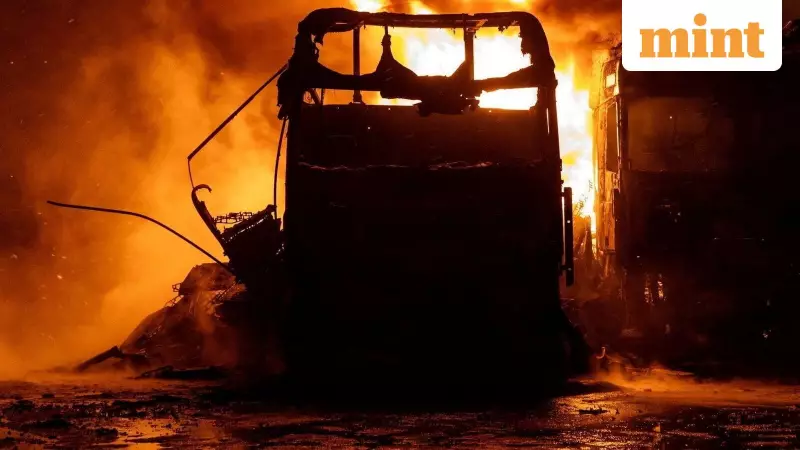
Two days of intensive negotiations between Russian and Ukrainian officials, mediated by the United States, concluded in Abu Dhabi on Saturday, January 24, even as Ukraine faced one of its most severe aerial bombardments in recent months. The talks wrapped up just hours after Russia unleashed hundreds of drones and missiles across Ukrainian territory, resulting in civilian casualties and extensive power disruptions.
Abu Dhabi Peace Negotiations
The discussions, which lasted approximately three hours on Saturday, marked the second consecutive day of meetings involving representatives from Ukraine, Russia, and the United States. According to a spokesperson for the United Arab Emirates government, the negotiations focused on addressing the "outstanding elements" of a US-proposed peace framework and featured "direct engagement" between Russian and Ukrainian delegates.
"The discussions were held in a constructive and positive atmosphere," the UAE spokesperson stated, as reported by Reuters. This diplomatic effort represents a significant step in Washington's renewed push to broker an end to the nearly four-year-long conflict.

Russia's Willingness for Continued Dialogue
Following the talks, Russia indicated its openness to further diplomatic engagement. The Russian Foreign Ministry announced that Moscow is prepared to continue discussions with Ukrainian delegations, with potential future meetings possibly taking place in Istanbul, according to reports from the state news agency RIA.
Massive Russian Air Assault During Talks
As negotiations were underway, Kremlin forces launched a devastating aerial offensive against Ukraine. Ukrainian President Volodymyr Zelensky reported earlier on social media platform X that Russia had fired more than 370 drones and 21 missiles overnight.
The attacks targeted Kyiv and surrounding areas, along with parts of the Sumy, Kharkiv, and Chernihiv regions in northern Ukraine, triggering widespread power outages across multiple regions. "Power outages are widespread," Zelensky confirmed in his statement.
Civilian Casualties and Infrastructure Damage
The aerial assault resulted in significant civilian harm and infrastructure destruction. According to Kyiv city officials, at least one person was killed and four others wounded in the capital. Kyiv Mayor Vitali Klitschko reported through Telegram posts that falling debris from the attacks sparked fires in several districts and disrupted water and heating supplies.
Tymur Tkachenko, head of the Kyiv City Military Administration, confirmed that Russian drone strikes on the capital killed one person and injured four. Across Ukraine, officials reported that Russian attacks overnight killed at least one person and wounded 18 individuals.
Ukrainian Accusations Against Putin
Ukraine's foreign minister directly accused Russian President Vladimir Putin of ordering the strikes while peace negotiations were actively in progress. "This barbaric attack once again proves that Putin's place is not at the board of peace, but at the dock of the special tribunal," Foreign Minister Andrii Sybiha wrote on social media platform X.
US Role in Diplomatic Efforts
The Abu Dhabi talks represented the first known instance of officials from the Trump administration engaging directly with representatives from both Russia and Ukraine as part of Washington's renewed diplomatic initiative to end the war. US and Ukrainian officials have previously indicated progress on a 20-point plan aimed at resolving the conflict.
This diplomatic push followed US President Donald Trump's meeting with Zelensky at the World Economic Forum in Davos earlier in the week. Subsequently, US representatives Steve Witkoff and Jared Kushner traveled to Moscow to meet with Putin before proceeding to Abu Dhabi for the negotiations.
Delegation Composition
Ukraine's delegation was led by Rustem Umerov, Secretary of the National Security and Defense Council, while Russia's team was headed by Igor Kostyukov, chief of Russia's military intelligence service. The presence of high-level security officials from both sides underscored the seriousness of the diplomatic effort.

Key Sticking Points in Negotiations
Despite the diplomatic engagement, Kyiv and Moscow remain deeply divided over fundamental territorial issues. Russia continues to insist that Ukraine cede control of the entire Donetsk region and accept a freeze in fighting along current front lines in southern Kherson and Zaporizhzhia.
"There is no hope of achieving a long-term settlement until Russia's territorial demands are accepted," Putin's foreign policy aide Yuri Ushakov stated in an audio message posted on Telegram.
Ukraine has firmly rejected demands to withdraw from heavily fortified parts of Donetsk that Russian forces have failed to capture since hostilities began in 2014. US proposals have suggested transforming the unoccupied areas into a demilitarized or special economic zone under international administration as a potential compromise solution.