Santragachhi Jheel Bird Census Reveals Mixed Trends for Migratory Species
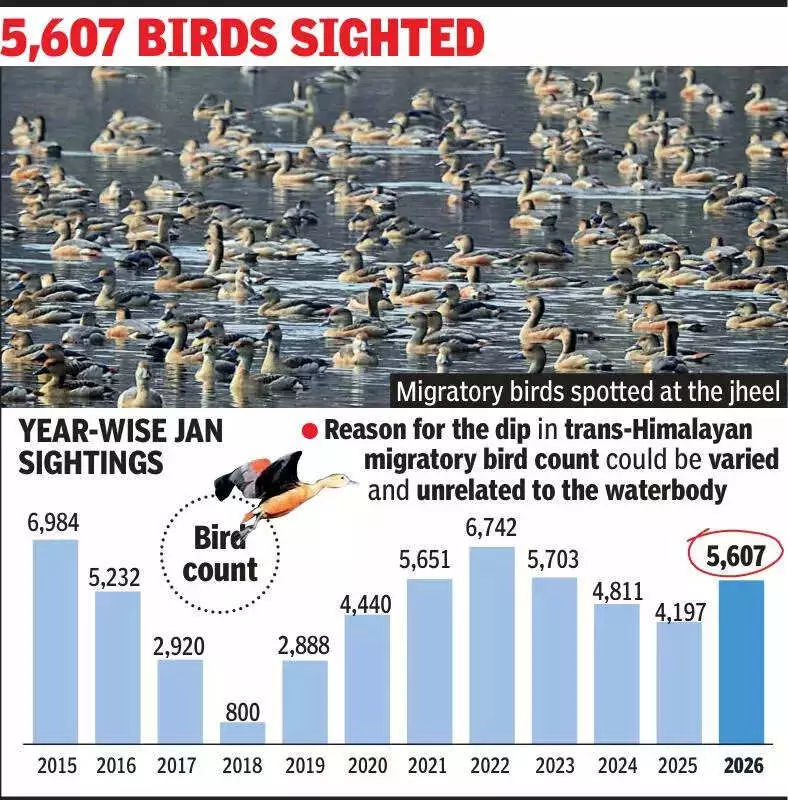
The annual bird census at Santragachhi Jheel in Howrah delivered both encouraging and concerning news this Saturday. Birdwatchers recorded a total of 5,607 migratory birds during the hour-long count. This figure represents a clear increase from last year's tally of 4,197 birds. However, the count remains slightly lower than the January 2023 census, which documented 5,703 birds.
Trans-Himalayan Migrants Show Worrying Decline
Despite the overall increase, birders expressed serious concern about one particular group. The number of trans-Himalayan migratory birds continued its downward trend this season. These rare species are highly sought after by bird enthusiasts. Their declining presence at Santragachhi Jheel has become a persistent reality.
Rudra Prasad Das, a Prakriti Sansad member and state coordinator of the Asian Water Birds Census, led the study. He acknowledged the concerning pattern. "The number of trans-Himalayan migrants recorded at Santragachhi has reduced over the years," Das stated. He listed affected species including Ferruginous duck, Gadwall, Northern pintail, Northern shoveler, Garganey, and Common teal.

Experts Suggest Multiple Possible Causes
Das explained that pinpointing a single reason for the decline proves difficult. "These birds could have discovered a water body that is more favourable," he suggested. Other local factors might also contribute. The depth of water at Santragachhi Jheel may have decreased. Foraging grounds in the surrounding area could have reduced as well.
Lina Chatterjee of Nature Mates Nature Club offered a broader perspective. She pointed to international events potentially impacting bird migration. "The war between Russia and Ukraine, now in its fourth year, may also have an impact on Siberian migrants," Chatterjee noted. She explained that affected breeding grounds in those regions could lead to fewer birds arriving in India. Changes along migration routes might also cause population shifts.
Management Issues and Conservation Efforts
Both Chatterjee and Das agreed on one crucial point. While international geopolitical developments remain beyond their control, local management of Santragachhi Jheel requires immediate attention. Das emphasized a simple solution. "If the Jheel is cleaned up on time, the numbers will shore up," he asserted.
Reports indicate that cleanup operations faced significant delays this season. Water hyacinth covered the entire Jheel, but removal only began in the last week of November. The work concluded in early January, well into the migration period. Chatterjee and other conservationists voiced concern over this timing. They feared the delayed cleanup could negatively impact bird arrivals.
Lesser Whistling Ducks Dominate the Count
One species single-handedly saved this year's census numbers. Lesser whistling ducks, which migrate from the Himalayan foothills, appeared in massive numbers. Birdwatchers counted 5,562 of these ducks, representing a staggering 99% of all migratory birds recorded at Santragachhi.
Their overwhelming presence sparked debate among observers. Some suggested these birds should now be considered resident species rather than migratory ones. The argument stems from their consistent and dominant numbers over several years.
Other Species Sighted During the Census
Beyond the lesser whistling ducks, observers documented several other bird species on Saturday. The list includes:
- Common moorhen
- Gadwall
- Barn swallow
- Bronze-winged Jacana
- Pond heron
- White-throated kingfisher
- Cinnamon bittern
- White-breasted water hen
- White wagtail
- Indian cormorant
- Intermediate egret
- Little cormorant
The census was conducted jointly by Prakriti Sansad and Nature Mates Nature Club. Their annual effort provides valuable data for understanding migration patterns and conservation needs at this important wetland habitat near Kolkata.