

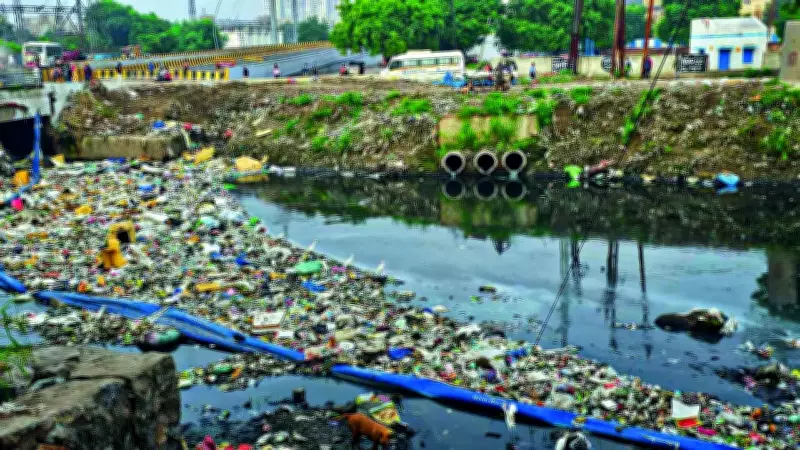
Supreme Court Takes Action on Yamuna Pollution Crisis
The Supreme Court of India has expressed serious concern over the continuous flow of untreated effluents and sewage from Delhi, Noida, and Ghaziabad into the Yamuna River. In a significant development on Thursday, the court appointed senior advocate K Parmeshwar as amicus curiae to assist in formulating a comprehensive treatment plan before discharge into the river system.
Legal Proceedings and Environmental Compensation
A bench comprising Justices Manoj Mishra and Manmohan was hearing civil appeals filed by the Noida Authority and the Delhi Jal Board. These appeals challenge a 2022 order from the National Green Tribunal that imposed an environmental compensation of Rs 150 crore for failing to prevent sewage inflow into the Kondli canal, which ultimately drains into the Yamuna River.
The court directed the Central Pollution Control Board (CPCB) to identify all relevant authorities involved in addressing this critical environmental issue and to help frame a coordinated response. Additionally, the State of Haryana has been added as a party to the case and has been asked to submit a detailed report outlining steps taken to prevent effluent discharge into the Yamuna or its tributaries.

Interconnected Pollution Problem
Referring to the tribunal's findings, the bench emphasized that the pollution issue concerns an irrigation canal in Noida that feeds directly into the Yamuna and eventually reaches the Ganga River. The court highlighted the failure of authorities in Delhi, Ghaziabad, and Noida to contain this persistent problem.
"Given the interlinked nature of these regions, untreated waste from multiple jurisdictions can easily enter shared water systems," the bench observed, underscoring the transboundary nature of the pollution crisis.
Need for Comprehensive Treatment Plan
The court stressed that "a comprehensive plan for treatment of effluent and sewage is the need of the hour to ensure that these rivers, which are national assets, remain protected." The bench noted particular challenges in coordinating data and action across multiple agencies operating in different jurisdictions.
"In such circumstances, we deem it appropriate to appoint a senior advocate, Supreme Court of India, K Parmeshwar, to assist us as an amicus curiae in the matter," the bench ruled, emphasizing the need for expert legal guidance in this complex environmental case.
Concerns Over Sewage Treatment Plant Delays
The court also reviewed an affidavit filed by the Uttar Pradesh government following its February 24 order. While acknowledging that authorities had cleared encroachments from the site identified for a proposed sewage treatment plant (STP), the bench raised serious concerns about project execution delays.
"What surprises us is that the site for the STP has been made available now in 2026, but it appears that an agency for setting up the STP at the site was shortlisted sometime in the year 2024," the bench noted. "The date of start of the project envisaged earlier was Oct 4, 2024, and now the date of completion has been extended to March 30, 2028."
The proposed STP is designed to treat 66 million liters per day (MLD) of sewage water. However, the court questioned whether this capacity would be sufficient, given the likelihood that sewage volumes may have increased significantly over time. The bench emphasized that the adequacy of the proposed treatment infrastructure must be thoroughly examined to ensure it meets current and future requirements.
Next Steps and Future Hearing
The Supreme Court has scheduled the next hearing in this critical environmental case for April 29. The appointment of an amicus curiae represents a significant step toward developing a coordinated, effective strategy to address the Yamuna pollution crisis that affects millions of people and threatens vital water resources across multiple states.
The court's intervention highlights the urgent need for inter-agency cooperation and timely implementation of sewage treatment infrastructure to protect India's precious river systems from further degradation.






