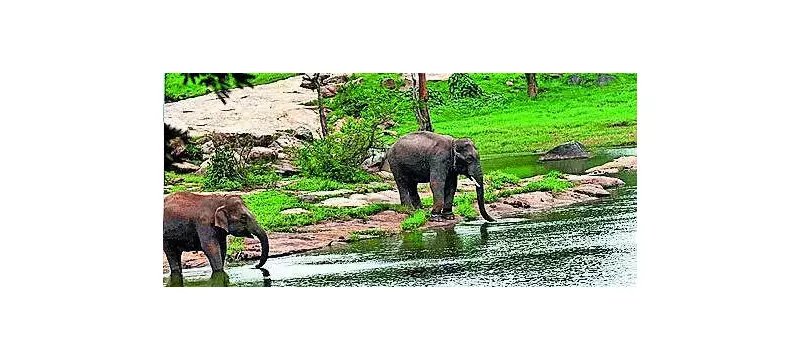
A Supreme Court-appointed committee is set to conduct a crucial inspection of Bengaluru's Bannerghatta National Park (BNP) this Friday. This visit comes in response to a legal petition challenging the Karnataka government's 2018 decision to drastically reduce the protected Eco-Sensitive Zone (ESZ) surrounding the park, a move that has drawn parallels to the Aravalli forest controversy.
The Core of the Dispute: A Shrinking Buffer
The conflict centers on the significant downsizing of the protective buffer around the national park. In a preliminary notification issued in June 2016, the Union Environment Ministry, in consultation with the state, proposed an ESZ of 268.9 square kilometers around BNP. However, the final notification released in November 2018 slashed this area to just 168.8 square kilometers.
More alarmingly, the width of this protective belt was curtailed from 4 kilometers to a mere 1 kilometer. A group of citizens and environmental activists, led by K Belliappa, approached the Supreme Court in May 2025, arguing that this reduction fundamentally undermines the very purpose of an ESZ, which is to act as a shock absorber for core forest areas.

Pressure from Development and Mining Interests
The petitioners have alleged that the decision to shrink the ESZ was heavily influenced by real estate developers and mining and quarrying interests eyeing the park's contiguous landscape. They contend that several ecologically sensitive pockets, including those surrounding well-documented elephant corridors, were deliberately excluded from the final protected zone.
Kiran Urs, a member of the Bannerghatta Nature Conservation Trust (BNCT), stated that the ESZ reduction appears to be an attempt to legitimize existing ecological violations. "The pockets excluded from the final notification contain active quarries, and there were efforts to build a township along the boundary, which will inevitably exert immense pressure on the ecosystem," Urs alleged.
This sentiment is echoed on the ground. Somashekhar, a farmer from Kaduchikkanahalli near the park, claimed he faced pressure to sell his land even after the final ESZ notification was issued. "However, I continue to hold my land and grow ragi," he affirmed.
Ecological Impact and the Friday Inspection
On Friday, members of the Supreme Court-appointed Central Empowered Committee (CEC), led by Chandra Prakash Goyal, will survey the park and its surroundings. They are scheduled to speak with senior Karnataka officials, including the chief secretary, to assess the ecological impact of the ESZ reduction.
Activists warn that the shrinking buffer threatens one of Bengaluru's last major green lungs. Keerthan Reddy of BNCT described Bannerghatta as one of the best ecological gifts for the burgeoning metropolis. "No other city can boast this vast green landscape in its backyard, dotted with a salubrious population of tigers, elephants, leopards, and countless other species," he said.
Reddy also cautioned about the rising incidents of human-animal conflict in the region. "Violations like these would only add to the problem," he warned, emphasizing that a strong ESZ is vital for both wildlife conservation and human safety. The CEC's findings from this inspection could play a pivotal role in the ongoing legal battle and the future of Bannerghatta's fragile ecosystem.