In a significant environmental intervention, the Supreme Court of India on Monday put a hold on its own earlier order that had accepted a contentious new definition for the Aravalli mountain range. The court expressed grave concern that the proposed "100-metre rule" could devastate the fragile ecosystem by opening up vast protected areas to mining and real estate development.
The Controversial Definition and Its Potential Impact
On November 20, the apex court had approved recommendations from a committee formed by the Union Ministry of Environment, Forest and Climate Change (MoEFCC). This panel had proposed defining the Aravalli Hills strictly as landforms that rise at least 100 metres above the local relief. The court's initial acceptance was aimed at creating a "uniform definition" to curb illegal mining.
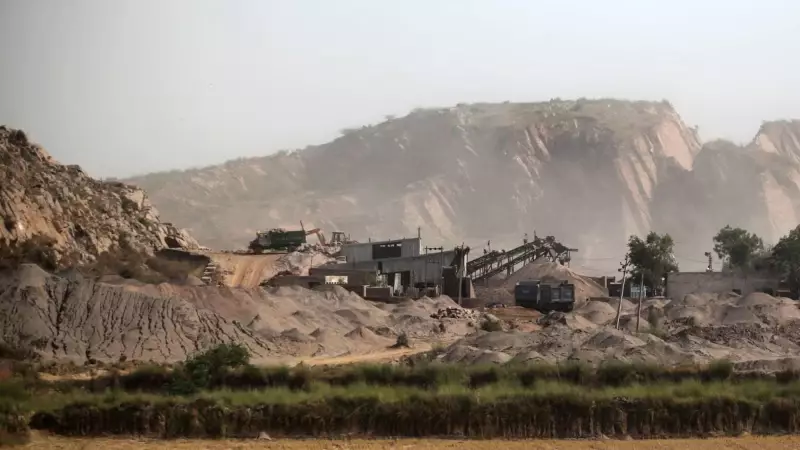
However, a report by The Indian Express a week later, citing an internal assessment by the Forest Survey of India (FSI), revealed the alarming consequences. The new criteria could potentially strip legal protection from nearly 90% of the Aravalli range spanning several states. This would have left huge tracts of land vulnerable to mining and construction, with severe implications for air quality, groundwater, and biodiversity, particularly in the already polluted National Capital Region (NCR).

Public Outcry and Judicial Re-think
The court's initial nod triggered widespread protests across Rajasthan, Haryana, and other regions. The "Save Aravalli" campaign gained massive traction on social media, with videos of large public gatherings going viral. Adding political heft to the movement, former Rajasthan Chief Minister Ashok Gehlot launched a social media campaign on December 18, changing his profile picture and releasing videos to counter the Centre's stance.
Faced with this backlash and the stark data, the Supreme Court took suo motu cognizance to re-examine the issue. The bench flagged that its earlier order could have "dangerous" consequences, leading to the stay on December 29. This move was hailed by environmentalists and local communities who had been campaigning vigorously.
Government Response and The Path Ahead
Amid the growing controversy, the Environment Ministry announced a freeze on granting new mining leases across the Aravalli range from Delhi to Gujarat. This moratorium will remain until a comprehensive "Management Plan for Sustainable Mining" is finalized. The Indian Council of Forestry Research and Education (ICFRE) has been tasked with preparing this science-based plan and identifying additional no-mining zones. The ministry clarified that existing mines would continue to operate under stricter safeguards.
Environmentalists celebrated the court's intervention but stressed the need for inclusive policy-making. "This judicial intervention was much needed and came at the right time. We had maximum objection to the definition. The committee to be formed should have ecologists, environmentalists, and not just bureaucrats," said environmental activist Bhavreen Kandhari in a statement to ANI.
Echoing this sentiment, environmentalist Vimlendu Jha told ANI, "The Court made an observation from its personal notes that it is crucial to remove the confusion from the definition of Aravalli… This is a welcome move by the Supreme Court."
The stay order brings the spotlight back on the perennial conflict between environmental conservation and developmental pressures. The Supreme Court's final decision on defining the Aravallis will now await further deliberations, with the future of one of India's oldest and most critical mountain ranges hanging in the balance.