The Science Behind Rainbows: How Light and Water Create Nature's Colorful Arc
A rainbow often appears like a fleeting miracle in the sky, emerging after rainfall and vanishing before we can fully appreciate its splendor. Yet beneath this breathtaking display lies a fascinating interplay of light, water, and scientific principles that transform ordinary sunlight into one of nature's most spectacular visual experiences.
The Hidden Colors in Sunlight
While sunlight appears white to our eyes, it actually contains a complete spectrum of colors blended together. Each color possesses a distinct wavelength and energy level. These colors travel harmoniously until they encounter conditions that cause them to separate. Rain provides the perfect environment for this separation, allowing the concealed colors to emerge vividly and distinctly, creating the rainbow we admire.
Raindrops as Natural Prisms
Every individual raindrop suspended in the atmosphere functions as a miniature natural prism. When sunlight enters a raindrop, it slows down and bends through a process called refraction. The light then reflects off the inner surface of the droplet before bending again as it exits. These multiple refractions cause the different colors within sunlight to spread apart rather than remain combined, ultimately forming the vibrant arc we recognize as a rainbow.

The Consistent Color Sequence
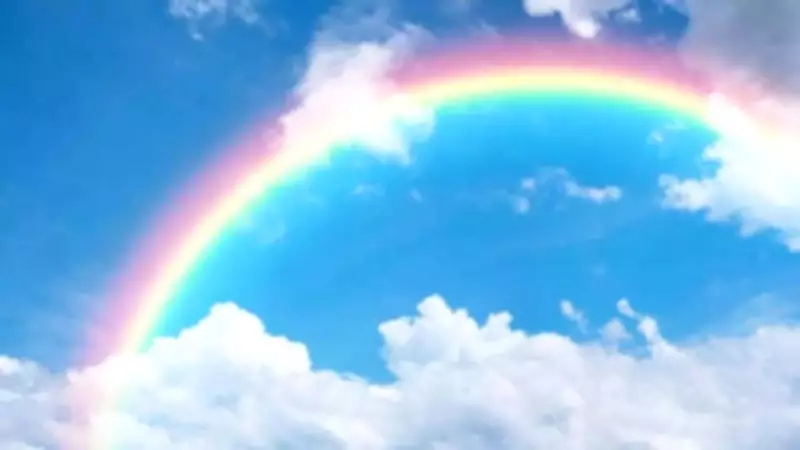
Rainbows always display colors in the same predictable order: red, orange, yellow, green, blue, indigo, and violet. This consistency occurs because each color bends at a slightly different angle when passing through water. Red light bends the least, positioning it on the rainbow's outermost edge, while violet light bends the most, placing it on the innermost portion. This precise bending pattern ensures the familiar color sequence appears every time atmospheric conditions are right.
The Origin of the Seven-Color Concept
In reality, a rainbow presents a continuous spectrum where colors gradually transition into one another without distinct boundaries. The notion of seven specific colors originated with scientist Isaac Newton, who divided the spectrum into seven segments partly due to the symmetry of the number seven and its correspondence with musical notes. While our eyes can perceive numerous shades between these colors, the seven-color framework provides a simplified way to understand and describe the phenomenon.
Why Rainbows Curve
The characteristic curved shape of rainbows results from the specific angles at which light reaches our eyes after passing through raindrops. Each color becomes visible at a particular angle—approximately 42 degrees for red light. Since raindrops are distributed throughout the sky, these angles collectively create a circular pattern. From ground level, we typically observe only half of this circle, resulting in the iconic arc-shaped rainbow that graces our skies.
Science Enhances the Wonder
While physics thoroughly explains rainbow formation, this scientific understanding doesn't diminish their magic—it actually enhances our appreciation. The transient beauty of rainbows reminds us that nature often combines aesthetic wonder with precise physical principles. A rainbow serves not only as a visual delight but also as a gentle lesson in science, elegantly written across the sky for those who pause to observe and understand.
This article is intended for general educational and informational purposes. Scientific concepts have been simplified to make them accessible to readers of all ages.