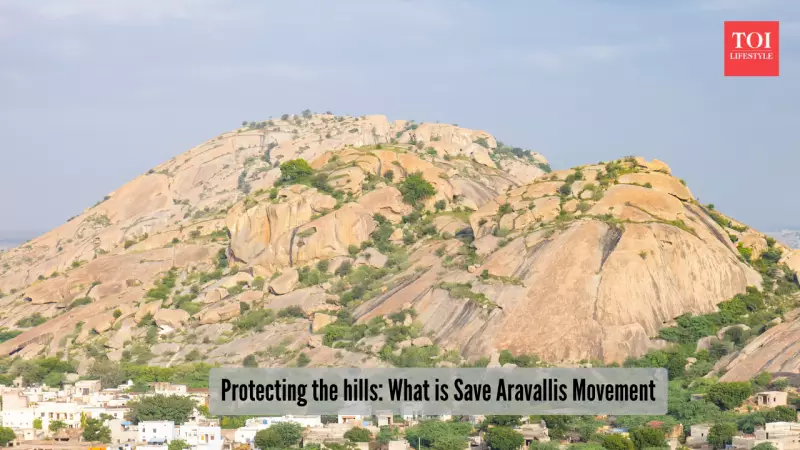
In a landmark environmental intervention, the Supreme Court of India has established a uniform definition for the Aravalli hills and imposed a ban on all new mining leases across four states. This decision aims to strengthen conservation efforts for one of the world's oldest mountain ranges, which is vital for the ecological health of northern India.
What the Supreme Court Ruling Means
The court has now defined the Aravalli hills as natural formations with a height of 100 meters or more. This definition applies uniformly across Delhi, Haryana, Rajasthan, and Gujarat. As a direct consequence, the ruling puts a complete stop to the granting of any fresh mining leases in these designated areas.
While this move is designed to close legal loopholes that allowed inconsistent state-level rules to undermine protection, it has sparked fresh concerns. Environmental activists fear that by setting the bar at 100 meters, significant stretches of the ancient range that are lower in height could be excluded from the protective shield. This, they argue, might make these areas vulnerable to acquisition by governments and real estate developers for construction projects.

Why the Aravalli Range is Indispensable
The Aravallis are not merely hills; they are an ancient ecological fortress nearly two billion years old. Stretching approximately 650 kilometers, they serve as a crucial barrier, preventing the expansion of the Thar Desert into the fertile plains of north-west India. Their role extends to moderating the regional climate, steering dry winds, reducing dust storms, and recharging groundwater through their rocky structures.
The range is a biodiversity hotspot and supports major rivers like the Chambal, Sabarmati, and Luni. Its forests and scrublands act as vital wildlife corridors connecting protected areas. However, its richness in minerals like limestone, marble, and copper has led to decades of intensive mining, particularly since the 1990s. Unchecked quarrying has resulted in flattened landscapes, plummeting water tables, and increased air pollution in the National Capital Region.
The Rise of the Save Aravalli Movement
The recent court order has galvanized the Save Aravalli movement, a citizen-led campaign born from growing public alarm over environmental crises linked to the hills' degradation. Issues like Delhi's severe smog, Gurugram's water scarcity, and Jaipur's rising temperatures are all connected to the loss of these natural barriers.
The movement advocates for:
- Science-led and consistent conservation policies.
- Strong safeguards for biodiversity and ecological connectivity.
- Strict enforcement of laws in line with India's environmental commitments.
This is not just an ecological debate. The Aravallis are lifelines, providing water security, climate regulation, and habitat for millions. Choosing to protect them through smart policies and restoration is a choice for sustainable growth and securing the future of North India against desertification, water crises, and climate vulnerability.