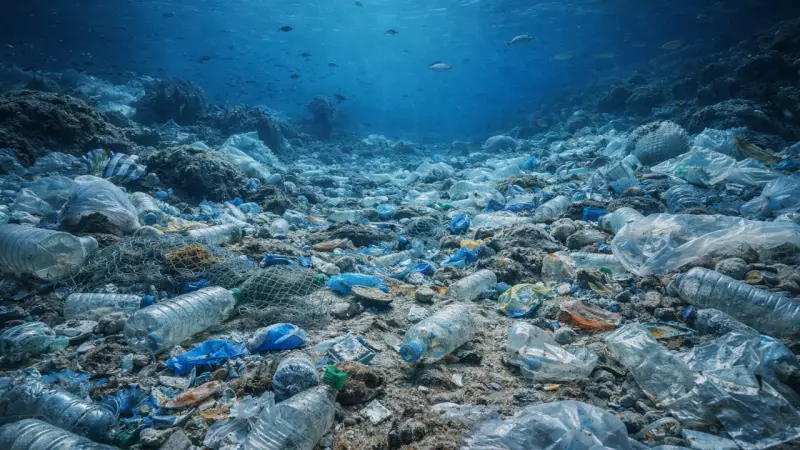
Hidden Ocean Crisis: Seafloor Becomes Permanent Dumping Ground for Plastic Waste
For years, the public perception of ocean pollution has focused on visible surface debris: floating plastic bottles, drifting bags, and beaches strewn with litter. However, scientists now reveal that the most dangerous accumulation is occurring far below the surface, on the seafloor, where waste settles and persists for decades, creating a hidden environmental crisis.
Global Scientific Review Sounds Alarm
A comprehensive global scientific review led by Professor Miquel Canals at the University of Barcelona has issued a stark warning. The study indicates that deep-sea basins and underwater canyons are transforming into collection zones for human-made waste. This pollution poses not only environmental threats but also severe biological risks, as plastic materials and abandoned fishing gear continue to harm marine life long after they vanish from sight.
The research, published in 2021 in Environmental Research Letters under the title “The quest for seafloor macrolitter”, consolidates existing scientific knowledge about deep-sea debris. It examines monitoring methods and explains why controlling this pollution is exceptionally challenging. The international team behind the review includes prominent marine litter specialists such as Christopher K. Pham, Melanie Bergmann, Georg Hanke, Erik van Sebille, and François Galgani. The work also reflects broader European research initiatives involving organizations like the European Commission’s Joint Research Centre and Germany’s Alfred Wegener Institute.

The Sinking Plastic Problem
While floating plastic often captures public attention, a significant portion of marine debris ultimately sinks to the seabed. Once waste reaches deep waters, it becomes extremely difficult to locate and even harder to remove. Consequently, the seafloor acts as a long-term storage site for plastics, metal, glass, and fishing gear, allowing pollution to accumulate silently over time.
One of the most severely affected areas identified by researchers is the Strait of Messina, located between Italy and Sicily. Surveys of its underwater canyon system have recorded alarming debris densities, ranging from approximately 121,000 items per square kilometre to as high as 1.3 million items per square kilometre. The region’s unique geography and strong ocean currents funnel litter into narrow deep-sea pathways, where it concentrates into dense clusters rather than dispersing evenly.
Underwater Canyons: Channels to the Deep
Marine litter does not simply sink vertically. It can be pushed offshore by storms, carried by ocean currents, and then drawn into deep basins through submarine canyons. These canyons function as natural channels, transporting waste away from coastlines and concentrating it far below the surface. This mechanism explains why deep-sea debris can appear in areas seemingly remote from human activity, as the ocean’s constant movement carries waste along with it.
Plastics Dominate and Fragment
Plastics constitute the largest share of seafloor debris in numerous studies, primarily due to their lightweight nature, widespread use, and slow degradation rates. Over time, larger plastic items break down into smaller fragments, increasing the number of pollutants in the environment and exposing a wider range of marine species to harm. Unlike materials that corrode or dissolve more rapidly, plastic can persist for extended periods in deep water, where low temperatures and limited biological activity hinder decomposition.
Disturbingly, plastic debris has been recorded at extreme depths, including near the Mariana Trench, the deepest part of the ocean. This discovery underscores a troubling reality: even the most remote marine environments are not immune to global waste pollution. This is no longer merely a coastal issue; it has evolved into a planet-wide crisis.

Ghost Fishing: A Long-Term Threat
Among the most hazardous forms of seafloor debris is abandoned fishing gear. Nets, ropes, and lines can continue to capture and kill marine animals for years through a process known as ghost fishing. Because this equipment is designed to trap living creatures, it inflicts damage in ways ordinary litter cannot. It also harms habitats, particularly when heavy nets drag across coral reefs or become entangled in seabed structures.
How Seabed Debris Harms Marine Life
Scientists caution that seafloor pollution adversely affects marine animals through three primary mechanisms:
- Entanglement: Wildlife becomes ensnared in nets and ropes, leading to injury, starvation, or drowning.
- Ingestion: Animals consume plastic, either by mistaking it for food or swallowing it accidentally during feeding.
- Habitat Disruption: Debris smothers the seabed, damages corals, or alters already fragile ecosystems.
Researchers estimate that hundreds of marine species worldwide are impacted by marine debris, with long-term risks that are still under investigation.
Challenges in Tracking Deep-Sea Pollution
Unlike surface pollution, deep-sea debris cannot be easily monitored. Scientists rely on advanced tools such as remotely operated vehicles, deep-sea cameras, sonar mapping, and specialized research vessels. However, these surveys cover limited areas, suggesting that the problem is likely undercounted in many regions globally. This lack of visibility contributes to the persistence of seafloor pollution, as issues that are not easily seen are often overlooked.
Prevention: The Only Viable Solution
Large-scale cleanup of the deep seafloor is impractical in most locations due to high costs, technical difficulties, and the risk of disturbing sensitive ecosystems. Therefore, scientists and environmental organizations emphasize preventing waste from entering the ocean in the first place. Key strategies include:
- Improving waste collection and management on land
- Strengthening enforcement against illegal dumping
- Reducing plastic leakage through rivers and ports
- Minimizing the loss of fishing gear that becomes deadly ghost equipment
The message from researchers is unequivocal: the ocean is not a bottomless trash bin. Waste that enters it can settle on the seafloor for decades, transforming the deep sea into a concealed rubbish repository that marine life cannot escape.