

The Hidden World of Underwater Mountains
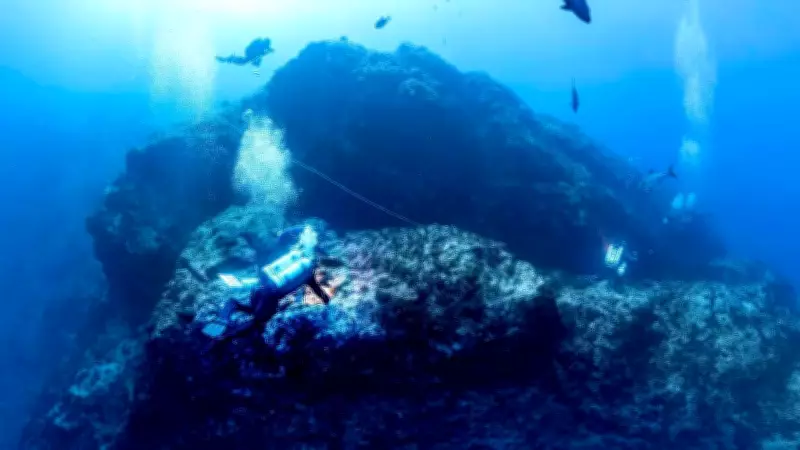
Beneath the vast, rolling surface of the world's oceans lies a landscape of monumental proportions. These are not the familiar snowy peaks of terrestrial mountains, but colossal underwater volcanoes that rise dramatically from the seafloor. Some of these submerged giants tower more than a kilometre high, with a select few even breaking the ocean's surface to form tiny, remote islands. According to scientific estimates, there may be over 100,000 of these geological formations, known as seamounts, scattered across the global seabed. Astonishingly, fewer than 0.1% of these underwater mountains have been thoroughly explored by researchers.
Seamounts as Thriving Marine Ecosystems
Far from being mere rocky structures, seamounts function as vibrant, living cities teeming with marine biodiversity. A casual observer, such as a diver or researcher swimming past, might initially perceive little activity. However, these underwater mountains host complex ecosystems that span from the frozen waters of the North Atlantic to the abyssal depths of the tropical Pacific. As reported by the BBC, more than 100,000 seamounts are distributed worldwide, each contributing to the ocean's ecological richness.
Why Seamounts Attract Sharks and Other Predators
The unique topography of seamounts—characterized by sharp rises from the deep ocean, along with ridges, craters, and flat tops—plays a crucial role in attracting marine life. Ocean currents collide with these slopes, stirring the water like giant mixing spoons. This process forces cold, nutrient-rich water to rise from the depths, a phenomenon known as upwelling. The resulting bloom of tiny plankton draws in schools of fish, which in turn lure apex predators such as sharks.

Marine scientist Sam Weber, who spent years studying the marine environment around Ascension Island—itself the tip of an undersea volcano—reported that the nearby Southern Seamounts harbored 41 times more sharks than the surrounding open ocean. "It was like living in a small village underwater," Weber reportedly said, highlighting the dense concentration of life around these structures.
Scientists actively debate the reasons behind shark congregations at seamounts. One prevailing theory is the "oasis hypothesis," which posits that seamounts generate life and energy directly on-site, creating self-sustaining ecosystems. Alternatively, the "hub hypothesis" suggests that sharks feed elsewhere but regularly return to seamounts, much like commuters checking into a station. Weber believes both mechanisms may be at play, with some sharks residing permanently while others come and go.
Evidence supporting this includes tracking data from a tagged silky shark that reportedly left its seamount at night to hunt, traveled up to 100 kilometers away, and returned by morning—akin to a daily check-in. Additionally, the "service station hypothesis" proposes that upwelling currents allow sharks to float and conserve energy, acting as a natural conveyor belt before they venture out to feed again.
The Fragile Nature of Seamount Ecosystems
Seamounts support an astonishing array of marine life, from corals and whales to turtles and tunas. Many species inhabiting these environments are slow-growing and highly vulnerable to human activities. Bottom trawling, a destructive fishing method, can devastate these ecosystems in mere hours, reducing vibrant habitats to bare rock. Recovery can take decades, and some species may never return, leading to irreversible biodiversity loss.
The ecological influence of seamounts extends beyond their immediate vicinity through a "halo effect." Even several kilometers from the summit, predator numbers remain significantly higher than in the open ocean. These underwater mountains serve as safe havens; for instance, pregnant marbled electric rays gather here, and deepwater corals thrive on slopes thousands of metres down, underscoring their role as critical refuges.

Conservation Efforts and Global Initiatives
Conservation initiatives are gaining momentum to protect these vital marine habitats. Portugal has established a protected area around the Gorringe seamount, while Ascension Island's waters are now off-limits to commercial fishing. The United Nations has called for a global halt to bottom trawling on seamounts by 2026. Despite these steps, experts emphasize that partial protection is insufficient. Comprehensive safeguarding of entire ecosystems is essential to preserve biodiversity.
Sharks depend on these underwater mountains for survival, and conversely, the health of seamount ecosystems relies on the presence of sharks and other keystone species. As research continues to unveil the secrets of these submerged peaks, the urgency to protect them grows, highlighting the interconnectedness of marine life and the need for sustained conservation efforts.





