The bustling urban conglomerate of Chandigarh, Mohali, and Panchkula, collectively known as the Tricity, has been plunged into a deep freeze. A severe cold wave has tightened its grip on the region, prompting the India Meteorological Department (IMD) to sound a high-level alarm. The weather office has issued a red alert for dense to very dense fog over the next two days, warning of significant disruptions to road, rail, and air traffic.
Mercury Plummets, Visibility Drops to Zero
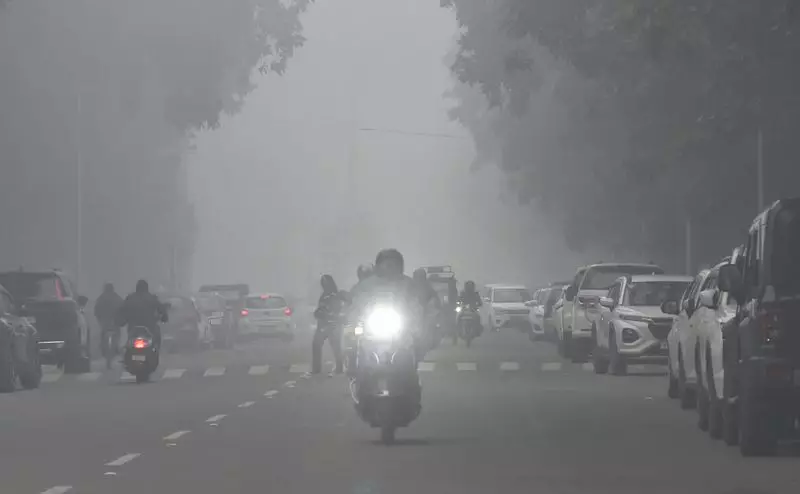
Residents woke up to another bitterly cold morning on Tuesday, with the minimum temperature in Chandigarh hovering at a chilling 4.4 degrees Celsius. This marks a continuation of the intense cold spell that has seen temperatures consistently dip below the seasonal average. The real menace, however, lies in the thick blanket of fog that has enveloped the area. Visibility in many parts of the Tricity dropped dramatically, at times falling to less than 50 meters during the early hours. This severe reduction in sightlines has turned commuting into a hazardous ordeal, with vehicles forced to crawl with hazard lights on.
The IMD's red alert categorically states that dense to very dense fog conditions are very likely to persist. Such intense fog episodes pose serious risks, including:

- High chance of major traffic disruptions and road accidents.
- Delays and cancellations of train services.
- Impact on flight operations at the Chandigarh International Airport.
- Health hazards for pedestrians and two-wheeler riders exposed to the cold.
Disruption and Advisory for Citizens
The cascading effects of the cold wave and fog are being felt across daily life. Road travel has become perilously slow, leading to long traffic snarls. The railway authorities have reported multiple trains running behind schedule due to the foggy conditions. Local administrations and the police have issued advisories, urging people to exercise extreme caution.
Commuters are advised to avoid unnecessary travel during early morning and late night hours when the fog is at its peak. For those who must venture out, using fog lights, driving at low speeds, and maintaining a safe distance from other vehicles is paramount. Pedestrians are encouraged to wear reflective clothing or carry lights to make themselves visible to drivers.
A Prolonged Chill and Health Warnings
Weather analysts indicate that the prevailing conditions are a result of a combination of factors, including light winds and moisture in the lower atmospheric levels. The cold wave is expected to persist for the next few days, with only a slight moderation possible later in the week. However, the dense fog alert remains firmly in place, indicating no immediate respite from the visibility crisis.
Medical professionals have raised concerns about the health impact, especially on the elderly, children, and those with respiratory ailments. The combination of cold air and fog can exacerbate conditions like asthma, bronchitis, and seasonal flu. Doctors recommend staying warm, wearing layered clothing, covering the head and ears, and consuming warm fluids to guard against the cold. Vulnerable groups are advised to limit their exposure to the outdoors during this severe weather phase.
As the Tricity shivers and navigates through near-zero visibility, the IMD's red alert stands as a critical warning. The community is bracing for more challenging mornings ahead, with the hope that the sun will soon break through the dense, freezing fog.