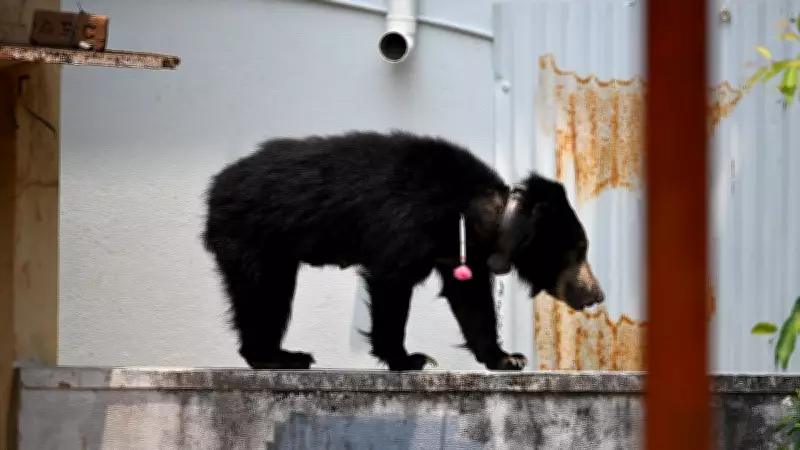
Sloth Bear Fitted with Radio Collar After Captured Near Shivamogga Airport
In a significant wildlife operation, the forest department has successfully captured a sloth bear that had strayed into human habitation in Sogane village, located in the Shivamogga district of Karnataka. The incident, which caused considerable alarm among local residents, culminated in the safe capture and subsequent release of the bear back into its natural habitat.
Airport Incident Sparks Local Panic
According to reports from local villagers, the sloth bear ventured into the premises of the airport at Sogane, creating a wave of panic and concern among the community. The unexpected appearance of the wild animal in a populated area prompted immediate action from authorities to ensure public safety and the well-being of the bear.
The forest department swiftly mobilized a team to address the situation, employing specialized techniques to capture the bear without causing harm. This proactive response highlights the department's commitment to managing human-wildlife conflicts effectively in the region.

Radio Collaring for Enhanced Wildlife Monitoring
Following the capture, officials took the opportunity to fit the sloth bear with a radio collar, a crucial tool for modern wildlife conservation. This device will allow forest authorities to:
- Track the bear's movements and migration patterns in real-time
- Monitor its behavior and habitat preferences more closely
- Gather valuable data to inform future conservation strategies
- Prevent potential future conflicts by anticipating its movements
The radio collaring initiative represents an important step in Karnataka's ongoing efforts to protect its diverse wildlife while balancing the needs of local communities.
Safe Release Back into Natural Habitat
After the successful fitting of the radio collar, the forest department carefully transported the sloth bear to a suitable location within its natural habitat and released it. This approach ensures the animal's welfare while minimizing disruption to both wildlife and human populations in the area.
The operation in Shivamogga serves as a model for how wildlife authorities can respond to similar incidents across India, combining immediate action with long-term conservation planning through technological interventions like radio telemetry.