

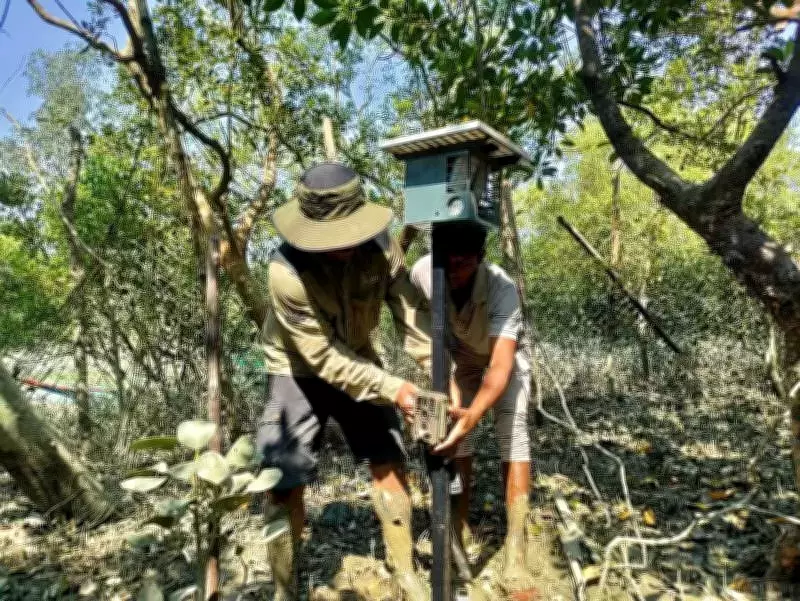
Smart Scarecrows Deployed in Sundarbans to Combat Tiger Straying Incidents
In a groundbreaking move to address the escalating human-animal conflict in the Sundarbans, authorities have introduced 'smart scarecrows' as a new deterrent against straying tigers. This initiative follows previous measures such as nylon nets, solar lights, and AI cameras, marking a significant step in wildlife conservation efforts.
Rising Tiger Straying Cases Prompt Innovative Solutions
The South 24 Parganas forest division of the Sundarbans has witnessed a concerning increase in tiger straying incidents. In 2024 alone, there were at least 15 cases of tigers venturing into fringe villages, with two reported last year and a recent incident in Jharkhali's Tridibnagar. These events highlight the urgent need for effective conflict mitigation strategies.
What Are ANIDERS and How Do They Work?
Known as ANIDERS (Animal Intrusion Detection and Repellent System), these smart scarecrows are solar-powered devices designed to deter tigers, leopards, and other big cats from entering human habitations and agricultural fields. According to Abhishek Ghosal of the Wildlife Trust of India (WTI), which has provided four devices to the forest department, ANIDERS use sensors to trigger loud buzzes of sound and intense light alarms. This non-lethal approach startles animals, pushing them back without causing harm.

Key features of ANIDERS include:
- Solar-powered operation for sustainability
- Sensor-based activation for immediate response
- A coverage range of 25-30 meters in a 180° angle from the center point
- Deployment in strategic locations, such as near forest-village interfaces
Strategic Deployment and Monitoring in the Sundarbans
On Tuesday, four ANIDERS devices were installed in the Herobhanga compartment of the Raidighi range, areas prone to human-tiger conflicts. Four more units are scheduled for installation soon. These devices are placed at key points where tigers cross canals to enter villages, with plans to integrate AI cameras for generating alerts and photographic evidence.
Samrat Paul, field officer of the Sundarbans Tiger Project at WTI, emphasized that each device offers extensive coverage, enhancing its effectiveness in the challenging mangrove ecosystem. The setups will be closely monitored by WTI and the forest department to assess their performance.
Broader Applications and Success in Other Regions
ANIDERS have already been deployed in other conflict-prone areas, such as Uttar Pradesh's Pilibhit and Katarniaghat. In Pilibhit, which faces the unique issue of 'sugarcane tigers'—tigers adapted to living in sugarcane fields—the system has shown promise. The Pilibhit Tiger Reserve has experienced a sharp increase in tiger population from 2014 to 2022, exceeding its carrying capacity, making such innovations crucial.
Focus on Sustainable and Non-Lethal Approaches
Divisional forest officer Nisha Goswami of South 24 Parganas stated that the long-term strategy emphasizes sustainable, cost-effective, and non-lethal methods for conflict mitigation. This aligns with conservation goals, as the Indian Sundarbans is home to about 101 tigers, with numbers nearing carrying capacity—the maximum stable population an area can support without escalating conflicts.
Recent incidents, such as a tiger straying in Deulbari village about 10 months ago, underscore the importance of these efforts. With over 20 tigers in the South 24 Parganas division, including ranges like Matla, Ramganga, and Raidighi, proactive measures are essential to safeguard both wildlife and local communities.






