South Bihar Wetlands Experience Significant Waterbird Population Growth
The wetlands of south Bihar have reported a remarkable and encouraging increase in waterbird populations this year, marking a rare positive development in ecological conservation. This uplifting trend has been documented through the latest Asian Waterbird Survey, which was conducted collaboratively by scientists from the Central University of South Bihar (CUSB) and officials from the state forest department.
Comprehensive Survey Methodology and Launch
The extensive survey was carried out over a three-week period from January 18 to February 8, following an official flag-off ceremony led by the chief wildlife warden and the Gaya circle nodal officer. A dedicated team of experts, under the leadership of Ram Pratap Singh, who heads the life science department at CUSB, meticulously covered 12 distinct wetlands spread across six districts in the southern region of Bihar.
Notable Findings and Population Increases
Survey results indicate that bird numbers in several wetlands were substantially higher compared to the previous year, with similar positive trends observed at most surveyed locations. Ram Pratap Singh provided detailed insights, highlighting that the Indrapuri Barrage Wetland, one of Bihar's largest wetland areas, supported an impressive 7,829 birds representing 66 different species this year.

This represents a dramatic increase from last year's count of only 2,268 birds from 58 species, marking a more than threefold growth in population. Eight new species were added to the wetland's official checklist this year, with the Common shelduck being sighted for the very first time in this region.
Migratory Bird Contributions and Ecological Indicators
The majority of the recorded counts consisted of long-distance migratory ducks, including species such as Gadwall, Red-crested pochard, Eurasian wigeon, Common teal, Cotton teal, Northern pintail, and Ruddy shelduck. This substantial surge in migratory bird populations has not only enhanced the visual appeal of the region but also serves as a promising indicator of ecological and environmental improvements.
Key Habitat Sites and District-Level Observations
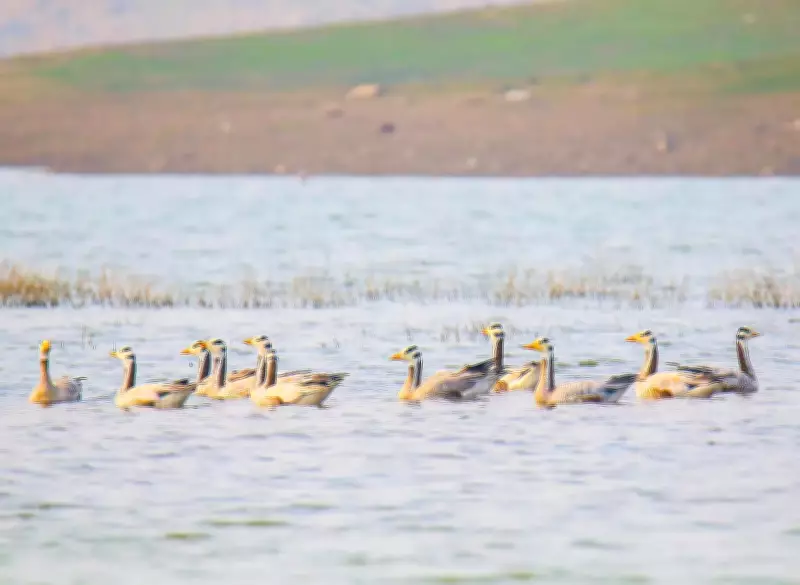
In Nawada district, Hardiya Dam and Jog Jalashay emerged as particularly important habitats, recording 2,061 and 1,975 birds belonging to 58 and 50 species respectively. The sighting of 15 Bar-headed geese at Jog Jalashay was viewed as a particularly positive indicator, suggesting improved ecological conditions capable of supporting high-altitude migratory species.
Barandih wetland in Gaya district also demonstrated a modest increase in bird populations, reinforcing its status as a wetland of national importance. Meanwhile, Dharaut pond in Jehanabad district presented a pleasant surprise, supporting 2,301 waterbirds that included large congregations of Northern pintail, Northern shoveler, Gadwall, Eurasian wigeon, and Black-tailed godwit.
Gangetic River Basin Survey Results
The survey also encompassed the Gangetic river basin stretching from Mahuli ghat to Maner ghat in Bhojpur district, where researchers recorded 2,008 birds from 45 different species. Large flocks of Small pratincole, Little stint, Temminck's stint, and Dunlin created striking visual displays along the riverbanks. Additionally, several Gangetic dolphins were sighted during the survey, adding to the biodiversity observations.
Conservation Implications and Future Planning
According to Singh, the survey extended beyond mere population counts to include comprehensive assessments of habitat conditions. The research team collected vital data on multiple factors including:
- Habitat suitability for various species
- Levels of human intervention in wetland areas
- Pollution indicators and water quality parameters
- Water depth measurements across different sites
- Dependence of local communities on wetland resources
- Incidents of poaching and conservation threats
This multifaceted data collection will provide essential information for developing long-term conservation strategies and management plans for Bihar's valuable wetland ecosystems.