

South Korea's Solar Trees: A Dual-Use Solution for Energy and Forest Protection
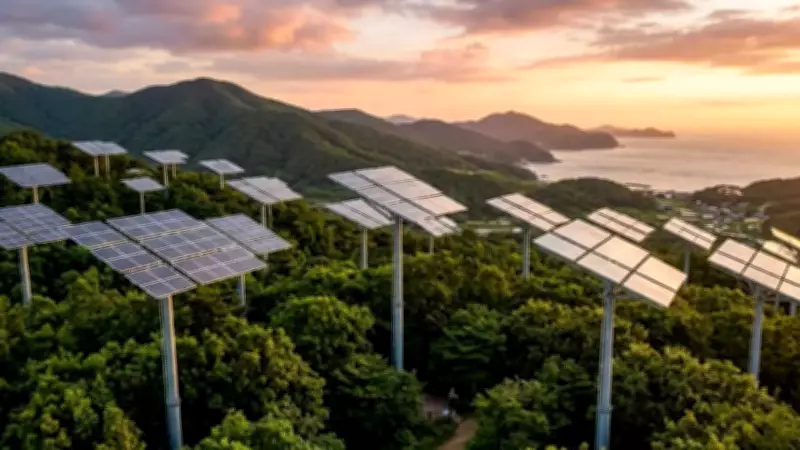
South Korea is pioneering an innovative approach to renewable energy that tackles the critical conflict between land use for solar power and forest conservation. Traditional solar farms often necessitate extensive deforestation, with studies in Scientific Reports revealing that conventional installations can eliminate up to 98% of existing tree biomass. However, a groundbreaking design known as 'solar trees' is changing this narrative by integrating vertical photovoltaic arrays within forest canopies.
How Solar Trees Preserve Forests While Generating Power
The primary challenge for large-scale solar energy in mountainous areas like South Korea is the need to clear trees that serve as vital carbon sinks. Solar trees, which consist of tall poles equipped with photovoltaic panels, address this issue by allowing projects to maintain up to 99% canopy cover. Research published in Scientific Reports demonstrates that these vertical systems leave the forest floor and understory largely undisturbed, in stark contrast to ground-mounted arrays that nearly completely deforest sites. This design not only protects biodiversity but also ensures the area continues to function as an active carbon sink, absorbing carbon dioxide while producing clean electricity.
3D Simulations Validate Efficiency of Solar Trees
To optimize performance despite partial shading from surrounding trees, researchers utilized 3D geospatial information and simulations to determine the ideal height and placement for solar trees. These studies confirmed that solar trees can generate equivalent power to conventional solar farms without the associated environmental footprint. By strategically positioning the arrays to clear natural canopies, this technology maximizes energy output while minimizing ecological disruption, offering a sustainable alternative for renewable energy projects.

Why Land-Scarce Nations Are Embracing Solar Trees
Solar trees represent a specialized application of agrivoltaics, a concept promoted by organizations like the International Energy Agency (IEA) and the US Department of Energy (DOE) for co-locating solar energy and agricultural activities. Government-sponsored research indicates that countries with limited landmass, committed to achieving net-zero emissions by 2050, must leverage vertical space rather than horizontal land. This approach is particularly crucial for nations facing deforestation pressures, as it enables green energy generation without sacrificing forested areas.
Solar Trees as a Climate Change Mitigation Tool
Preventing forest destruction is a key recommendation from the Intergovernmental Panel on Climate Change (IPCC) for climate-change mitigation. Solar trees contribute to this goal by avoiding deforestation, thereby preserving carbon sinks that absorb CO2 while generating carbon-free electricity. Compared to conventional solar projects that often lead to large-scale deforestation, this dual-use design results in a net-positive environmental impact, aligning with global efforts to combat climate change and promote sustainable development.






