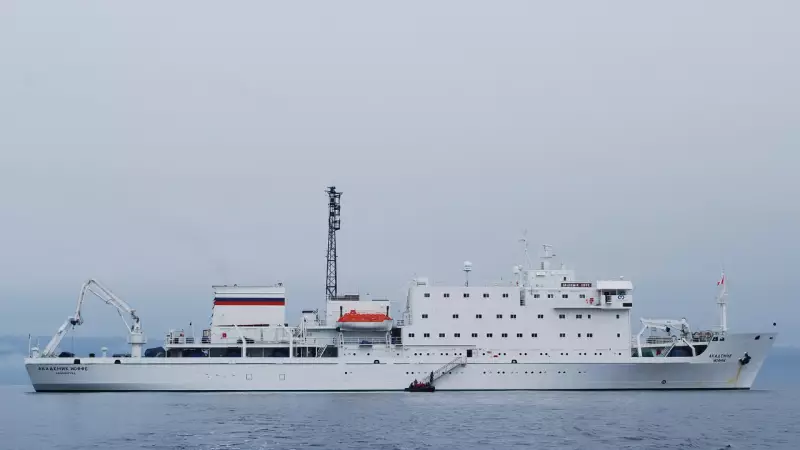
Russian Scientists Discover Hidden Soviet Nuclear Waste in Arctic Waters
A Russian scientific expedition has made a startling discovery in the icy depths of the Arctic Ocean. They have located a decades-old Soviet nuclear waste disposal site that had been missing from official records. This finding brings to light the secretive Cold War practices of dumping radioactive materials far from public view.
The Likhter-4 Barge Emerges from the Depths
During a recent Arctic mission, researchers identified the remains of the Likhter-4, a Soviet-era barge intentionally sunk in 1988. This vessel was carrying two reactor compartments from the submarine K-22 along with 146 containers of solid radioactive waste. The discovery helps fill a critical gap in historical data about Soviet dumping activities.
Between the 1960s and late 1980s, the Soviet Union routinely disposed of spent nuclear fuel, reactor parts, and other hazardous debris in deep Arctic waters. They chose remote locations away from populated coastlines to keep these operations hidden. Scientists emphasize that confirming the location and condition of these objects is vital for accurate record-keeping and environmental safety assessments.

Challenges in Tracking the Missing Site
Finding the Likhter-4 was no easy task. Previous attempts in 2007, 2023, and 2024 failed due to harsh weather conditions, limited ice-free windows, and inaccurate archival documents that placed the site in the wrong area. This time, the research team employed advanced technology like side-scan sonar and remotely operated vehicles to map the seabed and identify wreck structures.
Their efforts paid off, providing a clearer picture of what lies beneath the Arctic waves. The use of modern survey equipment was crucial in overcoming the obstacles posed by extreme Arctic conditions and poor historical records.
Radiation Checks Show No Immediate Leakage
Survey teams conducted thorough radiation checks at the site using gamma spectrometers and high-resolution sonar. Initial readings from the barge's hull and deck showed no signs of active radioactive leakage into the surrounding waters. Scientists attributed detected radiation to residual surface contamination rather than any failure of shielding or structural collapse.
They also collected samples of nearby sediment and marine organisms. Tests revealed no measurable artificial radionuclides in the sampled material, indicating that containment has remained intact so far.
Second Barge and Ongoing Concerns
The expedition also confirmed the location of a second suspected barge known as the Nikel. Previous reports linked this vessel to nearly 580 tonnes of radioactive waste, but its precise whereabouts had been unclear for decades. Russian researchers mapped it using sonar imaging and visual documentation, marking a significant step in tracking submerged hazards.
Another major concern is the K-27 submarine, scuttled in 1981 in Stepovoy Bay with its nuclear fuel still onboard. This experimental submarine suffered a severe reactor accident in 1968 and was deemed too dangerous to dismantle at the time. While current surveys show no leakage, researchers continue to flag it as one of the world's most dangerous submerged nuclear objects due to its unique lead-bismuth reactor system.
Future Monitoring and Broader Implications
Scientists involved in the project are discussing the establishment of a permanent underwater monitoring station near the K-27 site. This station would track long-term stability, monitor sediment movement, and detect any changes that could threaten containment over time. Such monitoring is becoming increasingly essential in the Arctic, where ice loss and shifting oceanographic patterns can alter the seabed environment in unpredictable ways.
The discovery of these hidden nuclear waste sites comes at a time of growing interest in Arctic shipping routes and resource access. Governments and researchers are now forced to revisit long-forgotten hazards. Russian scientists acknowledge the complexity of this task, given the sheer volume of Soviet dumping activity and the unreliable nature of historic documentation.

While current findings suggest no immediate leaks, the broader concern lies in the future. As metal structures degrade and the Arctic continues to warm, the potential for environmental risks increases. This expedition underscores the urgent need for ongoing vigilance and comprehensive risk assessments in the rapidly changing Arctic region.