Fresh Storms and Torrential Rain Wreak Havoc Across Spain and Portugal
On Saturday, a new wave of severe storms and torrential rain battered Spain and Portugal, unleashing widespread flooding, forced evacuations, and major disruptions to transport networks across the Iberian Peninsula. This latest onslaught comes just days after earlier storms had already inflicted deadly damage in the region, compounding the crisis for residents and authorities.
Emergency Response and Widespread Disruptions
In Portugal, the weather system, named Storm Marta, prompted a massive emergency deployment, with over 26,500 rescue workers mobilized to respond to rising waters, landslides, and flood risks across multiple regions. Flood alerts remained active in both Portugal and neighboring Spain, where hundreds of roads were blocked, rail services were severely disrupted, and thousands of residents were compelled to abandon their homes for safety.
In Spain, southern regions, particularly Andalusia, were placed on orange alert due to heavy rain and violent storms, while parts of the northwest also faced severe weather warnings. Andalusia's regional president, Juan Manuel Moreno, described the situation as "complex", noting that dozens of roads were cut off, rail traffic was largely suspended, and more than 11,000 people had been evacuated. The agricultural sector has been hit hard, with repair costs for damaged infrastructure estimated to exceed 500 million euros.

Precautionary Measures and Civic Disruptions
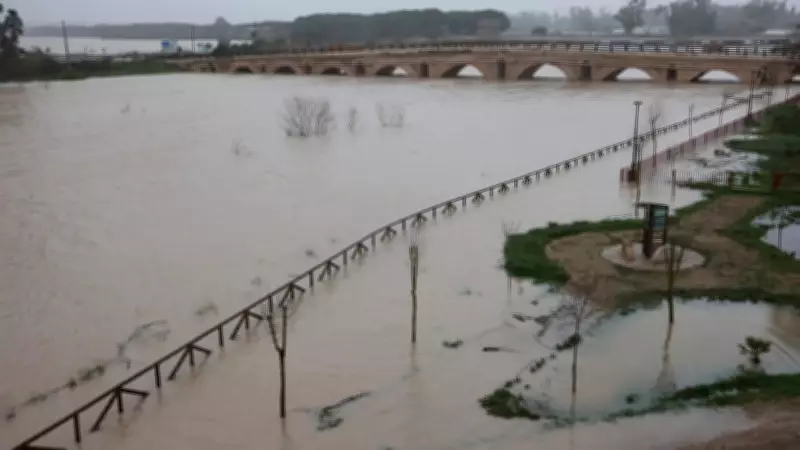
Authorities took swift action to mitigate risks, closing the historic Roman bridge over the Guadalquivir river in Cordoba as a precaution. In a move to ensure public safety, Sevilla Football Club's home match against Girona was postponed. Evacuated residents from severely affected areas, such as Grazalema, found shelter in temporary accommodations, including gymnasiums in nearby cities.
The severe weather also disrupted civic life in Portugal, where three municipalities postponed a presidential vote scheduled for Sunday due to safety concerns. The risk of flooding along the Tagus river in the Santarem region remained at its highest level, although waters further south along the Sado river had begun to recede, offering a slight respite.
Casualties and Growing Death Toll
The storms claimed another life on Saturday when a 46-year-old volunteer member of Portugal's emergency services drowned while attempting to cross a flooded area near Campo Maior in the central Portalegre district. Local media reported that the man encountered difficulties in strong floodwaters, becoming the first confirmed victim of Storm Marta.
This death adds to a growing toll from a series of recent storms. Storm Kristin killed five people in Portugal last week, while Storm Leonardo claimed another life earlier this week. Authorities noted that Leonardo also forced the evacuation of around 1,100 people across the country, highlighting the persistent danger.
Background: A Deadly Series of Storms and Climate Concerns
Spain and Portugal have faced an unusual succession of intense weather systems in recent weeks, with meteorologists pointing to increasingly volatile climatic conditions in the region. Portuguese Prime Minister Luis Montenegro described 2026 as a "particularly unusual year" marked by "exceptionally violent" weather events.
According to the Portuguese Environment Agency, dams across the country were forced to release a volume of water equivalent to Portugal's annual consumption within just three days during the recent storms, underscoring the immense scale of the rainfall. The Iberian Peninsula is considered one of Europe's regions most exposed to climate change, with scientists warning of longer heatwaves and more frequent episodes of extreme rainfall in recent years. The latest storms have reinforced concerns about growing weather volatility across southern Europe.
The impact has extended beyond the peninsula, with Morocco also reporting severe storms in recent days that displaced around 150,000 people in the country's northwest, illustrating the broader regional effects of these extreme weather patterns.