

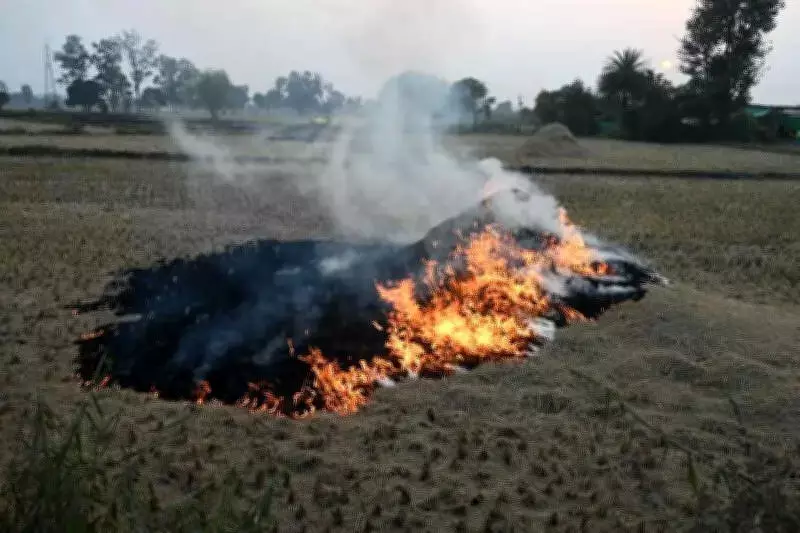
Stubble Burning Surge in Madhya Pradesh Overshadows Punjab's Decline
While Punjab has reported a significant reduction in stubble burning cases this wheat harvesting season, primarily due to delayed harvesting caused by unseasonal rain and hail, Madhya Pradesh continues to experience a sharp increase. On Wednesday, Madhya Pradesh recorded 1,290 out of the total 1,982 stubble burning cases reported across various states, highlighting a concerning trend in agricultural practices.
Cumulative Data Reveals Alarming Dominance
The cumulative count of stubble burning incidents now stands at 19,324 for the current season. Of these, Madhya Pradesh accounts for 13,907 cases, representing nearly 72% of the total incidents. This dominance is not a recent phenomenon; according to the Consortium for Research on Agroecosystem Monitoring and Modeling From Space (CREAMS), which tracks stubble burning twice yearly after paddy and wheat harvesting, Madhya Pradesh has reported approximately 50% of all crop residue burning cases over the last five years.
Historical Context and Regional Breakdown
From 2022 to April 15, 2026, a total of 217,863 stubble burning cases were reported nationwide. Madhya Pradesh led with 108,593 cases, followed by Uttar Pradesh with 51,382, Punjab with 47,981, Haryana with 9,788, and Delhi with 119. The district of Siddharthnagar in Uttar Pradesh reported the highest number of cases at 2,281, while 30 districts across Madhya Pradesh and Uttar Pradesh each recorded over 100 burning incidents by April 15.

Earlier, during the paddy harvesting of the 2025 kharif season, Madhya Pradesh remained the top contributor to stubble burning, with 17,067 cases, followed by Uttar Pradesh with 7,290 and Punjab with 5,114 until November 30, 2025. The current season's data up to April 15 shows Madhya Pradesh with 13,907 cases, Uttar Pradesh with 5,391, Haryana with 19, Punjab with 4, and Delhi with 3, totaling 19,324 incidents.
Implications and Ongoing Monitoring
The persistent high levels of stubble burning in Madhya Pradesh raise serious environmental and health concerns, contrasting with the temporary relief seen in Punjab due to weather disruptions. CREAMS continues to monitor these patterns closely, emphasizing the need for sustainable agricultural practices to mitigate the adverse effects of crop residue burning on air quality and ecosystem health.






