

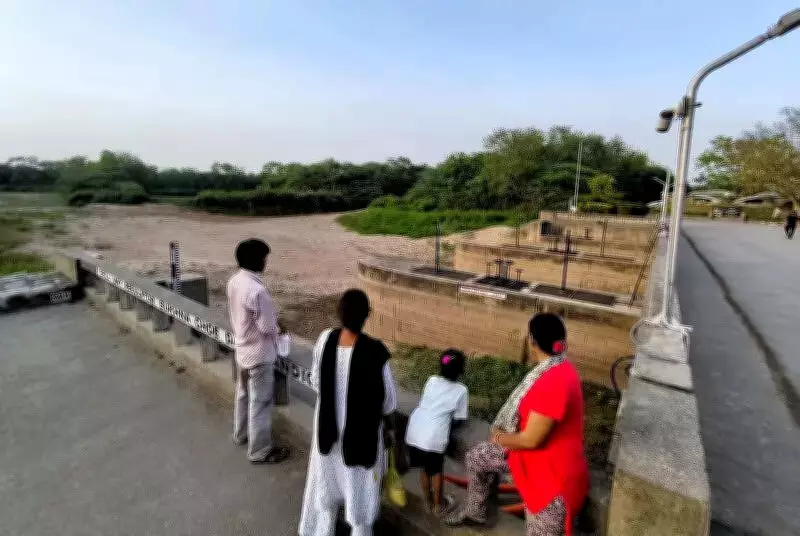
Chandigarh Officials Dismiss Fears of Sukhna Lake Drying Up Amid Early Summer Concerns
Despite the regulatory end of Sukhna Lake drying up prematurely this summer and the India Meteorological Department forecasting below-normal rainfall for the year, officials from the Chandigarh administration have moved to allay fears that the main body of the lake could dry up. Concerns had been mounting among residents and environmentalists over the potential for the iconic water body, or significant portions of it, to go dry.
Inspections Confirm Minimal Risk to Main Lake Body
Acting on these concerns, teams from the Union Territory's engineering and forest departments have conducted multiple inspections of Sukhna Lake. Following the latest inspection on Wednesday, officials have stated that the risk of the main lake drying remains minimal. UT Chief Engineer C B Ojha, who participated in the inspection team, provided clarity on the current situation.
"The water level at present is similar to levels in the last few years wherein no drying up of the lake was witnessed," Ojha confirmed. He further explained that the regulatory end which has dried up is not actually part of the main lake, but is connected to the Sukhna choe, a seasonal stream that feeds into the lake.

Seasonal Water Level Decline and Historical Context
Over the seven to eight months since last year's monsoon season, the water level in Sukhna Lake has dropped by more than four feet and continues to decline gradually. This is in stark contrast to last year when heavy rains necessitated the opening of flood gates at the regulatory end more than ten times after water levels breached the danger mark.
A senior UT official, who requested anonymity, elaborated on expectations: "At this rate, we are expecting the water level to further dip by at least 3-4 feet and stabilise around the 1,156 ft mark. But this depends entirely on the intensity of the heat in the coming days."
It has been nearly a decade since Sukhna Lake or major parts of it last dried up significantly. The most recent substantial drying occurred in 2017 when large patches of dry land became visible. Similar situations were reported in 2012 and 2010, highlighting the cyclical nature of the lake's water levels.
The Persistent Challenge of Siltation and Storage Capacity
Beyond seasonal factors like high summer temperatures and poor rainfall patterns, a perennial issue affecting Sukhna Lake's vulnerability to drying is the dramatic loss of its water storage capacity over decades. Heavy siltation from the Shivalik catchment area has substantially reduced the lake's ability to retain water.
The lake's storage capacity has undergone significant changes since its creation:
- 1958 (inception): 1,074 hectare-metres (Ham)
- 1999: Plummeted to a low of 343 Ham
- 2015: Recovered to 545 Ham (approximately half of original capacity)
Scientific Interventions and Future Plans
In response to these challenges, the Chandigarh administration last year engaged the National Institute of Hydrology (NIH) in Roorkee to conduct integrated hydrological investigations. The NIH's initial findings have identified the regulatory end as a potential zone for increasing storage capacity through targeted interventions.
Based on these scientific recommendations, authorities are now exploring various methods to enhance the lake's water-holding ability while simultaneously addressing the ongoing issue of silt accumulation. Chief Engineer Ojha detailed the practical considerations: "The desiltation will be taken up as required. Though, at present, even at the dried-up regulatory end, the soil is still very soggy. It is not possible to take heavy digging machinery to the site. Plans are being finalised for the desiltation to be carried out as and when the conditions are right."
Current Water Level Data and Historical Comparison
According to data from the UT Engineering department, Sukhna Lake's water levels on April 22 show a gradual but manageable decline:

- 2023: 1158.65 feet
- 2024: 1158.10 feet
- 2025: 1157.70 feet
- 2026: 1158.40 feet
This data indicates that while water levels have fluctuated, they remain within a range that officials consider manageable, particularly when compared to historical drying events. The administration continues to monitor the situation closely, balancing immediate concerns with long-term strategies to preserve this vital ecological and recreational resource for Chandigarh.





