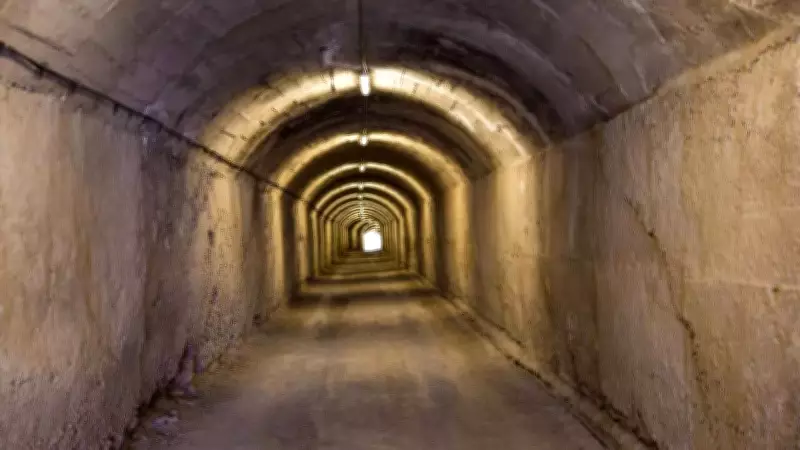
Switzerland's Hidden Nuclear Bunker Network: A Cold War Legacy Still Active
While Switzerland is globally recognized for its majestic mountains, political neutrality, and tranquil urban centers, a remarkable secret lies beneath its surface. An extensive network of nuclear shelters exists under countless residences, educational institutions, medical facilities, and government buildings across the nation. This infrastructure represents one of the world's most comprehensive civil defense systems, born from historical anxieties and sustained through contemporary planning.
The Origins: Cold War Anxieties and National Response
Switzerland's bunker system expanded dramatically during the Cold War era. Despite maintaining official neutrality, the country found itself geographically encircled by NATO and Warsaw Pact nations. Swiss authorities harbored legitimate concerns that any major European conflict could easily transcend borders. The escalating nuclear arms race and heightened geopolitical tensions throughout the 1950s and 1960s further amplified public apprehension.
In reaction, Switzerland implemented a robust civil defense strategy. The foundational principle was straightforward: even if the nation could not prevent a nuclear confrontation, it could safeguard its population. Government planners concluded that shelters capable of withstanding blast forces, radioactive fallout, and radiation exposure were essential for survival. This philosophy guided national policy for decades.

The Legal Mandate: The 1963 Civil Protection Law
A pivotal element behind Switzerland's extensive bunker network is its legislative framework. In 1963, Switzerland enacted a civil protection law that mandated nuclear shelter access for every citizen. This legislation required newly constructed homes to incorporate private shelters or obligated local municipalities to establish communal shelters within proximity.
Developers unable to integrate shelters into their projects were required to contribute financially to a public shelter fund. This provision guaranteed that urban dwellers without private bunkers would still have designated refuge points during crises. Over time, this law facilitated the creation of a nationwide shelter network directly correlated with population distribution.
Current Scale and Specifications
Today, Switzerland boasts approximately 9 million shelter spaces for a population of about 8.8 million people, theoretically providing coverage for nearly every resident. No other country achieves this level of per capita preparedness. These shelters range from large communal bunkers beneath schools and public structures to compact, fortified rooms within private residences.
Many facilities are equipped with advanced air filtration systems, substantial concrete walls, emergency sanitation provisions, and hermetically sealed doors designed to block radioactive contamination. Regular maintenance ensures these features remain functional.
Post-Cold War Persistence and Modern Relevance
Following the dissolution of the Soviet Union, numerous nations decommissioned or neglected their Cold War-era shelters. Switzerland, however, maintained its system. Authorities argued that while threats evolved—encompassing nuclear accidents, terrorism, and emerging geopolitical conflicts—the need for protective infrastructure persisted. The economic rationale also favored upkeep over potential reconstruction if necessity resurfaced.
In peacetime, many Swiss bunkers serve secondary purposes as storage areas, wine cellars, archives, or emergency supply depots. Crucially, they must retain their shelter functionality, with owners mandated to preserve critical elements like ventilation systems and reinforced entryways. Local governments conduct periodic inspections to verify operational readiness, and some regions continue evacuation drills to familiarize citizens with shelter protocols.

Renewed Significance Amid Global Tensions
Switzerland's bunker network has regained international attention following recent global conflicts. The Russian invasion of Ukraine, in particular, sparked renewed domestic interest, with many residents reviewing their assigned shelter locations for the first time in years. The Swiss government has reaffirmed the system's operational status, concurrently reviewing emergency plans and supply readiness as part of broader civil protection initiatives.
Comparative Analysis and Societal Implications
Unlike Switzerland, many European nations prioritize evacuation strategies over fixed shelter systems. Switzerland's unique geography, political culture, and federal structure enabled substantial investment in localized protection. The Swiss defense model emphasizes decentralization, distributing protection across thousands of smaller sites rather than concentrating it in few large facilities. This approach reduces congestion risks and enhances accessibility during emergencies.
The bunker network reflects deeper Swiss societal values: preparedness, regional responsibility, and long-term planning. While some critics question the relevance of Cold War-era infrastructure, Swiss officials view the shelters as a form of national insurance—providing psychological reassurance during uncertain times, even if never utilized for their primary purpose.
An Enduring System of Protection
Switzerland's nuclear bunker network stands as a testament to decades of consistent policy, legal mandates, and public cooperation. It represents a rare instance of a nation preserving large-scale civil defense infrastructure long after the Cold War's conclusion. These underground structures are not merely symbols of fear but embodiments of a national commitment to civilian protection in worst-case scenarios. Integrated into daily life yet perpetually ready, Switzerland's shelters await the day they might be needed, underscoring a unique approach to national security and resilience.