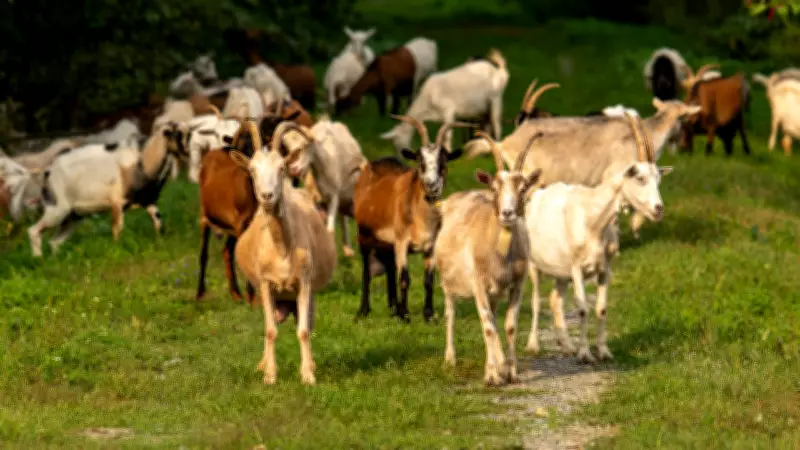
Texas Employs 300 Goats for Eco-Friendly Invasive Plant Control in Dallas
In an innovative environmental initiative, Texas has adopted a proven yet unconventional method to manage invasive plants. A herd of 300 goats was deployed to clear dense shrubs across approximately 11 acres of public land near White Rock Lake in Dallas. Instead of relying on heavy machinery, the city utilized controlled grazing to remove privet and similar invasive species that flourish near waterways.
Why Goats Instead of Machines?
Goats are natural browsers rather than grazers, meaning they prefer woody plants, vines, and shrubs over grass. This makes them exceptionally effective against invasive species like privet, which are challenging to cut back with traditional mowers. Additionally, goats can access uneven terrain, steep banks, and dense undergrowth that machines often struggle to reach. Their operation is noise-free, emission-free, and avoids soil compaction, making them ideal for urban parks and conservation zones.
The Ecological Damage Caused by Invasive Shrubs
Invasive shrubs spread rapidly and form thick canopies that block sunlight, pushing out native plants and reducing biodiversity. This disruption affects food sources for insects and birds. Along lakes and streams, these shrubs can alter soil moisture and compromise bank stability. Clearing them helps restore healthier ecosystems and allows native vegetation to recover over time, promoting ecological balance.

How the Goatscaping Operation Was Carried Out
The herd, managed by professional handlers, was monitored continuously throughout the project. Temporary fencing confined the goats to specific plots, and once an area was fully browsed, the fence was moved to advance them to the next section. This targeted approach ensured efficient clearing rather than random grazing. The project lasted just over a week and cost about $15,000, which officials note compares favorably with mechanical clearing in sensitive areas.
Goat grazing offers benefits beyond vegetation removal. It reduces ground fuel that can feed wildfires, particularly in dry seasons, and the animals return nutrients to the soil through natural fertilization. Unlike machinery, goats do not leave behind cut plant waste that requires hauling away, lowering transport needs and reducing overall emissions.
A Method Gaining Ground Across the US
Goatscaping is being increasingly utilized in cities and states across the US, including Texas, California, and Colorado. It is applied in wildfire prevention zones, parklands, and utility corridors. While the Dallas project attracted online jokes and viral attention, officials emphasize it reflects a growing shift toward low-impact, nature-based land management solutions.
City officials stress that goats are not a one-time solution. Invasive plants can regrow if the land is left unmanaged, so follow-up work may include planting native species, manual removal of regrowth, or repeat grazing in future seasons. When integrated into a broader management plan, goats can significantly reduce long-term maintenance efforts and support sustainable environmental practices.