

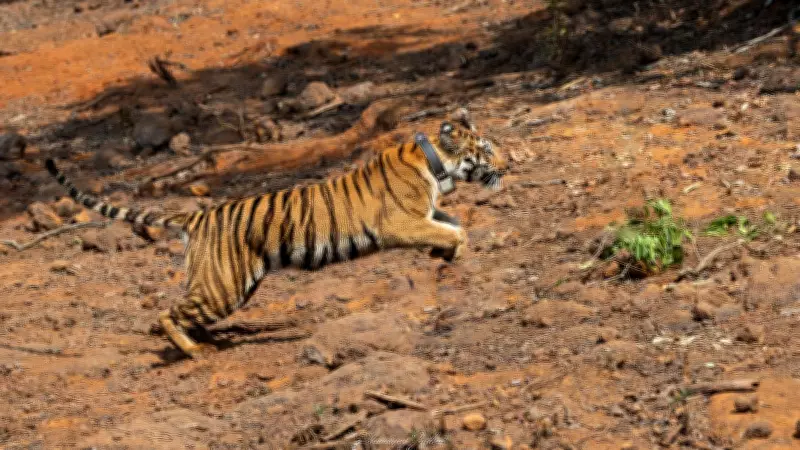
Third Tigress 'Hirkani' Released in Koyna Wildlife Sanctuary to Boost Tiger Population
The Maharashtra Forest Department has successfully released a third adult tigress, named Hirkani, into the Koyna Wildlife Sanctuary, which is part of the Sahyadri Tiger Reserve (STR). This strategic move is a key component of the Tiger Augmentation and Range Expansion (TARA) programme, aimed at enhancing tiger numbers and promoting biodiversity in the region.
Translocation and Release Details
According to Tushar Chavan, the field director of STR, the tigress, estimated to be 4 to 5 years old, was captured in the Nagalwadi forest area of Pench Tiger Reserve in Madhya Pradesh on February 5. She was then safely transported to STR in a specialized cage. On Friday night, the tigress was further moved to Koyna Wildlife Sanctuary via boat, where veterinary doctors conducted health checks and provided her with water and mutton for sustenance.
On Saturday morning, she was taken to a secure location within the core area of the sanctuary. At approximately 12 noon, she emerged from the transportation cage and swiftly ran into the forest, marking a successful release into her new habitat.

Previous Releases Under the TARA Programme
This release follows earlier efforts under the TARA programme. In December 2025, a tigress named Tara was translocated from Tadoba Tiger Reserve in Chandrapur district to Chandoli National Park within STR. Initially kept in a soft-release enclosure, Tara eventually ventured into the core forest after making a kill and feeding for three days. Another tigress, Chanda, was similarly relocated from Tadoba Tiger Reserve and released in Chandoli National Park in November 2025.
Impact on Tiger Population and Biodiversity
Rohan Bhate, an honorary wildlife warden involved in the initiative, highlighted the significance of these releases. Previously, STR was home to only three male tigers. With the addition of three tigresses, there is optimism for a population increase, which is crucial for strengthening biodiversity and boosting wildlife tourism. Bhate noted that Chanda has already mated with a male tiger, and Tara has adapted well to the new environment.
The Sahyadri Tiger Reserve spans approximately 740 square kilometers across the Satara, Sangli, Kolhapur, and Ratnagiri districts of Maharashtra, encompassing Chandoli National Park, Koyna Wildlife Sanctuary, and Radhanagari Wildlife Sanctuary.
Monitoring and Safety Measures
To ensure the safety and smooth integration of the newly released tigresses, the forest department has equipped them with radio collars. These devices enable round-the-clock monitoring using satellite-based telemetry and VHF antenna tracking units. Additional monitoring strategies include:
- Field-patrol-based triangulation and direct sign verification
- Behavioral documentation covering movement, resting sites, kill patterns, and territory exploration
- Conflict-avoidance protocols with local communities
- Veterinary response readiness to address any health issues promptly
Economic and Environmental Benefits
The release of these tigresses has already spurred tourism activities in the Sahyadri region. Chavan reported an increase in tourists opting for home stays, which contributes to the economic and environmental development of the area. This initiative not only supports conservation efforts but also creates new employment opportunities, fostering a sustainable balance between wildlife protection and community welfare.






