Scientists are currently re-evaluating the risks posed by Antarctica's massive Thwaites Glacier, often dubbed the "Doomsday Glacier." A recent Antarctic expedition aboard the icebreaker Araon aims to study the glacier and surrounding seas to better predict its future stability. While the ominous nickname suggests an inevitable catastrophe, researchers present a more nuanced picture, blending alarming possibilities with critical reassurances.
The Anatomy of a Potential Collapse
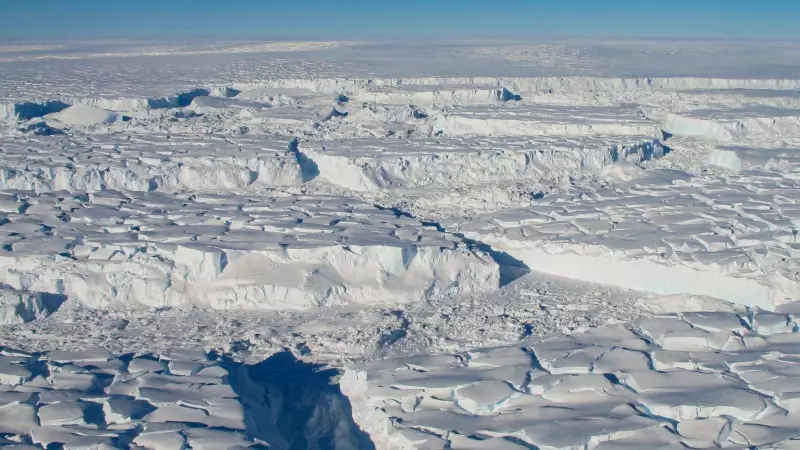
The Thwaites Glacier, comparable in size to the US state of Florida, holds enough ice to raise global sea levels by an estimated two feet if it were to melt entirely. Its unique structure is key to understanding the threat. The glacier originates on land but extends far out over the ocean, forming a vast floating ice shelf. The critical danger zone is its "grounding line"—the point where the ice lifts off the bedrock and begins to float.
Warm ocean currents are relentlessly eroding this glacier from below, melting the floating shelf and weakening the ice at the grounding line. The bedrock beneath Thwaites presents a major concern: it lies below sea level and slopes downward, becoming deeper inland. If the grounding line retreats past a certain threshold, this slope could allow a much larger volume of warm water to intrude, initiating a self-reinforcing cycle of melt and retreat.

"The consequences of this unstable retreat will be felt worldwide in terms of sharply increased rates of sea-level rise," warned Hilmar Gudmundsson, a glaciologist at Northumbria University in England. A 2023 study co-authored by Gudmundsson indicates this catastrophic cycle has not yet begun, but computer simulations now make its future occurrence near certain if the grounding line retreats too far. "We have gone from thinking, 'Yeah, it could happen, but we don't really know,' to an almost certainty," he stated.
A Glimmer of Hope Amidst the Warnings
Not all recent findings point toward doom. One particularly frightening scenario, involving the runaway collapse of the glacier's towering ice cliffs, now appears less probable based on 2024 computer modeling. This mechanism, where tall, unstable ice cliffs fail in rapid succession, may not be a primary threat to Thwaites, though some scientists caution that more research is needed to fully dismiss it.
This underscores the central message from the scientific community: Thwaites is not yet doomed. Researchers emphasize that decisive global action to slash carbon emissions—the root cause of the warming oceans—could still prevent the glacier's irreversible collapse. However, this path requires urgent change. Global fossil fuel emissions hit record highs in 2025 and continue to rise, putting the world off-track from the necessary cuts.
The Urgent Reality of Incremental Sea-Level Rise
While the specter of a sudden glacier collapse captures headlines, scientists are increasingly focused on refining predictions for the steady, incremental sea-level rise already underway. This ongoing melt from Antarctica, where ice flows to the sea, breaks apart, and melts, may not be cinematic, but its impacts are immediate and severe for vulnerable coastal communities and ecosystems.
"Authorities are not really going to be planning for the next century. They're going to be planning the next decades," noted Doug Benn, a glaciologist at the University of St. Andrews. "So that's where our focus has turned." The research from Thwaites is crucial for these near-term plans, helping nations prepare for the rising waters that are already locking in a changed future for our coastlines.