

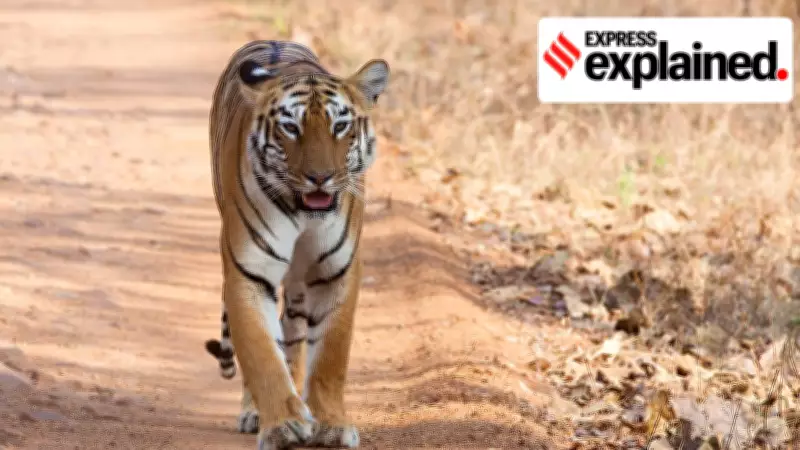
Tiger Dispersal in Andhra and Telangana Sparks Human-Wildlife Conflict Concerns
The sighting of two tigers in Andhra Pradesh and Telangana has become a major source of worry for forest officials and local residents. Both big cats, believed to have traveled over 600 kilometers from Maharashtra's Tadoba Tiger Reserve, are now being spotted near agricultural fields and busy roads, heightening fears of potential human-animal conflict or poaching incidents.
Unusual Sightings in Populated Areas
In an unprecedented event, an adult Royal Bengal Tiger was observed casually strolling along National Highway 16 near Rajamahendravaram in East Godavari district on Tuesday night. The tiger appeared unperturbed by traffic and was seen near a school and religious center, having traveled approximately 650 kilometers from its original habitat.
"It is highly unusual for a tiger to be seen in such densely populated areas, especially on NH 16, which is one of the busiest highways in the region," stated forest officials who confirmed the tiger had moved another 35 kilometers to Raghudevapuram.

Meanwhile, in Telangana, officials are tracking a sub-adult male tiger that has never been seen before in Yadadri Bhuvanagiri district. This tiger is also believed to have originated from Maharashtra and has traveled through multiple districts including Adilabad, Mulugu, Karimnagar, and Jagityal before reaching its current location.
Long-Distance Dispersal Patterns
Such long-distance tiger movements are not entirely unprecedented but remain concerning due to their proximity to human settlements. Historical data reveals:
- In 2023, a tiger traveled 2,000 kilometers across four states from Maharashtra to Odisha
- Last month, a tigress ventured 300 kilometers from Odisha to West Bengal
- Another tiger journeyed from Uttarakhand to Himachal Pradesh, possibly reaching upper Jammu
A study of 29 tiger cubs between 2005 and 2011 in Ranthambhore found that male tigers have a significantly higher probability of dispersal (92.3%) compared to females (36.4%). Males also tend to travel much greater distances, with documented ranges from 4.5 to 148 kilometers from their birth areas.
Immediate Threats and Responses
Both tigers have already demonstrated behaviors that concern authorities:
- The Rajamahendravaram tiger has killed buffaloes and calves, though it hasn't harmed humans
- The Yadadri Bhongir tiger has preyed on livestock while moving toward residential areas
- Both animals are frequently spotted near agricultural fields and busy roads
East Godavari district collector Kirthi Chekuri has declared holidays for schools in affected areas until the tiger moves away. Forest officials have alerted residents to take precautions at night and protect their livestock in secure shelters.
Conservation Challenges and Solutions
Andhra Pradesh's Principal Chief Conservator of Forests Dr. P V Chalapathi Rao explained that the tiger near Rajamahendravaram may be tranquilized if it remains too close to residential areas. "Permission to tranquilize has already been granted, and a special team from Pune is en route," he confirmed. The tiger would then be transported back to a forest area for release.
Similarly, forest officers in Yadadri Bhongir and neighboring Jangaon district are closely monitoring the second tiger, prepared to tranquilize and relocate it if necessary.
Imran Siddiqui of the Hyderabad Tiger Conservation Society highlighted the underlying issue: "Both tigers dispersed from Maharashtra's Chandrapur area where tiger populations have increased. They should have been intercepted earlier while still in tiger reserve areas."
Siddiqui added that these tigers have now become "problem tigers" because of their proximity to human habitations. "They are looking to establish territory and find mates, and they will not leave easily. While they can be captured, existing tiger reserves already have sufficient populations with limited space for additional animals."
Understanding Tiger Dispersal Behavior
Tiger dispersal represents a natural biological process for these solitary, territorial animals. Key factors driving this behavior include:

- Male tigers must establish their own territories with exclusive hunting and reproductive rights
- Within shrinking forest habitats, frequent conflicts occur between young males and established dominant males
- Vanquished tigers must explore new areas for vacant territories and accessible mates
- When tigers from "source" reserves reach low-density areas, they contribute to fresh gene flow that revitalizes isolated populations
While tiger dispersal indicates positive population growth, it also underscores the urgent need for developing and protecting wildlife corridors. These natural pathways allow tigers to move between habitats safely, reducing the likelihood of human-wildlife conflicts.
Without adequate monitoring and timely intervention, tiger movements through non-forest areas and human habitations may escalate man-animal conflicts, potentially eroding public support for conservation efforts surrounding India's national animal.





