

The Titanic Disaster: A Catalyst for Global Maritime Safety Reforms
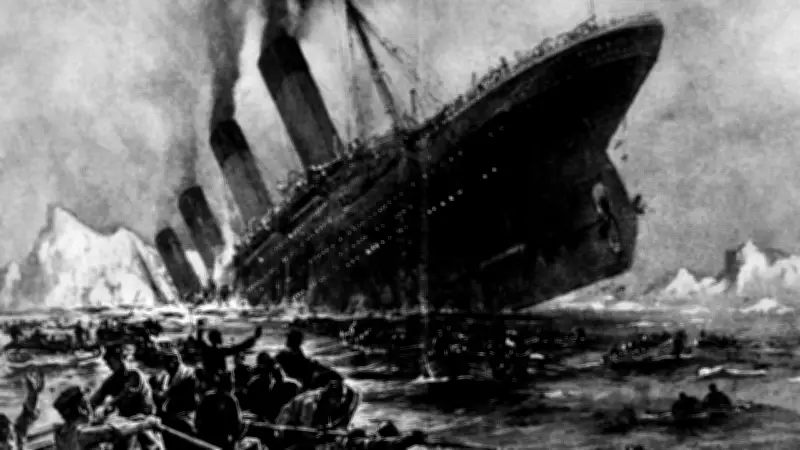
Exactly 114 years ago, the North Atlantic Ocean witnessed one of history's most infamous maritime tragedies. The RMS Titanic, famously dubbed "unsinkable," plunged to the ocean floor, claiming 1,517 lives. In their final, frigid moments, those passengers and crew could not have foreseen that their deaths would forge the most comprehensive life insurance policy the seas have ever known. The survivors' harrowing accounts spurred reforms that have safeguarded countless voyagers in the decades since.
Engineering and Design Flaws That Sealed the Fate
The RMS Titanic, designed by Thomas Andrews, stood as an engineering marvel of its era. Yet, critical flaws lurked beneath its grandeur. A primary weakness was the use of wrought iron rivets to secure steel plates. Their manufacturing process left excessive slag residue, rendering them brittle and prone to failure under stress. Additionally, iron was employed instead of steel in key structural areas like the hull, a material more vulnerable to fracturing in cold conditions.
Furthermore, the ship's watertight bulkheads only extended up to D deck. Any flooding beyond this point would compromise the entire vessel's integrity. These engineering shortcomings were compounded by regulatory gaps and human decisions that exacerbated the disaster's scale.

Regulatory Shortcomings and Operational Failures
In 1912, maritime law mandated lifeboats based on a ship's tonnage, not passenger capacity. The 1894 Merchant Shipping Act required just sixteen lifeboats for vessels over 10,000 tons. Despite the Titanic's 46,000-ton displacement and designer Thomas Andrews' recommendation for forty-six lifeboats, White Star Line chairman Joseph Ismay prioritized aesthetic appeal over safety, settling for the bare minimum: sixteen standard lifeboats and four collapsible ones.
Wireless communication protocols were equally lax. No law enforced a 24-hour wireless watch, and the Marconi system lacked an emergency channel, causing critical ice warnings to be buried under passenger messages. On the fateful night, the S.S. Californian's wireless operator, Cyril Evans, retired at 11:30 PM, just ten minutes before the Titanic struck the iceberg. The pitch-black, calm conditions further hindered visual detection, making the collision nearly inevitable.
The Sinking and Subsequent Investigations
The Titanic had received only three of seven iceberg warnings, prompting Captain Edward Smith to alter course. At 11:39 PM, lookout Frederick Fleet spotted the iceberg, and the crew executed a "hard-a-starboard" maneuver. Despite efforts, the ship collided on its starboard side, popping rivets and flooding watertight compartments. By 12:05 AM, lifeboat preparations began, but initial orders were met with disbelief, leading to underfilled boats.
The vessel sank steadily, eventually snapping in two, leaving thousands in freezing waters to succumb to hypothermia. Only 37% of passengers survived; experts estimate that figure could have reached 53% with fully loaded lifeboats.
Two major investigations followed. The U.S. Senate inquiry, led by Senator William Smith, condemned the crew's "absolute unpreparedness," citing a lack of alarms and organized evacuation. The British inquiry, overseen by Lord Mersey, attributed the sinking to excessive speed in icy waters but absolved the ship's design. Both probes catalyzed sweeping changes in maritime safety practices.
Landmark Safety Reforms Inspired by Tragedy
The disaster made glaring safety gaps undeniable, spurring immediate action. The Radio Act of 1912 mandated 24/7 manned ship radios, a dedicated emergency power source, and a minimum 100-mile communication range, directly addressing the S.S. Californian's watch lapse.
In 1914, the International Convention for the Safety of Life at Sea (SOLAS) was established, setting minimum safety standards for ship construction, equipment, and operations. Key SOLAS provisions included reduced speeds in ice fields, a direct response to the Titanic's high-velocity impact. Regulation also required Public Address systems by 1998 to prevent panic-driven misinformation, ensuring clear communication during emergencies.

The International Ice Patrol was founded in 1914 to monitor Atlantic and Arctic icebergs, using advanced tracking to prevent future collisions. Structural improvements were implemented to enhance ship resilience, while lifeboat regulations were overhauled. SOLAS now mandates lifeboats for 125% of onboard personnel, assigns passengers to specific boats, and requires regular, non-cancelable drills—a stark contrast to Captain Smith's cancelled drill that contributed to chaos.
Distress signal protocols were also refined. Post-disaster inquiries stipulated that flares must signify distress only, eliminating ambiguities that delayed the Californian's response.
Enduring Legacy of the Titanic
Today, the Titanic's wreck lies dormant in the Atlantic depths, but its influence permeates modern seafaring. Every lifeboat drill, every cautious navigation through icy waters, and every vigilant radio watch echoes the lessons learned from that tragic night. The 1,517 lives lost unknowingly forged a legacy of safety that continues to protect millions at sea, ensuring that such a catastrophe never repeats itself.





