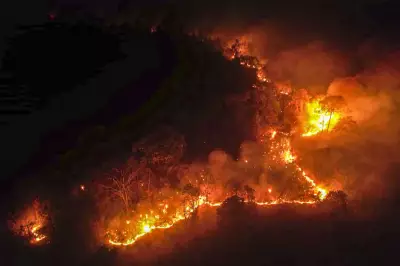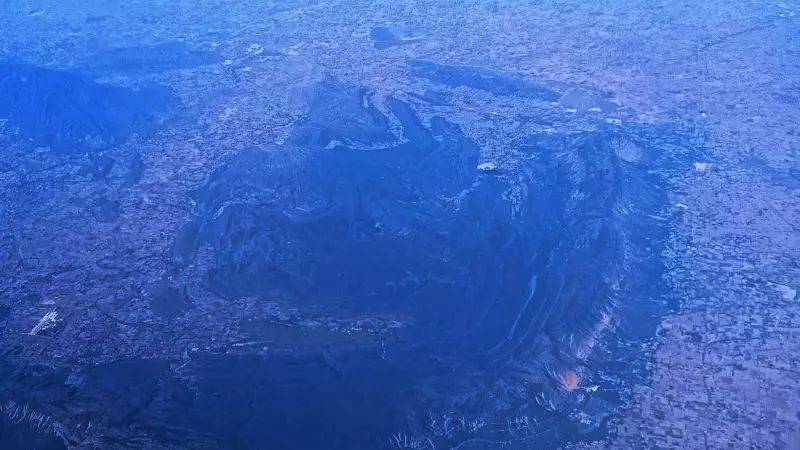
The ancient Aravalli mountain range, a geological formation older than the Himalayas, is embroiled in a critical legal and environmental struggle. Intensive quarrying, mining, and urban expansion in states like Rajasthan and Haryana, including the National Capital Region, have severely degraded these hills. In a significant recent development, the Supreme Court of India put a hold on a controversial order that defined and protected these mountains based solely on a 100-meter height threshold. This pause prevented the potential loss of legal safeguards for vast stretches of the range, but the underlying crisis is far from over.
The Leopold Lesson: Short-Term Gains, Long-Term Peril
The current predicament mirrors a fundamental error in ecological thinking, one famously articulated by ecologist Aldo Leopold. In his seminal work, A Sand County Almanac, Leopold recounts his early belief that killing wolves would benefit deer populations for hunters. However, watching a dying wolf, he realized "the mountain did not agree." Eliminating predators led to deer overpopulation, which stripped the mountain of vegetation, causing soil erosion and eventual ecosystem collapse.
Today, with over 1,200 active mining leases carving out the Aravallis, policymakers are repeating this mistake by prioritizing immediate economic gains over long-term stability. The hunt for construction materials has scarred the landscape, disrupting natural drainage, destroying forests, and fracturing food webs. This short-termism ignores the range's vital, interconnected roles: it influences the North Indian monsoon, acts as a barrier against the eastward expansion of the Thar Desert, recharges groundwater through its fractured rocks, and serves as a crucial biological corridor for genetic diversity and carbon sequestration.

The Flawed 100-Metre Rule and the Path Forward
The recent controversy over the 100-metre height rule is a prime example of this dangerous oversimplification. Defining a hill merely by an arbitrary height for administrative convenience exposes lower ridges to the threat of quarrying. Recognizing this, the Supreme Court has directed a new committee to study the Aravallis, acknowledging that such a narrow definition could trigger rampant mining in ecologically sensitive zones. This offers a glimmer of hope, suggesting that long-term ecological decisions must be rooted in interdisciplinary research.
Adopting a Mountain's Perspective
To genuinely protect the Aravallis, policymakers must learn to "think like a mountain." This means appreciating the profound interconnectedness forged over evolutionary timescales. It requires ignoring artificial administrative boundaries and managing the entire Aravalli range as one integrated system. District-wise mining plans must be replaced by a single, sustainable management strategy that prioritizes the ecosystem's integrity.
Policies must value work done on a geological timeline. While forests can regenerate in decades, a mountain range shaped over millions of years is irreplaceable. As Leopold's philosophy warns, prioritizing immediate gains invites long-term danger. If India's leaders fail to adopt this elevated perspective, the future will be ecologically poorer—a profound loss for a megadiverse nation. The writer, Gurudas Nulkar, is the director of the Centre for Sustainable Development at the Gokhale Institute of Politics and Economics, Pune.