In a world that often prizes speed, some of Earth's most fascinating creatures have mastered the art of moving slowly. Their deliberate pace is not a disadvantage but a finely tuned survival strategy. From the dense rainforests of South America to the depths of the ocean, these animals prove that sometimes, the slow and steady truly do win the race of life.
The Champions of Slowness: A Closer Look
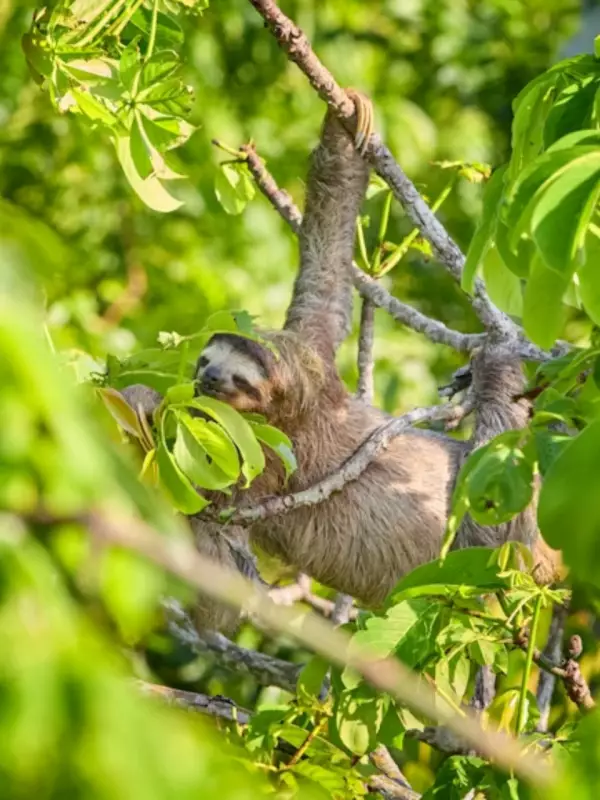
Topping the list of the world's slowest animals is the three-toed sloth. This iconic resident of the Americas' rainforests moves at a maximum speed of a mere 0.24 kilometres per hour. Its life is spent almost entirely in the canopy, where its lethargic movements help it evade predators by blending in with the slow-moving leaves. The sloth's incredibly low metabolic rate is a direct adaptation to its leaf-based diet, which provides minimal energy.
Following closely is the giant tortoise, a majestic reptile known for its longevity and ponderous gait. With a top speed of just 0.27 km/h, these giants carry their heavy shells across islands like the Galápagos and the Seychelles. Their slow pace is linked to their massive size and herbivorous diet, requiring them to conserve energy.

The common garden snail is a creature of glacial pace that many have witnessed in their own backyards. It manages only about 0.048 km/h, leaving behind its distinctive silvery trail. This slow movement is a result of its unique form of locomotion—it glides on a muscular foot over a layer of mucus it secretes.
Other Notable Slow-Movers in the Animal Kingdom
The list of nature's most deliberate creatures includes several other remarkable species:
- Starfish: Many species move at a rate of only 0.02 to 0.06 km/h using their hundreds of tiny tube feet.
- Loris: This nocturnal primate from Southeast Asia is a slow and stealthy hunter, moving deliberately to avoid detection and to catch insects.
- Sea Anemone: Although mostly sedentary, it can slide very slowly on its base at a minuscule pace.
- Manatee: The gentle sea cow, often called a manatee, cruises calmly through waterways at around 5 km/h but can be much slower when grazing or resting.
- Gila Monster: This venomous lizard of the American deserts is a slow-moving forager, conserving energy in its harsh habitat.
Why So Slow? The Science of Survival
The incredibly slow speeds of these animals are not random flaws but are deeply connected to their ecology and physiology. For the three-toed sloth, a slow metabolism is essential for surviving on nutrient-poor leaves. Its algae-covered fur provides camouflage, making speed unnecessary. Similarly, the giant tortoise's heavy shell offers superb protection, reducing the need for a fast escape. The garden snail's pace is a direct consequence of its muscular, mucus-based movement system, which is highly effective for its small scale but not built for speed.
These adaptations demonstrate a fundamental principle of evolution: survival is about fitness for one's specific environment, not about being the fastest. Energy conservation is a critical theme. In environments where food is scarce or low in energy, moving slowly minimizes caloric expenditure. Furthermore, slow movement often aids in stealth and camouflage, helping predators like the loris ambush prey and helping prey like the sloth avoid becoming a meal.
Lessons from Nature's Most Patient Creatures
Observing the world's slowest animals offers profound insights. In the context of climate change and habitat loss, their specialized adaptations can make them particularly vulnerable. Their existence reminds us of the incredible diversity of life strategies on our planet. They challenge the human obsession with speed and efficiency, showing that a slow, deliberate, and energy-conscious lifestyle is a successful and sustainable model for survival. Their continued survival depends on the preservation of their unique habitats, from rainforest canopies to coral reefs.
Ultimately, the slowest animals in the world are masterpieces of evolutionary adaptation. They turn slowness into a superpower, proving that in the complex web of life, there is a successful niche for every pace.