

India's Tourism Boom Creates Mounting Waste Crisis in Public Spaces
India's waste accumulation doesn't follow gradual patterns. It manifests suddenly and dramatically during specific periods throughout the year. Long weekends, vibrant festival seasons, school holidays, and peak tourist months trigger overwhelming surges of discarded materials across the country.
The Structural Problem of Mobile Waste Generation
Beaches become saturated with debris. Hill stations overflow with trash. Pilgrimage towns strain under the weight of visitor-generated waste. Almost overnight, public spaces transform visually, accumulating more bottles, wrappers, and litter in areas designed to remain clean and inviting.
This phenomenon isn't accidental but structural in nature. India's waste management systems primarily focus on residential areas, with door-to-door collection and scheduled pickups assuming waste originates where people live permanently. However, some of India's most intense waste loads emerge where people don't reside but rather visit temporarily.

Beverage containers and packaged products are frequently consumed while traveling. A bottle purchased on a beach, highway, or market street often gets discarded minutes later, far from any formal collection infrastructure. Once these items enter public spaces, they become significantly harder to recover systematically.
Drains, waterways, forested areas, and roadside edges become default endpoints for this mobile waste stream. This creates distinct challenges for tourist-heavy states where floating populations generate substantial waste but don't remain long enough to be captured by household-oriented systems.
Tourism Magnifies the Waste Management Challenge
Goa exemplifies this imbalance with striking clarity. The state maintains a resident population of approximately 15 lakh people, yet recorded about 1.08 crore tourist visits in 2025. This disparity means far more people consume beverages and packaged products in public spaces than in private residential settings.
Beaches, leisure zones, highways, and markets absorb waste volumes never intended for management through residential neighborhood systems. A comparable pressure manifests across the Himalayan tourism belt, where Himachal Pradesh, with a resident population of 6,864,602 according to the 2011 Census, welcomed approximately 1.80 crore tourist visits in 2024.
Hill towns, pilgrimage routes like the Manimahesh Yatra corridor, forested valleys, and highway stretches experience brisk consumption of packaged products during peak seasons. Disposal frequently outpaces the reach of routine collection mechanisms in these challenging terrains.
Shifting Focus from Cleanup to Prevention
These realities prompt a fundamental question shift: not "How do we clean more?" but "How do we prevent waste from becoming litter initially?" This reframing has directed attention toward innovative solutions like the Deposit Refund Scheme, which intervenes at the disposal moment rather than after accumulation occurs.
How Deposit Refund Schemes Function
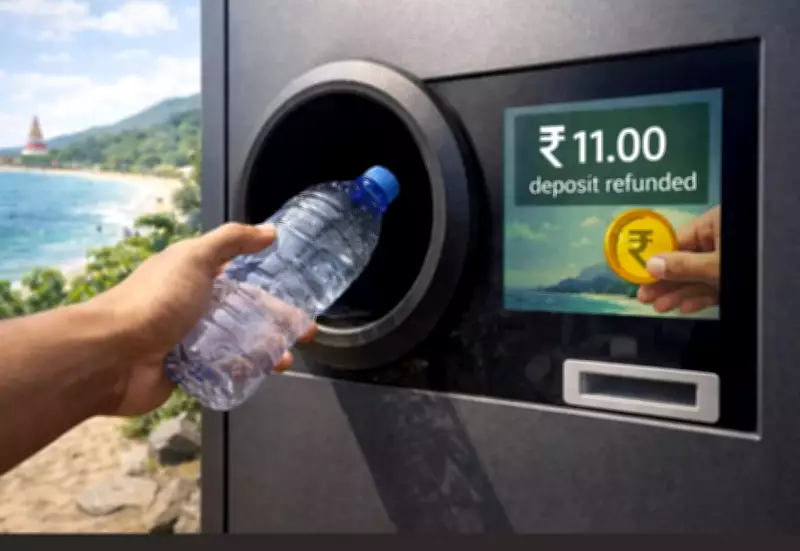
Deposit Refund Schemes operate on a straightforward yet powerful principle. A small, fully refundable deposit gets added to beverage container or packaged product prices. When consumers return empty containers, they receive their deposit back, transforming disposable items into valuable retrievable objects.
Behavioral economics explains why this mechanism proves effective. People demonstrate stronger motivation to avoid losing money than to comply with abstract environmental rules. A refundable deposit creates immediate relevance at the disposal point, making discarding decisions carry tangible costs rather than remaining neutral actions.
Global Success Stories and Local Implementation
International experience demonstrates consistent effectiveness of this approach. Countries with established deposit systems report among the world's highest beverage container recovery rates. Germany achieves approximately 98 percent return rates, while Norway and Lithuania surpassed 90 percent within years of implementation.

The common success factor across jurisdictions isn't stricter enforcement but the presence of inherent value attached to containers. For tourism-driven regions, one design feature proves particularly crucial: refunds aren't limited to original purchasers. Anyone returning containers receives deposits, creating critical incentives in high-mobility settings where consumers and responsible disposers may differ.
Even if tourists leave bottles behind, these items retain monetary worth, encouraging others to collect them. Goa's Deposit Refund Scheme embraces this reality, complementing rather than replacing municipal collection infrastructure by addressing behavioral leakage in public spaces where traditional systems struggle.
Himachal Pradesh has progressed similarly, formally notifying its Deposit Refund Scheme and initiating implementation planning. A successful pilot during the Mani Mahesh Yatra demonstrated deposit-linked recovery functionality even in temporary, high-pressure environments with difficult terrain and substantial footfall.
A Broader Shift in Addressing Seasonal Pollution
Collectively, these developments indicate a broader strategic shift in managing seasonal pollution hotspots. The core issue isn't insufficient laws or infrastructure but concentrated waste generation in locations and moments where enforcement has limited reach.
Tourism will continue driving economic growth across India's coastal regions, hill stations, and heritage circuits. In locations where millions pass through annually, Deposit Refund Schemes offer something traditional systems often cannot provide: behavioral influence precisely when waste gets discarded.
For states grappling with seasonal surges and public-space litter, this distinction between prevention and cleanup may prove decisive in creating sustainable solutions for India's evolving waste management challenges.





