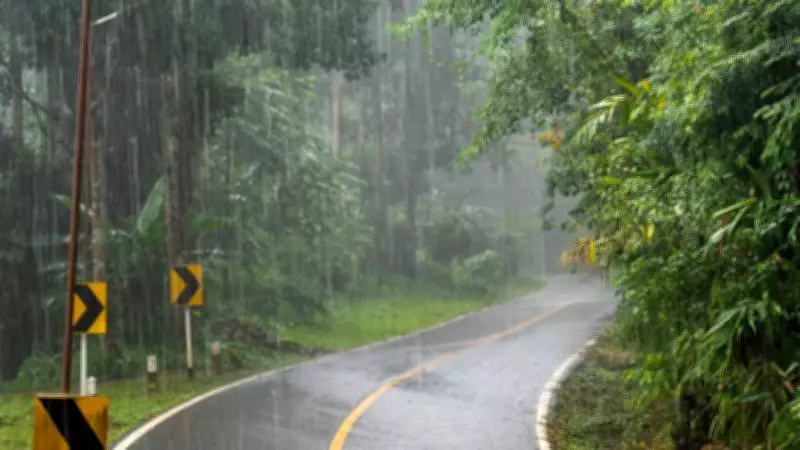
The monsoon season brings sudden rainstorms that can quickly transform a landscape. Hard, dry soil can turn into rivers of mud within minutes. During these rainstorms, trees play a crucial role in controlling flooding. Trees do not merely stand still in the rain; a forest actively catches, slows down, and holds millions of liters of water. With their structure, trees break the force of storms, preventing the soil around them from washing away. They also quietly conserve water for the months ahead, performing this vital function every year during the monsoon season.
How Trees Capture and Store Rainwater
Trees act like natural engineers that work to control flooding and save water. The monsoon season is a time of heavy rain, and trees help make it safer by capturing and storing water from the rainstorms. This frontline defense begins high above the ground in the forest canopy. When a torrential downpour hits, the dense layers of leaves, twigs, and branches act like a vast, multi-tiered umbrella. Ecologists call this first stage canopy interception. Instead of heavy raindrops hammering directly into the forest floor and washing away topsoil, billions of leaves break their momentum. A significant percentage of the rainfall gets trapped on the surface of the foliage and evaporates directly back into the air, cooling the local climate before it ever has a chance to cause flooding below.
Stemflow: Controlled Delivery to the Ground
What does manage to slip past the leaves is gently funneled downward in a process known as stemflow. Tree branches are naturally angled to collect rainwater and direct it inward toward the main trunk. From there, the water snakes its way down the rough bark in a slow, controlled trickle rather than a chaotic rush. This slow-motion delivery gives the ground immediately surrounding the base of the tree a chance to gradually absorb the moisture without becoming instantly waterlogged or overwhelmed.

Root Systems: The Underground Sponge
Once the rain reaches the forest floor, the root system takes over the heaviest lifting. As roots grow, they push through the earth, splitting tightly packed dirt and creating an intricate network of underground channels. This transforms the forest floor into a giant, hyper-absorbent sponge—a mechanism called infiltration. Forested soil can swallow heavy rainfall at a rate multiple times faster than cleared, barren land. Trees are exceptionally effective at helping to keep water in the ground. They draw the rainwater into the earth, which helps to fill the underground water tanks that keep local streams flowing and wells full even after the rainy season is over.
The Tree's Internal Water Cycle
Under the tree's canopy, its own special way of moving water around continues. The roots suck up a substantial amount of water from the ground and send it up to the branches. However, the tree does not use all of this water for itself. It retains only a small portion and then releases the rest back into the air. The tree accomplishes this through tiny holes on its leaves called stomata. When it is raining hard, a large tree can release hundreds of liters of water back into the air every day. This process helps to humidify the air, which can contribute to further rainfall later.
Consequences of Deforestation
When people cut down all the trees, it causes significant problems. Without trees, heavy rain can lead to mudslides, wash away fertile soil, and fill rivers with sediment. In contrast, when trees are present, they help break the fall of the rain and prevent the ground from being eroded. Trees act as helpers that transform rain from a potential hazard into a beneficial resource. They ensure that water does not cause damage and instead seeps into the ground where it can support the environment. Trees are fundamentally important for maintaining the water cycle and ensuring a year-round water supply.