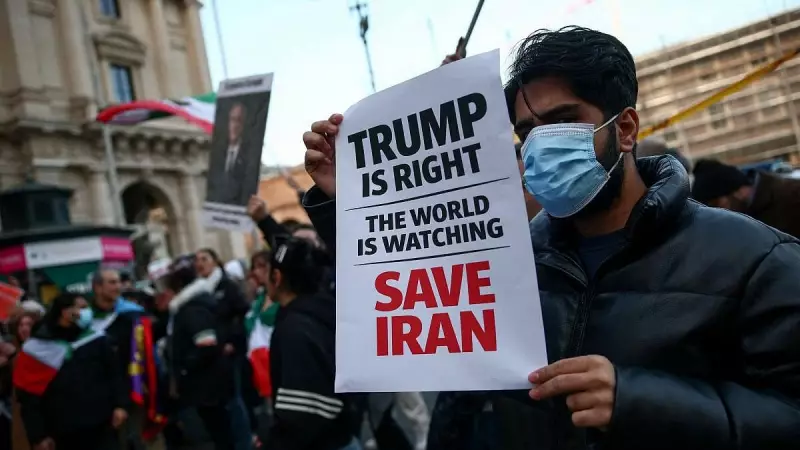
In a significant development that underscores the volatile political landscape in the Middle East, Iran has been rocked by the most substantial wave of protests since the 1979 revolution. These demonstrations have drawn international scrutiny, particularly from the United States, where President Donald Trump has issued a clear warning to the theocratic regime in Tehran.
Trump's Stern Warning to Iran
Following the escalation of unrest across Iran, President Donald Trump has publicly put the Iranian government on notice. In a statement that reverberated through diplomatic channels, Trump emphasized that any further killing of protesters by Iranian authorities would provoke a direct response from the United States. This move marks a pivotal moment in US-Iran relations, as it signals a potential shift in American foreign policy towards more assertive intervention in the region's internal affairs.
Context of the Protests
The protests in Iran have erupted as a result of deep-seated economic grievances and political dissatisfaction among the populace. Citizens have taken to the streets in large numbers, voicing their frustrations with the government's policies and demanding greater freedoms. This unrest represents the most significant challenge to the Iranian regime in decades, harking back to the revolutionary fervor of 1979 that reshaped the nation's trajectory.

Global Distractions and Geopolitical Implications
Amidst this crisis, global attention has been somewhat divided, with debates in Washington and other international capitals focusing on various issues, including discussions about Greenland. This distraction highlights the complex nature of contemporary geopolitics, where multiple crises compete for the world's focus. However, the situation in Iran remains a critical flashpoint, with potential ramifications for regional stability and international security.
The US warning comes at a time when Iran is already grappling with internal strife and external pressures, including sanctions and diplomatic isolation. Trump's stance could further exacerbate tensions, potentially leading to a more confrontational approach between the two nations. Observers note that this development underscores the ongoing struggle for influence in the Middle East, with the US seeking to assert its role as a key player in shaping the region's future.
As the protests continue to unfold, the international community watches closely, weighing the implications for human rights, democracy, and peace in the area. The outcome of this crisis could have lasting effects on Iran's domestic politics and its relations with the world, making it a pivotal moment in contemporary history.