Trump's Superlative Language Signals Escalating Iran Confrontation
When former President Donald Trump discusses Iran in his current public statements, he consistently employs dramatic superlatives that leave little room for ambiguity. His descriptions range from a "beautiful armada" to warnings about time "running out" and threats of attacks that would be "far worse" than previous military actions. This blunt, personal, and highly public rhetoric represents a significant escalation in Washington's approach to Tehran.
Naval Buildup and Explicit Threats
The immediate catalyst for this heightened tension is the deployment of a substantial US naval force to Middle Eastern waters, spearheaded by the USS Abraham Lincoln aircraft carrier. Trump has explicitly contrasted this deployment with previous military movements, claiming it is both larger and more combat-ready than the fleet previously directed toward Venezuela. His public ultimatum is clear: unless Iran agrees to nuclear concessions, the United States will launch attacks surpassing the intensity of the June 2025 strikes on Iranian nuclear facilities.
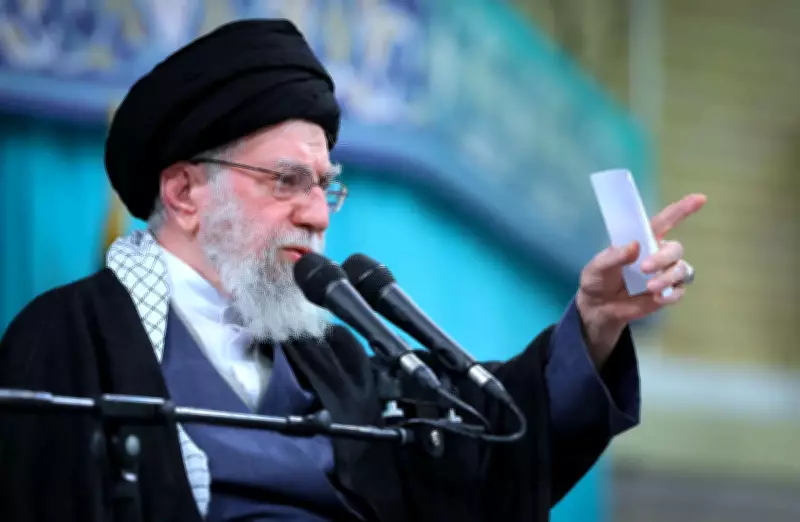
This military posture has prompted serious questions among security analysts about potential next steps. Many are now examining whether Trump might attempt targeted strikes against Iranian leadership, potentially even pursuing the capture or elimination of Supreme Leader Ayatollah Ali Khamenei, mirroring his administration's previous regime-change strategies in Venezuela.

Substantial Military Presence in the Region
The scale of American military assets already positioned near Iran is difficult to dismiss as mere posturing. According to detailed reports, the United States currently maintains between 30,000 and 40,000 troops across multiple regional countries, supported by five air wings and five warships. This formidable force includes advanced air-defense systems and carrier-based aircraft such as F-18s, stealth F-35s, and electronic warfare EA-18 Growlers.
Recent reinforcements have added a dozen F-15s along with additional THAAD and Patriot missile defense systems. As Seth Jones, a former Pentagon and special operations official, observed, "This looks like the US is planning to use military force" both offensively and defensively, though the precise objectives remain unclear.
Iran's Vulnerable Yet Dangerous Position
Iran's leadership currently operates from a position of significant weakness but retains substantial dangerous capabilities. The regime faces immense economic pressure and domestic instability following protests that reportedly resulted in over 30,000 casualties. Despite these challenges, the Islamic Revolutionary Guard Corps continues to dominate Iran's political and security apparatus, maintaining the regime's coercive power.
Should Trump pursue direct action against Iran's top leadership, he would venture into uncharted geopolitical territory with potentially catastrophic regional consequences. The suggestion of a "Venezuela-style" mission to rapidly dismantle Iran's leadership structure has moved beyond hypothetical discussion into active policy consideration.
Military Options and Strategic Calculations
Trump's administration has reportedly reviewed multiple offensive options, including:
- Precision strikes against Iran's missile infrastructure including silos, launchers, and command centers
- Targeted operations against IRGC leadership and high command
- Potential decapitation strikes aimed at Ayatollah Khamenei
According to intelligence assessments, targeting regime officials could serve dual purposes: punishing Iran for its protest crackdowns while potentially inspiring further civil unrest that might lead to regime change.
Feasibility of Leadership Strikes
While striking Iran's supreme leader might seem implausible, military planners have not eliminated the possibility. The United States possesses multiple tools for such operations:

- Stealth F-35 aircraft capable of evading radar detection
- F-18 and F-15E fighters for precision bombing missions
- EA-18 Growlers for electronic warfare and radar disruption
- Tomahawk missiles deployed on three destroyers in the Persian Gulf
- Cyber capabilities to disable Iran's electrical grid and communications
However, significant obstacles remain. As former Pentagon official Mark Cancian noted, "A Maduro-style snatch-and-grab is unlikely" due to geographical challenges and insufficient planning time. The distance between potential launch points and Tehran presents greater logistical difficulties than previous operations in Venezuela.
Iran's Strategic Response
Iranian officials have responded with deliberately calibrated rhetoric that combines deterrence with diplomatic openings. Adviser Ali Shamkhani warned that any US military action would trigger Iranian retaliation against American, Israeli, and allied targets. Foreign Minister Abbas Araqchi emphasized that Iran's armed forces maintain "fingers on the trigger" ready to respond powerfully to aggression.
Simultaneously, Iranian diplomats have reiterated openness to a "mutually beneficial, fair and equitable nuclear deal" conducted on equal footing without coercion. This dual-track approach represents classic deterrence messaging aimed at factions within Trump's coalition concerned about broader Middle East conflict.
Regional Allies Express Concern
American partners in the region have voiced significant reservations about potential military escalation. Gulf allies including Saudi Arabia and the United Arab Emirates have reportedly warned Washington against using their airspace or bases for strikes against Iran. As one Arab official starkly put it, "The United States may pull the trigger, but it will not live with the consequences. We will."
Even Israel, typically supportive of hardline approaches to Iran, has expressed concerns about regime destabilization. Senior Israeli planners note that airstrikes alone cannot topple Iran's government, and Khamenei's potential replacement might prove even more extreme, potentially pushing Iran toward greater nuclear brinkmanship.
Nuclear Dimensions and Escalation Risks
The nuclear factor adds critical urgency to the confrontation. UN nuclear chief Rafael Grossi recently confirmed that Iran maintains large stockpiles of highly-enriched uranium and could resume its nuclear program at will. While Trump claims the June 2025 strikes "obliterated" three major nuclear sites, Iran has reportedly begun reconstruction efforts.
Any direct strike against Khamenei or regime leadership would likely trigger immediate retaliation including:
- Missile attacks on US bases in Qatar, Jordan, and Iraq
- Drone strikes via Iranian proxies in Syria and Yemen
- Disruption of oil traffic through the Strait of Hormuz
- Proxy retaliation against Israeli targets
Iran's oil-dependent neighbors fear all-out conflict would destabilize global energy markets and potentially trigger civil unrest throughout the region.
Strategic Pressure Campaign Continues
Trump appears to be pursuing a strategy of attritional pressure against Iran, combining military, economic, and diplomatic elements to force concessions. This approach may include continued nuclear site strikes, naval blockades in the Strait of Hormuz, cyber warfare campaigns, and enhanced coordination with Israeli proxy operations.
While a direct strike against Khamenei remains an unlikely "nuclear option," the threat itself provides significant leverage in negotiations. The 2020 assassination of Quds Force commander Qassem Soleimani demonstrated that previously unthinkable actions can become reality, though targeting Iran's supreme leader would represent a far more explosive escalation.
Trump's message to Tehran remains characteristically blunt: negotiate an acceptable nuclear agreement or face military consequences exceeding anything previously experienced. As regional tensions continue to mount, the international community watches anxiously for signs of either diplomatic breakthrough or catastrophic military confrontation.