Tulare Lake's Dramatic Return: California's 'Erased' Water Body Reappears After Century
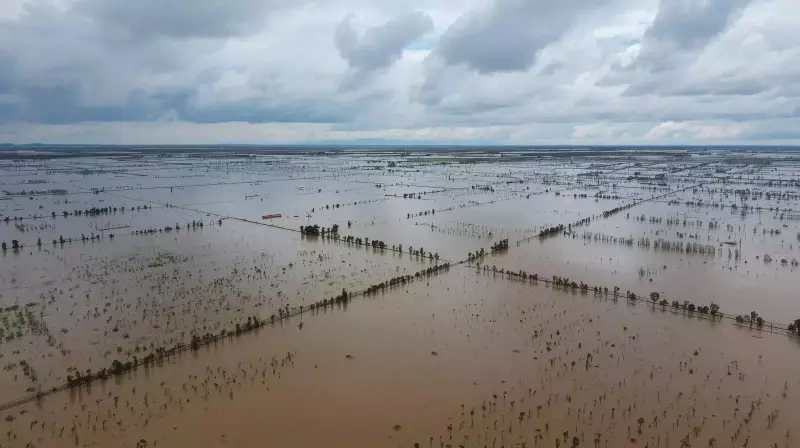
In the spring of 2023, a remarkable transformation unfolded across California's San Joaquin Valley. Where crops and roads had dominated the landscape for decades, water began spreading across vast areas. The combination of record Sierra Nevada snowmelt and repeated atmospheric river storms pushed rivers beyond their channels, creating what appeared to many as sudden flooding. However, to those familiar with the land's deeper history, this was something older and less surprising - the return of Tulare Lake, long treated as erased from the landscape.
The Historical Significance of Pa'ashi
Known to the Yokuts people as Pa'ashi, meaning "big water," Tulare Lake once dominated the valley floor as the largest freshwater lake west of the Mississippi River. Before large-scale water engineering projects transformed the region, this dynamic water body could stretch close to 100 miles in length and 30 miles in width during wet periods. Fed primarily by the Kern, Kings, Tule, and Kaweah rivers, the lake expanded and shrank with seasonal flows, creating a living ecosystem that supported fish, birds, and wetland plants.
For the Yokuts people, Pa'ashi was never a fixed body of water but rather a living system with moving edges that responded to natural rhythms. This indigenous understanding contrasted sharply with the perspective of settlers who arrived in the nineteenth century and often misinterpreted dry periods as permanent conditions.

The Deliberate Erasure and Agricultural Transformation
Beginning in the late 1800s, an ambitious network of canals, levees, and dams systematically redirected the rivers that fed Tulare Lake. The primary goal was agricultural expansion, transforming wetlands into productive farmland for cotton, alfalfa, and later almonds. By 1898, the lakebed appeared completely dry, leading many settlers to declare the lake permanently gone.
However, this confidence proved fragile. Tulare Lake refilled several times during the early twentieth century, with major floods occurring in 1906, 1916, 1921, and again in the late 1930s. Each inundation flooded farms planted on the lakebed, but as waters eventually receded, memory of the lake's persistence faded once more.
The Perfect Storm of 2023
The winter of 2022-2023 brought unprecedented snowfall to the Sierra Nevada mountains. When spring warming arrived, it released this massive water volume rapidly. Simultaneously, a series of atmospheric river storms added substantial rainfall across the valley. The existing levees and diversion systems, designed primarily for agricultural water management, could not contain the combined flow.
Water naturally moved toward its lowest point - the historic lakebed. Over several weeks, Tulare Lake reformed dramatically, covering approximately 94,000 acres and reaching a size comparable to Lake Tahoe. Roads, dairies, and orchards found themselves surrounded by shallow water, disrupting farming operations and infrastructure across the region.
Ecological and Environmental Impacts
The lake's return brought more than just flooding. Almost immediately, birds arrived in large numbers, with wading species spreading across the new shoreline. Fish appeared in channels and pools that had been dry for generations. Local residents reported noticeable changes in microclimate, including cooler breezes and higher humidity near the water.
These ecological responses echoed historical accounts from early settlers, who wrote about winds driven by the open lake surface and wildlife returning as soon as water settled. The rapid reappearance of these patterns suggests that the valley floor retains its ecological memory and responds quickly when water is allowed to spread naturally.
The Agricultural Dilemma and Climate Uncertainty
Much of the land now underwater has been farmed intensively for generations, featuring fertile soil and established infrastructure. From an economic perspective, abandoning this productive area seems impossible. Yet the repeated flooding history reveals a persistent pattern: when wet years arrive, the lake returns; when dry years follow, planting resumes.

Each cycle brings substantial economic losses. Climate change adds further uncertainty by increasing the likelihood of extreme swings between drought and flood conditions. This creates a fundamental challenge for agricultural planning and water management in the region.
Indigenous Perspectives and Knowledge Systems
For the Yokuts people, Pa'ashi was never truly erased. The lake's name and oral traditions preserved its presence even when maps showed only farmland. From this indigenous perspective, the 2023 flooding represents not merely a disaster but a powerful reminder of deeper truths about the land.
This viewpoint fundamentally challenges the assumption that human control over water systems is complete or permanent. It also raises important questions about whose knowledge shaped California's development and whose understanding was marginalized or ignored in the process.
Looking Forward: What Remains After the Waters Recede
As waters slowly recede, some fields may be replanted while others remain too damaged for immediate recovery. Legal and political debates continue regarding responsibility, compensation, and future planning for flood-prone areas.
Tulare Lake's return doesn't offer simple conclusions. Instead, it leaves behind wet soil, altered atmospheric conditions, and a visible outline of something that was meant to be forgotten. Pa'ashi returned without ceremony and may not remain permanently, but history suggests this won't be the last time this ancient water body makes its presence known in California's changing landscape.