The recent deaths of two notorious but iconic wild elephants in Tamil Nadu have cast a harsh spotlight on the state's wildlife management practices, igniting a fierce debate among conservationists. The tuskers, nicknamed Rolex and Radhakrishnan, died just weeks after being captured and moved to different forest reserves, raising serious questions about the stress and trauma inflicted by translocation.
A Tragic End for Problem Elephants
Tusker Rolex, responsible for damaging crops and killing four people in the Boluvampatti forest range of Coimbatore district, was captured from Thondamuthur. The forest department translocated him to Varagaliyar inside the Anamalai Tiger Reserve (ATR). After being held in a wooden enclosure for 25 days, he was released into the ATR on November 12. Merely two weeks later, on November 26, he was found dead. A postmortem report concluded the elephant died of cardiac arrest following a fall.
In a similar case, Tusker Radhakrishnan, linked to at least 12 human deaths in the Nilgiris district, met a tragic fate. Captured in September last year, he was moved to the Kalakkad-Mundanthurai Tiger Reserve in Tirunelveli district. His life ended on November 18 when he was discovered dead. Environmentalists point out that translocated animals often perish due to environmental changes, extreme stress, and an inability to locate familiar food and water sources in unfamiliar territory.

A New Hope: The Pethikuttai Wildlife Transit Centre
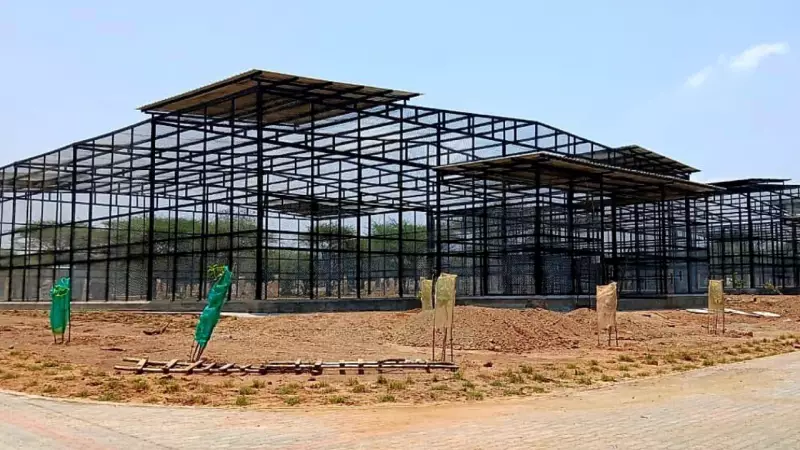
In response to these recurring tragedies, the Tamil Nadu forest department has inaugurated the state's first dedicated Wildlife Transit and Treatment Centre at Pethikuttai in Coimbatore district. This facility, sprawling across 130 acres, is envisioned as a game-changer. It aims to provide immediate medical treatment and stabilization for sick or injured wild animals, offering secure enclosures for short-term observation and care.
The centre boasts an operation theatre, specialized enclosures for various species, and separate, extensive facilities for elephants and calves, including a kraal and a swimming pool. Dr. E Vijayaragavan, the forest veterinary surgeon in charge, emphasized the centre's role in reducing stress. "Unlike earlier, injured animals like deer need not be transported long distances. We have the facilities here, which will minimize transit stress," he stated.
Supriya Sahu, Additional Chief Secretary of Environment, Climate Change and Forests, hailed the centre as a "watershed moment" for Tamil Nadu's conservation efforts, staffed by expert veterinarians and trained teams. N V K Ashraf, Senior Adviser of the Wildlife Trust of India, detailed the centre's sophisticated zoning: a human zone for the clinic, a quarantine zone, a rehabilitation zone, and a lifetime care zone, with specific structures for leopards, tigers, and bears.
Skepticism and the Call for Enhanced Capabilities
Despite the optimism, wildlife activists urge caution. They argue that infrastructure alone is insufficient without advanced equipment and specialized training. Activist S Muralidharan highlighted past failures: "Many wild animals died during transit and treatment due to a lack of facilities and specialized doctors. These veterinarians should be trained by experts from Thailand and Africa."
Muralidharan further revealed that a writ petition has been filed in the Madras High Court seeking a state-of-the-art treatment facility at the centre and proper advanced training for its veterinarians. This underscores the critical gap between establishing a facility and equipping it to handle complex wildlife medical emergencies effectively.
The deaths of Rolex and Radhakrishnan serve as a somber reminder of the challenges in human-wildlife conflict management. The success of the new Pethikuttai centre now hinges on bridging the gap between its physical infrastructure and the on-ground expertise required to fulfill its life-saving mission.