UAE Activates Emergency Alert System Amid Regional Missile Threats
Late on March 1, 2026, the United Arab Emirates government issued a rare nationwide emergency alert, sending urgent safety notifications directly to millions of mobile phones across all seven emirates. The sudden alerts, accompanied by loud alarm tones, served as a stark reminder of how rapidly escalating regional geopolitics can disrupt daily life in one of the Gulf's most stable and prosperous nations.
Immediate Safety Instructions for Residents and Visitors
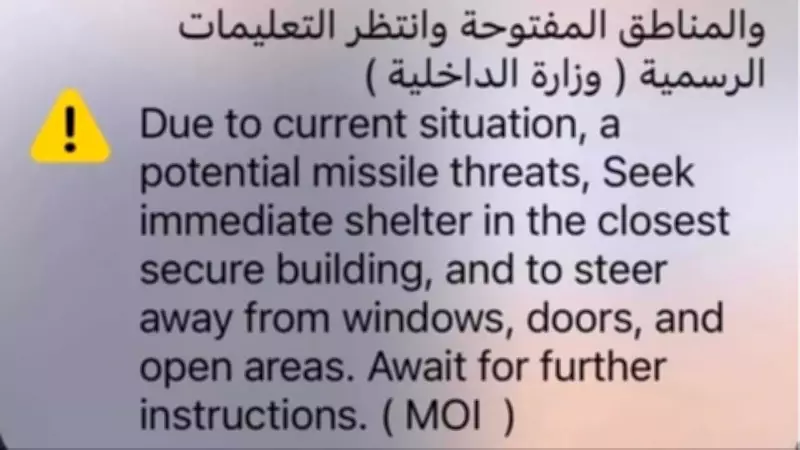
The emergency messages, distributed in both Arabic and English by the Ministry of Interior, contained critical safety guidance during heightened missile threats following recent military escalations involving Iran, the United States, and Israel. The alerts advised all residents and visitors to:
- Seek immediate shelter in the closest secure building
- Stay away from windows, doors, and open areas vulnerable to debris or blast effects
- Await further official instructions from government authorities
- Follow verified government channels rather than unverified social media sources
This activation of the UAE's national early warning system demonstrated the government's commitment to rapid dissemination of critical safety information during emergencies, with officials emphasizing that such alerts are preventive measures designed to enhance public preparedness.

Regional Tensions Trigger Precautionary Measures
The emergency alert came amid growing regional hostilities after U.S. and Israeli strikes on Iranian targets prompted retaliatory missile launches from Tehran toward Gulf states. While most incoming missiles were successfully intercepted by advanced UAE air-defense systems, authorities activated comprehensive precautionary measures to protect civilians as defensive operations unfolded over Emirati territory.
The National Emergency Crisis and Disasters Management Authority (NCEMA) clarified that although the alerts might cause concern among the public, they represent proactive crisis management mechanisms aimed at safeguarding community safety. Officials stressed that the situation, while serious, remains under control with all necessary defensive and emergency protocols fully operational.
Public Response and Government Reassurances
Social media platforms and community discussions captured widespread reports of the emergency alarms sounding simultaneously across different emirates, with many residents describing the startling alert tones and their immediate reactions to seek shelter. The incident thrust the UAE's emergency alert system into the spotlight against the backdrop of intensifying regional conflict between Iran and Western-aligned forces.
Explosions and interception booms were reported in cities including Abu Dhabi and Dubai, with civilian infrastructure occasionally experiencing shockwaves from the defensive operations. The conflict has already disrupted regional air travel, leading to temporary closures of major airports and triggering safety advisories from numerous foreign missions.
Broader Implications for Regional Stability
Foreign diplomatic missions, including those of India, the United States, and the United Kingdom, have urged their citizens in the UAE to follow local safety guidance and take appropriate shelter measures amid ongoing hostilities. This international coordination underscores broader concerns for civilian safety across the Gulf region as geopolitical tensions escalate.
Despite the emergency alerts and visible signs of regional conflict spilling into Gulf territories, UAE authorities have consistently reassured the public about the nation's robust defense capabilities and comprehensive emergency management systems. Government communications repeatedly emphasized the importance of relying on official sources for accurate information while avoiding the spread of unverified content that could generate unnecessary panic.
For both Emirati citizens and the large expatriate community, the emergency alert system represents an uncommon but critical safeguard during potential danger scenarios. The direct-to-phone messaging demonstrates the technological capability of modern governments to communicate life-saving instructions with unprecedented speed during developing crises.

Beyond immediate safety concerns, this situation highlights how interconnected global geopolitics have become with local security realities. Within hours, what might have appeared as distant diplomatic developments transformed into real-time emergency alerts, shelter-in-place directives, and reinforced crisis management operations affecting everyday urban life in one of the world's most dynamic regions.