

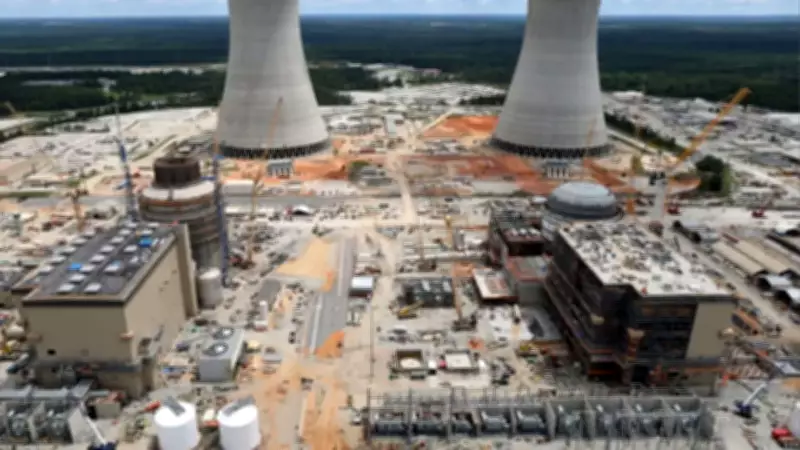
UK Government Approves Wylfa Nuclear Power Project, Boosting Energy Security
The UK government has officially approved the commencement of work on a groundbreaking new nuclear power project at the Wylfa site in Anglesey. This decision represents a significant milestone in the nation's strategic push for enhanced energy security and the expansion of low-carbon power generation capabilities.
Historic Partnership and Job Creation
Ministers selected the Anglesey location following the signing of a substantial £2.5 billion partnership with Rolls-Royce last year. This collaboration is focused on developing small modular reactors (SMRs), which constitute a new generation of advanced nuclear technology. According to industry estimates, the project is anticipated to generate approximately 8,000 jobs across the United Kingdom. This includes about 3,000 positions directly at the Wylfa site and an additional 5,000 roles nationwide, providing a substantial boost to the economy and skilled employment opportunities.
First-of-its-Kind SMR Rollout in the UK
The development will pave the way for the construction of three SMRs at Wylfa, marking the first deployment of such technology in the UK. These innovative reactors are engineered to be manufactured as modules in factories and subsequently assembled on-site, a method that significantly reduces both construction time and overall costs. Once fully operational, the three units are projected to generate sufficient electricity to power around three million homes for more than six decades, contributing massively to the country's clean energy targets.

Tom Greatrex, chief executive of the Nuclear Industry Association, described the government's approval as a "historic step for clean power, industrial growth and skilled jobs in Wales". He emphasized that the nuclear sector is prepared to position Britain at the forefront of new nuclear development globally.
Long Road to Nuclear Revival at Wylfa
Wylfa has a storied history in nuclear power, having operated as a nuclear power station for over four decades after its opening in 1971. The facility's final reactor was decommissioned in 2015. Initial plans for a replacement plant were abandoned in 2021, but renewed proposals emerged in 2024 after the site was acquired by state-backed Great British Energy – Nuclear. If the project successfully navigates final investment decisions and regulatory approvals, which are expected later this decade, the reactors could become operational in the 2030s, marking a revival of nuclear energy at this key location.
Rolls-Royce's Strategic Bet on Nuclear Future
Rolls-Royce SMR is at the helm of the technology development for this project. The company has secured up to £599 million in funding from Britain's National Wealth Fund to accelerate its SMR programme. Rolls-Royce is actively racing to deploy its modular reactor technology, which aims to make nuclear power more cost-effective and quicker to construct. The company already employs over 1,000 people dedicated to this project and is concurrently pursuing similar developments in Europe, including in the Czech Republic.
Chris Cholerton, chief executive of Rolls-Royce SMR, stated that the agreement brings "certainty" to the UK's SMR programme and signifies the beginning of a broader rollout of this innovative technology.
Government Backing for Energy Security Push
UK Energy Secretary Ed Miliband hailed the project as a "major milestone" for energy security. He stressed that expanding clean energy infrastructure is crucial for reducing the nation's reliance on fossil fuels. Chancellor Rachel Reeves added that investment in SMR technology will not only help create skilled jobs but also build a new generation of homegrown nuclear power, reinforcing the UK's energy independence.
Local Impact and Community Considerations
Local authorities on Anglesey have welcomed the announcement, highlighting the potential economic and employment benefits it could bring to the region. However, officials have also underscored the importance of carefully managing community concerns. These include potential environmental impacts and increased pressure on local infrastructure as the project progresses.

Officials emphasized that ensuring robust local participation, fostering skills development, and securing long-term benefits for residents will be key priorities as the project moves into its next phases. The successful integration of the project into the community will be vital for its overall acceptance and sustainability.





