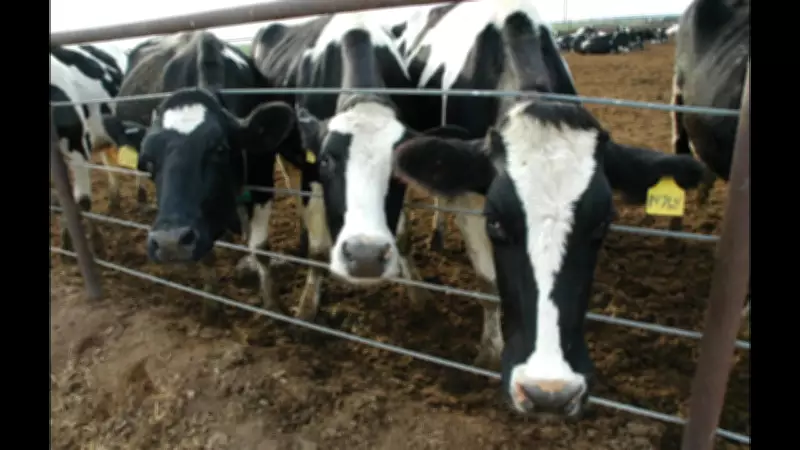
The number of intensive dairy farms in the UK where cows are kept indoors year-round has more than doubled over the past decade, according to a new investigation. The rise comes amid growing financial pressure on farmers and escalating concerns over animal welfare and pollution.
Investigation Findings
An investigation by the Bureau of Investigative Journalism revealed that there are now at least 180 dairy farms across the UK where some cattle reportedly have no access to outdoor grazing. This marks a significant increase from around 70 such farms in 2015, as reported by The Guardian.
The investigation also identified a sharp increase in so-called “mega dairies” housing more than 700 cows. Approximately 40 such farms are now operating across Britain, with some of the largest facilities containing more than 2,000 cattle.

Financial Pressures on Farmers
The expansion of intensive dairy farming coincides with soaring production costs, including higher prices for fertiliser, fuel, and feed. In some cases, milk prices have fallen below production costs, squeezing farmers' margins. Some farmers told investigators they felt compelled to adopt larger, more intensive systems to remain financially viable.
Several large dairy-producing areas, including Devon, Cornwall, Dorset, and Cheshire, have become hotspots for factory-style dairy farming. Unlike intensive poultry and pig farms, large dairy units in the UK are not currently required to hold environmental permits. This means there is no official public register showing how many exist or where they are located.
Animal Welfare Concerns
Campaigners and some farmers have raised concerns over the welfare of cows permanently housed indoors. Critics have referred to these systems as “battery cows”, drawing parallels to the battery farming of poultry. Patrick Holden, chief executive of the Sustainable Food Trust, said the practice mirrors concerns previously raised over battery farming in the poultry sector.
However, others within the industry have defended intensive systems. They argue that indoor housing allows for closer monitoring of animal health and can improve productivity.
Environmental Impact and Regulation
The report also highlighted concerns about pollution linked to dairy and beef farming. Environmental campaigners are calling for tighter regulation of large livestock units. The Department for Environment, Food and Rural Affairs (Defra) has stated that it is considering extending environmental permitting requirements to dairy farms as part of efforts to reduce pollution incidents.
Industry groups have cautioned that farmers are already operating under significant financial strain. They warn that additional regulation could increase pressure on businesses struggling to remain profitable.